You have an idea and a weekend. Instead of building, you open twelve tabs comparing frameworks, read a thread about why one of them is dead, and close the laptop having written zero lines of code. Congratulations, you've caught stack paralysis.
Here's the thing nobody says loudly enough. For an MVP, your stack choice barely matters. What matters is picking something you can ship with today and not painting yourself into a corner you'll have to rewrite out of. Let's make the decision fast.
Quick answer. Pick the stack you already know, or the most boring popular one if you're starting fresh. Use a managed database and a managed host so you're not running servers. Avoid anything trendy with a small community. The best MVP stack is the one that gets you to real users this month, not the one that wins arguments online.
Key Takeaways
- Familiarity beats theoretical superiority for an MVP, every time.
- Boring, popular tools have answers to your problems already written online.
- Managed services save the time you'd waste on infrastructure you don't need yet.
- You can rewrite later. You cannot rewrite something you never shipped.
Why Does Stack Choice Matter So Little at First?
Because your MVP will have almost no users and almost no load. The scaling debates that fill forums are about problems you'd be lucky to have. At ten users, nearly any modern stack performs identically.
What actually slows you down is unfamiliarity. Every hour spent learning a new framework's quirks is an hour not spent building the thing that might make money. Speed to first user is the only metric that matters right now.
The graveyard of unshipped side projects is full of perfect stacks. Nobody ever failed because they chose the second-best framework. They failed because they never launched.
What Should You Actually Pick?
If you already know a stack, use it. Full stop. Your rusty familiarity with the thing you've shipped before is worth more than the shiny new framework everyone's excited about this month.
If you're genuinely starting fresh, pick the boring popular option in whatever ecosystem you're nearest. Something with a huge community, endless tutorials, and an answer to every error already sitting on a forum. Boring means every problem you hit has been solved by someone before you.
How Do You Avoid the Rewrite Trap?
The one place stack choice bites later is when you pick something you have to tear out to grow. A few guardrails keep that from happening without slowing you down now.
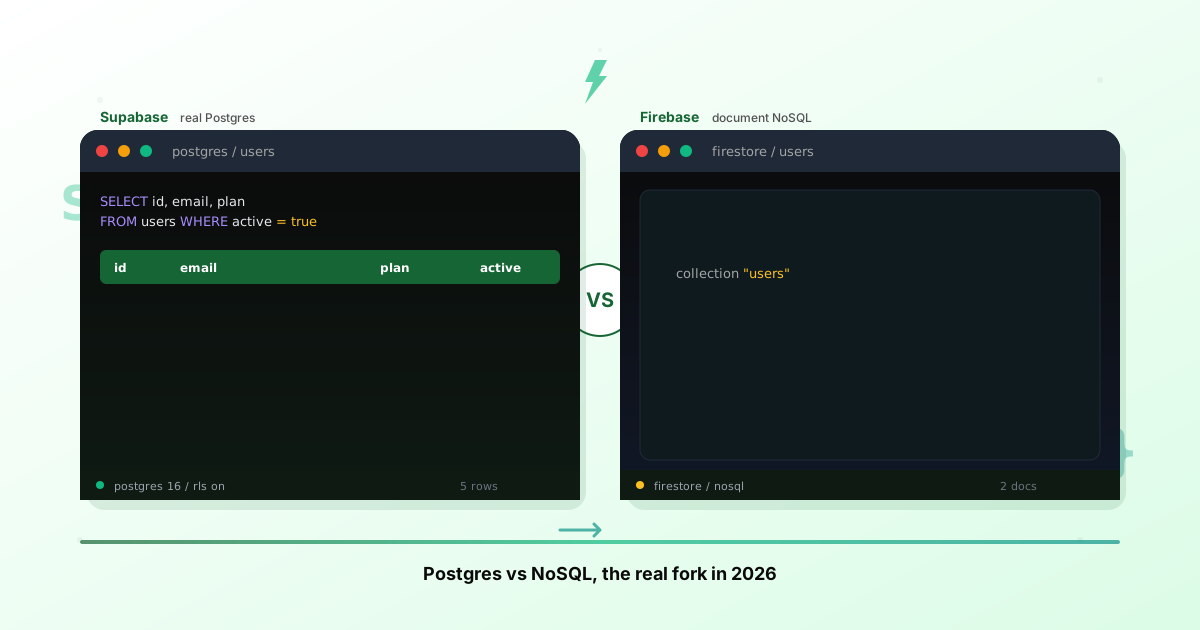
Use a real database like Postgres from day one rather than something you'll migrate off. Keep your business logic separate from whatever framework wraps it, so swapping the wrapper later doesn't mean rewriting everything. And avoid tools with tiny communities, because when they break or get abandoned, you're on your own.
| Layer | Safe Default | Why |
|---|---|---|
| Database | Managed Postgres | Grows with you, hard to outgrow |
| Hosting | Managed platform | No servers to babysit |
| Framework | Boring and popular | Every error is already answered |
| Auth and payments | Off-the-shelf services | Never build these yourself early |
What About Managed Services Versus Rolling Your Own?
Use managed everything at the start. Managed database, managed hosting, an off-the-shelf auth provider, a payment processor you don't have to think about. Every one of these is a problem you're paying a few dollars to make disappear.
Building your own auth to save money is the classic MVP mistake. You'll spend a week on it, get the security subtly wrong, and delay the launch that would have told you whether anyone wants the product at all. Buy the boring parts.
A good rule for MVPs. If a service exists that solves it for the price of a lunch, use the service. Your time is the scarce resource, not your cash, and definitely not your ego about writing it yourself.
When Should You Reach for No-Code Instead?
Sometimes the fastest stack is barely a stack at all. If your MVP is mostly forms, a database, and some logic, a no-code or low-code tool might get you to users in a day instead of a month.
The tradeoff is a ceiling and some lock-in, same as always. But validating an idea in no-code, then rebuilding in real code once you know it works, is a completely legitimate path. Plenty of real companies started exactly there.
Frequently Asked Questions
Should I Use The Newest Framework?
Rarely. New frameworks have thin documentation and few answers when you hit a wall. For an MVP you want the one with a decade of forum posts behind it, not the one topping this week's rankings.
Does My Database Choice Matter?
Pick a solid relational database like Postgres and stop thinking about it. It handles almost anything an early product throws at it, and you're unlikely to genuinely outgrow it for a long time.
Can I Really Rewrite Later?
Yes, and by then you'll have users and revenue to justify it. A rewrite with paying customers is a good problem. A perfect stack with no users is just a hobby.
What If I Pick Wrong?
For an MVP, there's almost no wrong that matters. The only real mistakes are choosing something you don't know well or something with no community. Everything else is recoverable.
How Long Should This Decision Take?
An hour, maybe less. If you've spent a full day comparing stacks, you've already lost more than any stack difference could cost you. Decide and start building.
Just Start Building Already
Pick the stack you know, or the most boring popular one if you're fresh. Wire up a managed database and host, buy the auth and payments, and go build the actual product. You can obsess over architecture when you have users worth architecting for.
Once it's live, the next problem is getting people to it, which we covered in the guide to launching without an audience. Ship first, optimize later. That order has never once let a founder down.