Last month I did something slightly unhinged. I built a robot that fills in directory submission forms, pointed it at 73 directories in a single session, and sat there watching Chromium windows blink like a proud parent.
This wasn't for a client. We ran it for our own products: Tool Index, the directory you're reading right now, and Melodex, a music tool we also run. Dog food, consumed enthusiastically.
Here's everything that happened, including the parts that make us look silly. If you're a founder about to spend a weekend submitting your startup by hand, read this first.
Why We Built a Robot for This
Two reasons. First, we sell a done-for-you distribution service, and I refuse to sell a thing I haven't personally suffered through. Second, we had two products of our own that needed listings, and I'm constitutionally incapable of filling in the same form 73 times.
The engine is Playwright driving a real browser, with OCR bolted on for image captchas. Each directory gets a small recipe: which fields exist, what the success signal looks like, where the traps are. Each product gets a kit: five description lengths, a tagline, logos at 256 and 512 pixels, screenshots, and structured metadata the engine can drop into any form.
Building a kit takes about an hour. Building the engine took days. Hold onto that ratio, it matters later.
We also run Tool Index, which means we sit on the receiving end of these forms too. Reviewing incoming submissions taught us what a good one looks like. Filling in 73 of everyone else's taught us what founders are actually up against.
The Raw Numbers
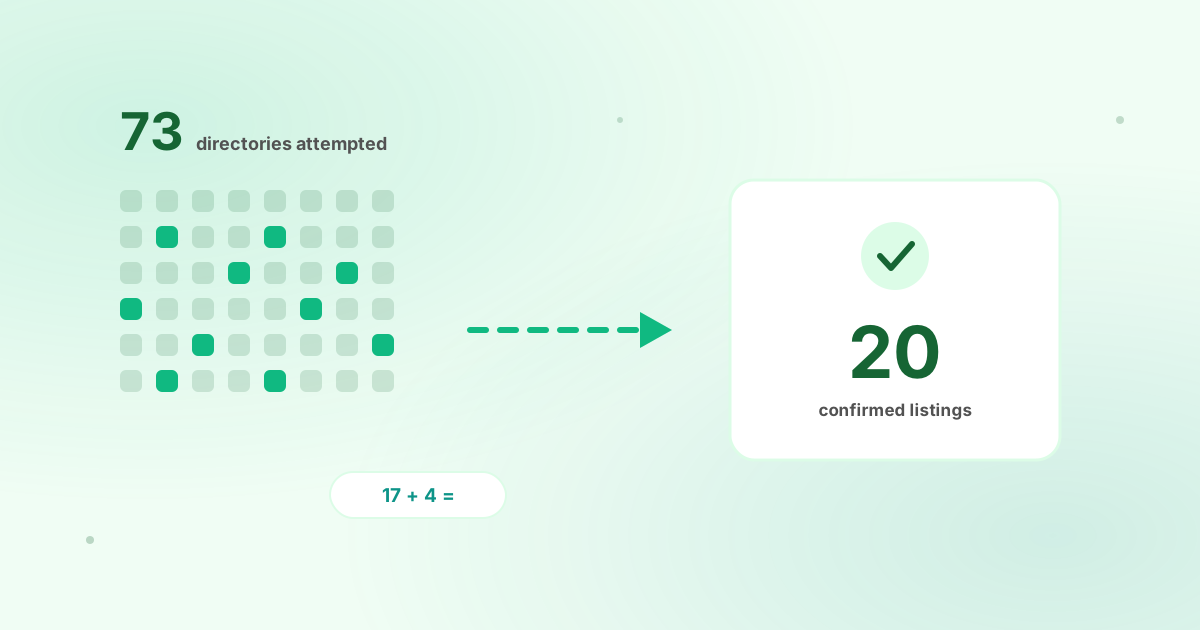
We attempted 73 directories in that session. We ended it with 20 confirmed real submissions.
Confirmed is the load-bearing word. Our bar was an explicit success signal we could verify: a confirmation message tied to the actual form, a URL change, or a live listing we could visit. "The form went away" doesn't count. You'll see why in a minute.
The spread of outcomes was wild. Viesearch, a human-edited directory older than most of the startups listed on it, published our listings the same day. Other directories dropped us into review queues measured in weeks. And a chunk failed in ways that were invisible until we went looking.
So where did the other 53 go? Roughly three buckets. A share landed in slow review queues and will surface eventually, a share rejected us or wanted payment before listing anything, and the rest died somewhere between a captcha, a broken form, and a silent trapdoor I'll get to shortly.
Before the run, we'd audited the whole target list and pre-classified every site: automatable, needs-a-human, pay-to-play, forum-style, or plain dead. Even with that homework done, the live run still surprised us at least once an hour.
The hard part of automating directory submissions isn't filling in forms. It's knowing whether a submission actually worked. The directory web is spectacularly creative at saying nothing.
The Directory Web Runs on About Three Templates
Crawl 73 submission forms and the patterns jump out fast. A big slice of "submit your site" pages are WordPress running Contact Form 7. Another slice are Webflow forms, complete with Webflow's particular loading-state quirks.
Then there's the empire: a whole family of general web directories running the same ancient PHP template, informally known as the "Site Web Directory" template. Same multi-step flow, same field names, same category dropdowns. And the same security, either a 4 to 6 digit image captcha or a math question like "17 + 4 =" sitting in a table row.
Our OCR cracked the digit captchas most of the time. Letter captchas beat it completely. Somewhere out there is a directory that will never know how close it came to receiving our submission, defended successfully by four lowercase letters in a wobbly font.
The modern end of the spectrum fought back differently. Several React-based directories hide their real inputs entirely and render styled stand-ins. The thing that looks like a checkbox is a button, the actual input is invisible, and clicking the pretty one doesn't always update the framework's state. Automating those means finding the invisible element that actually matters.
And a decent minority of "directories" turned out not to be directories anymore. Parked domains, abandoned WordPress installs with comment spam frozen in time, submission forms that post into the void. The directory web has a graveyard district, and none of the lists floating around online mark the graves.
The Silent Failures Almost Fooled Us
Here's the finding I'd tattoo on every founder's forearm. That same-template directory family silently rate-limits repeat submissions from one IP address.
We submitted Tool Index across the family, then ran Melodex from the same IP within minutes. The Melodex submissions sailed through every step. No errors, every field accepted, and nothing was actually recorded. The success message just quietly never appeared, and neither did a rejection.
An earlier version of our engine would have called that a win. It text-matched the word "success" anywhere on the page, and it once matched a link in the footer. We rebuilt the whole thing around explicit per-site success signals because of exactly this class of lie.
If you ever pay anyone for directory submissions, demand the proof links. Not a spreadsheet that says "submitted". Live URLs. Silent failure is the default state of this ecosystem, not the exception.
What the Directory Web Looks Like From the Inside
Domain strength across those 73 sites follows a brutal curve. A big chunk of the directory web sits at DR 0 to 30, with a thin crust of DR 60+ gems at the top.
That's less damning than it sounds. The long tail still gives you dofollow links, indexed pages that corroborate your product exists, and content that AI assistants crawl when they assemble answers. But it does mean volume alone isn't the goal.
Twenty real listings on living directories beat two hundred on abandoned ones.
The other quiet truth: the best directories are the ones where a human says no. Editorial review is infuriating when you're the robot's operator, and reassuring when you're deciding whether a listing means anything.
The DR 60+ gems all share that trait. A human reads your submission, sometimes days later, sometimes after a review fee. Annoying, and also precisely the moat that keeps their pages worth being on.
What You Should Do by Hand, Automate, or Pay For
Do the Big Ones by Hand
The top 10 to 15 venues deserve your actual fingers. Product Hunt, Hacker News, G2, Crunchbase, AlternativeTo, and their peers all involve editorial judgment, origin stories, or review-gathering that no robot should touch. Our tiered list of the 50 worth doing marks which ones these are.
Automate Only if It Sounds Fun
If you're technical, building a submission bot is a genuinely entertaining weekend. Once. Then you're maintaining recipes for sites that change their forms, budgeting for captchas, and writing success-detection logic for pages that lie. The engine took us days to make honest, and 73 attempts still only produced 20 confirmations.
Pay When the Hourly Math Says To
This is where I pitch, briefly, because it would be weird not to. That engine, plus a human reviewing every single result, is now our distribution service. Standard is $225 and submits your product to 50+ directories. Premium is $350 for 100+. Every order comes back with proof links, because of everything you just read.
The math is simple enough. If a weekend of your time is worth more than $225, the Standard tier pays for itself before Saturday lunch. If you're pre-revenue and cash-poor but time-rich, don't buy it. Do it by hand, which brings me to the last section.
If You Insist on Doing It by Hand
Completely reasonable, and here's how to not hate it. Build the asset kit first: three or four description lengths, a tagline, logos at two sizes, screenshots, and one canonical answer for your category. Every minute spent there saves ten downstream.
Then batch it. One sitting, one spreadsheet, columns for directory, date, status, and the eventual live URL. Use an email you actually check, because a surprising number of directories confirm by email days later.
And assume a chunk of your submissions won't stick. Ours was 20 confirmed out of 73 on day one, with the rest split between slow queues, rejections, and silent failures. Re-check everything two weeks out. That's not pessimism, that's the measured rate.
One more tip from the trenches: answer the category question the same way everywhere. Directories love asking for a category, and if you improvise a new one on every form, your listings scatter across niches. Pick your two categories once, write them into the kit, never think about it again.
What Happens After the Links Land
Slowly, then compounding. Listings go live over weeks, links get indexed, and long-tail pages start referring the occasional visitor with weirdly high intent. I wrote up the honest ROI timeline separately, because it deserves its own uncomfortable numbers.
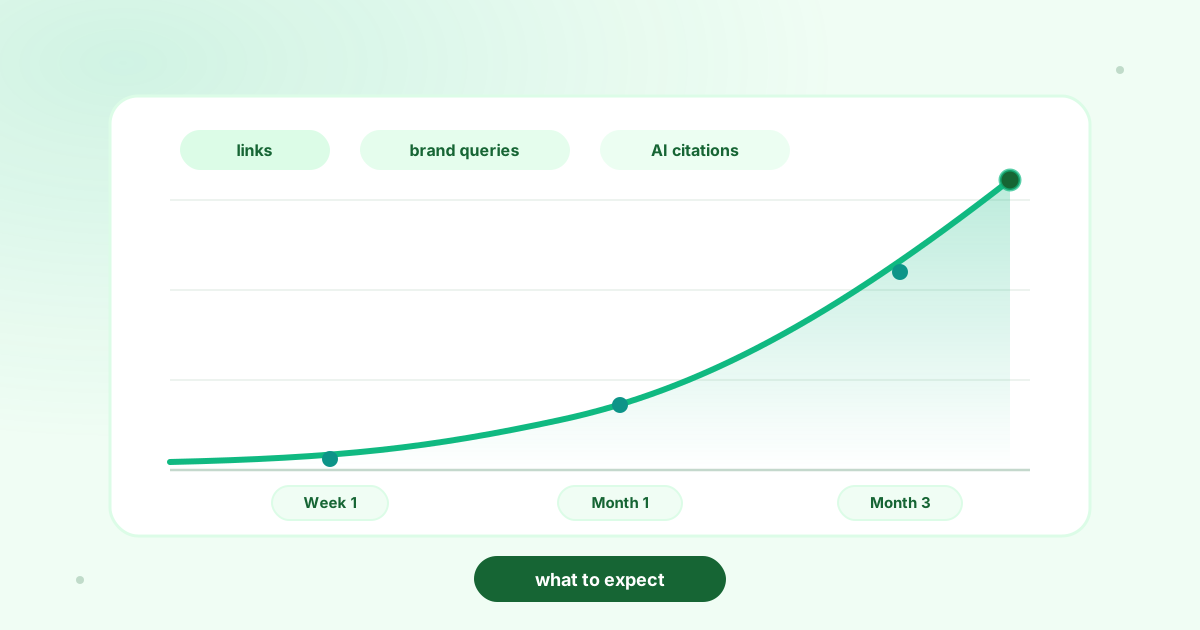
The short version: week one feels like nothing happened, month one puts a visible slope on the referring-domains chart, and month three is when brand searches and long-tail category pages quietly start paying rent.
And if you just want your product listed on this particular directory, the free listing takes about ten minutes. We'll even spare you the captcha.