The negotiation is the fun part. Two people who both want the deal, a few rounds of numbers, a handshake in a chat window.
Then someone has to go first.
Either the buyer sends money to a stranger and hopes the domain follows, or the seller hands over a repository and hopes the money follows. Every horror story about selling a small app starts right there.
What Actually Goes Wrong
Wire first, transfer later. The buyer pays, the seller gets slow. Not malicious, just slow. The registrar transfer takes a week, the repository invite goes to the wrong email, and the buyer spends that week wondering if they've been robbed. Sometimes they have.
Transfer first, pay later. The seller hands everything over, and the buyer "finds problems". The traffic was lower than claimed, the code needs work, could we do 60 percent? The seller has already given away the leverage.
Half and half. Fifty percent up front, fifty on delivery. Now both sides are exposed for half the deal and nobody is happier.
Chargebacks. A buyer pays by card, receives the assets, then disputes the charge with their bank. The seller has no product and no money. This one is more common than anyone admits.
None of these are about bad people. They're about a process with a gap in it, and gaps get filled by whoever is more comfortable being unfair.
How a Held-Funds Closing Works
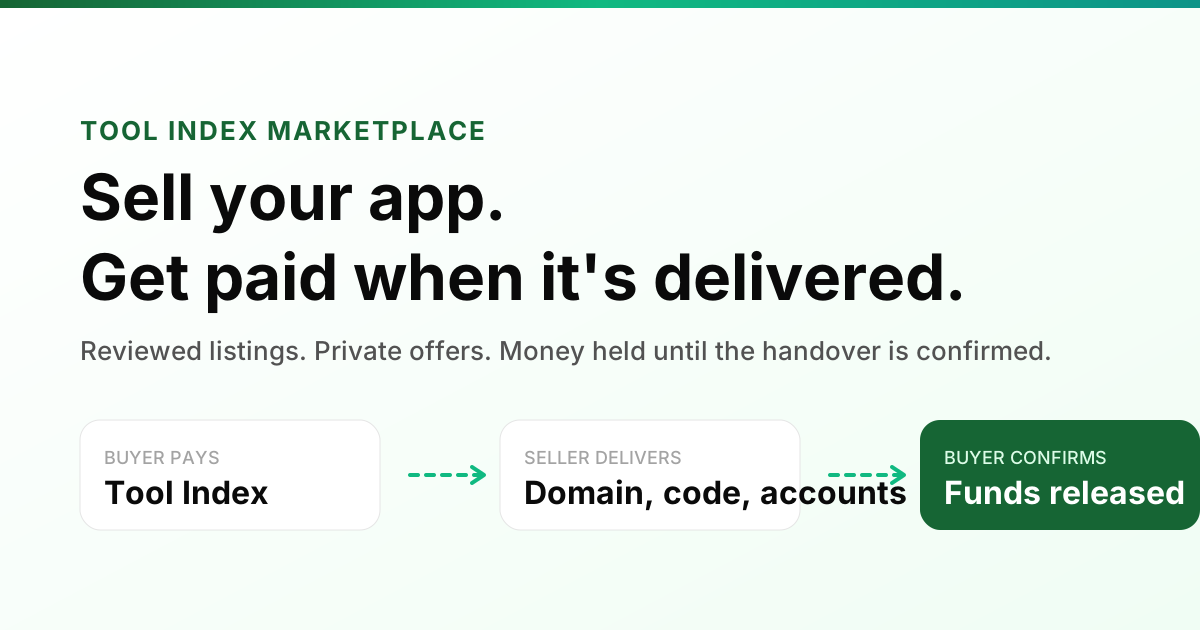
Escrow is a boring idea. A third party holds the buyer's money until the seller has delivered and the buyer has confirmed. Nobody goes first, because the money has already moved, just not to the seller yet.
Here's the exact sequence on Tool Index, where we hold the money ourselves.
1. Terms both sides can't quietly change
An offer states the price, the inspection window and the list of assets. When it's accepted, the terms get a digital fingerprint. Both parties sign that fingerprint. If anyone edits anything, the fingerprint changes and the signature stops matching. There's no "but we agreed on Slack".
2. The buyer pays us, not the seller
The buyer funds the exact agreed amount through a normal card checkout. The money lands with Tool Index. We check the payment against the deal before it counts, so a partial payment or a payment on the wrong deal doesn't unlock anything.
3. The seller delivers with a paper trail
Domains, code, accounts, whatever the terms list. The seller marks the deal delivered with a note saying what moved and how. That note is part of the record.
4. The buyer confirms inside a window
The inspection window is agreed in the offer, typically three to fourteen days. The buyer checks that the domain resolves, the repository is theirs, the app deploys. Then they accept.
5. The money is released
On acceptance the release is queued automatically and goes out within minutes, minus our fee. Every transfer carries a fixed idempotency key, which is a technical way of saying a retry can never pay twice.
What if something's missing?
The buyer opens a dispute instead of accepting. A person at Tool Index reads the delivery note, the dispute and the conversation, then either releases the funds or refunds the buyer in full. Both sides get the decision in writing. The seller can't run off with the money and the buyer can't run off with the app.
What It Costs
Our closing fee is 1 percent of the price, at least $19 and at most $199, plus the card processor's own fee. It comes out of the seller's release. The buyer pays the agreed price and not a cent more. Compare that with the 3 to 5 percent a general escrow service charges on a $20,000 deal, and the number is the smallest part of the decision anyway.
The real cost is the one you don't pay: the deal that falls through, the chargeback, the week of not knowing.
Before You Close, Do This
Write the asset list like an inventory. "Source code" is vague. "GitHub repository acme/forms, the acme.io domain at Namecheap, the Stripe account with 60 active subscriptions, the Postmark sending domain" is a checklist both sides can tick.
Agree the inspection window before the money moves. Long enough for every transfer to complete, including the slow ones like domain moves. Seven days covers most deals.
Rotate every secret after the handover. The buyer should re-issue API keys, signing certificates and OAuth apps in their own name. Shared keys are a liability for both of you.
Keep the conversation on the platform. The offer, the signatures, the delivery note and the dispute, if there is one, are all decided from that record.
The Short Version
Never go first. Get the terms fingerprinted and signed, put the money somewhere neither of you controls, deliver with a paper trail, confirm inside a window. That's the whole thing, and it's what selling on Tool Index is built around.
Not sure what your app is worth yet? Start with the valuation post, then pick the guide for your kind of product on the sell your app page.