
Dub
Open source link management platform for modern marketing teams
Gallery
About Dub
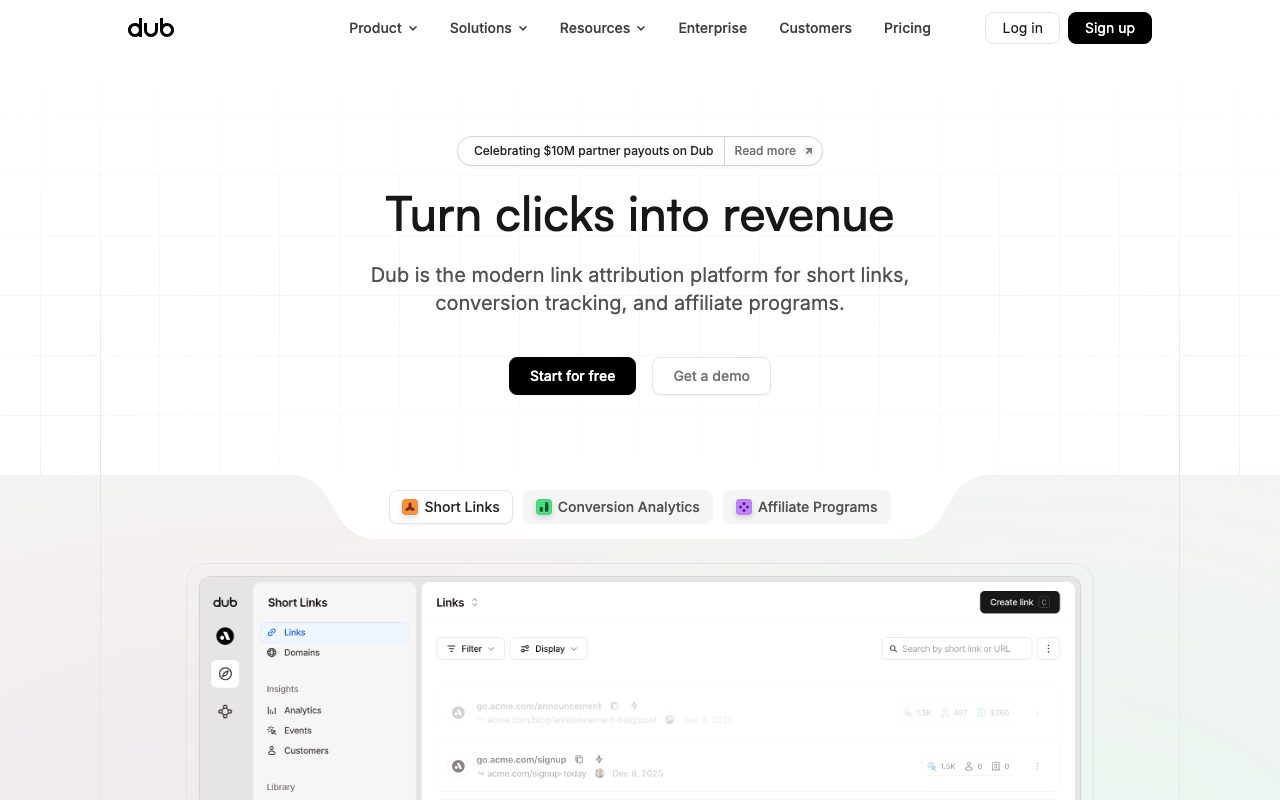
Dub is an open source link management platform with a modern UI and serious analytics. It started as an open source project from Steven Tey and grew into a full SaaS at dub.co. The product handles short links, custom domains, link previews, QR codes, and a deep analytics layer.
The pitch is simple. Bitly works, but it feels like a relic from 2010. Dub rebuilt the category for indie founders, marketing teams, and developers who care about both DX and design.
What Dub actually does
Dub creates branded short links on your custom domain. You bring a domain, point it at Dub, and start generating links with friendly slugs. Each link has its own analytics, click tracking, geo data, and device breakdown.
The platform also generates rich link previews for social media so your shared URLs show the right title, image, and description. UTM parameters can be auto-added per link, and link rotation supports A/B testing different destinations.
Who Dub is built for
Dub is built for marketers, founders, agencies, and developers who want a branded link layer. Indie SaaS teams pair it with email and social campaigns. Agencies use it to track client campaigns by domain. Developers love the API and the open source repo.
It's not really for someone who needs one link a year. The free tier handles that, but the value shows up when you're shipping links by the hundred.
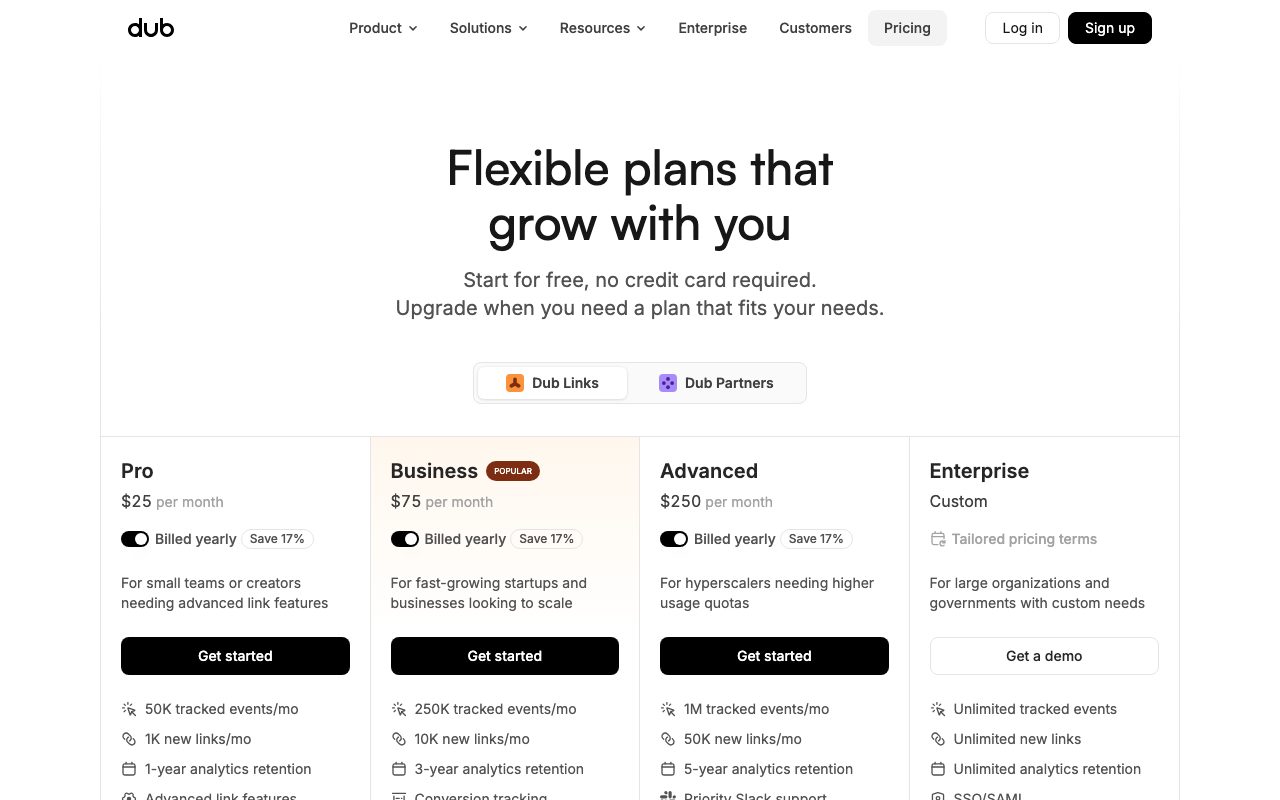
Dub pricing
Dub has a free tier for small teams with limited links and clicks. Paid plans scale up by link volume, click volume, custom domains, and seats. Business and enterprise tiers add team controls and SSO.
Pricing is straightforward and listed publicly. Compare it to Dub alternatives if you're benchmarking.
Features that define Dub
Analytics are deep. You see clicks over time, top countries, top cities, top referrers, top devices, top browsers, and even top OSes. Filters let you slice on date and link tag.
QR codes are auto generated for every short link with brand colors and logos. Link previews are configurable so you can override the OG title, description, and image.
Conversion tracking ties Dub clicks to downstream events using a tiny script. It's a real attribution layer, not just click counting. The Stripe and Shopify integrations make it easy for ecom and SaaS teams.
Dub feels like a 2026 product where Bitly feels like a 2014 one. The UI alone justifies a switch for most modern marketing teams.
Tradeoffs and rough edges
Dub is newer than Bitly, so a few enterprise-only features are still maturing. SSO, audit logs, and SCIM are tied to higher tiers. Very large enterprises occasionally still pick incumbents for the procurement story.
Self-hosting the open source version works but takes setup. If you want all the SaaS features, it's easier to pay than to run the stack yourself.
Dub vs alternatives
The classic competitor is Bitly, plus Rebrandly and Short.io. Bitly has the brand and the enterprise foothold. Rebrandly and Short.io fight in the same modern category as Dub.
Dub's edge is design, developer experience, open source roots, and built-in conversion tracking. See the best URL shorteners and Dub vs Bitly for context.
Common questions about Dub
Is Dub really open source? Yes, the core is licensed and on GitHub. The hosted SaaS adds polish and infrastructure on top.
Can I use my own domain? Yes, custom domains are a core feature, even on lower tiers.
Does Dub support team workspaces? Yes, multi-workspace and multi-user support is built in.
Bottom line on Dub
Dub is the modern link management platform Bitly should have become. It's a strong default for any team that takes branded links seriously. Browse tools for marketers for adjacent picks.
If you ship campaigns regularly, the analytics layer alone earns the spot in your stack.
Dub for marketing teams
Marketing teams use Dub to track every campaign link with a branded short URL. The deep analytics make it easy to compare channels in one dashboard. UTM consistency is enforced by tagging links from one place.
Influencer and creator partnerships work especially well with Dub. Each creator gets their own slug, and conversions tie back through Dub's tracking. That's hard to do with a plain link shortener.
Self-hosting Dub
The open source repo is on GitHub and supports self-hosting on Vercel, Docker, or your own infrastructure. Setup takes some configuration but the docs walk through every step. Self-hosting is the right move for teams with strict data residency rules.
Most users still pick the SaaS for convenience. The trade is operational time versus the monthly fee. For most marketing teams, the SaaS pays for itself within a few campaigns.
Tutorial / Demo
Key Features
- Branded short links with custom domains
- Detailed click analytics with geo and device data
- QR code generation for each link
- Conversion tracking and attribution
- Developer API for programmatic link management
- Team workspaces and collaboration
- Open source and self-hostable
Pros & Cons
What we like
- Beautiful and intuitive dashboard
- Open source with self-hosting option
- Generous free tier for small projects
- Analytics are detailed and actionable
- Developer API is well-documented
Room for improvement
- Free tier has link creation limits
- Advanced features require paid plans
- Smaller feature set than enterprise link platforms
- Self-hosting requires some setup effort
Frequently Asked Questions
Is Dub really open source?
Dub vs Bitly, what's better?
Can I use my own domain with Dub?
Does Dub have an API?
What analytics does Dub provide?
Best For
Featured in
Tags
Alternatives to Dub

Cometly
Marketing attribution for B2B SaaS that ties ad spend to pipeline and closed-won revenue

Hotjar
Behavior analytics with heatmaps, session recordings, surveys, and feedback widgets for understanding what users actually do.
Postiz
Open-source social media scheduling across 30-plus platforms with AI drafting and an MCP server

Apatero AI
The creator studio for AI image, video, audio, 3D, and avatars, now at apatero.ai.
Our take
Tool Index Editorial · May 2026· 4.3/5
Dub positions itself as open source link management platform for modern marketing teams, and on the whole it earns the framing.
What it actually does well: Beautiful and intuitive dashboard, Open source with self-hosting option, and Generous free tier for small projects. Less impressive: Free tier has link creation limits and Advanced features require paid plans.
Verdict: Dub cleanly earns its spot in the category — a smart default when you need creating branded short links for marketing campaigns.
Editorial opinion from the Tool Index team, written from the public product pages. Not a user review.
Reviews (2)
Genuinely impressed
Started using Dub casually, now it's pinned in my dock. Honestly impressed by how open source with self-hosting option. Qr code generation for each link works the way you'd hope. Mostly using it for generating QR codes for offline-to-online marketing.
The kind of tool you forget you're paying for
The pitch for Dub sounded too good to be true. Mostly true. The biggest win has been generous free tier for small projects. Branded short links with custom domains works the way you'd hope.
Badge builder
Add Dub to your website
Choose a badge style and size, preview it here, then copy the generated HTML. Badge images are self-contained SVGs and do not require an external script.

<a href="https://toolindex.net/tools/dub?ref=badge" target="_blank" rel="noopener">
  <img src="https://toolindex.net/badge/dub/medium.svg" alt="Dub - Listed on Tool Index" width="180" height="50" />
</a>How to use the badge
- 1. Pick the style, size, and theme that fit your layout.
- 2. Copy the generated HTML from the code block.
- 3. Paste it into your footer, homepage, or press page.
Standard badge available
The standard listing badge is available now. Score and circle badges are limited to tools currently ranked in the top 10 of a category.
Badge clicks return visitors to this profile with a referral tag so the source remains identifiable.
Related Tools
Apatero AI
The creator studio for AI image, video, audio, 3D, and avatars, now at apatero.ai.

SEObot
Autonomous AI SEO agent that runs your blog and link building on autopilot

Substack
Hosted newsletter and publication platform with built-in payments, recommendations, and an audience network for writers.

Sleep Suivour
Track your sleep, improve your rest
Work on Dub? Request listing access or correction