
Mubert
Generative AI engine that builds royalty-free music for video, streaming, apps, and infinite background soundtracks.
Gallery
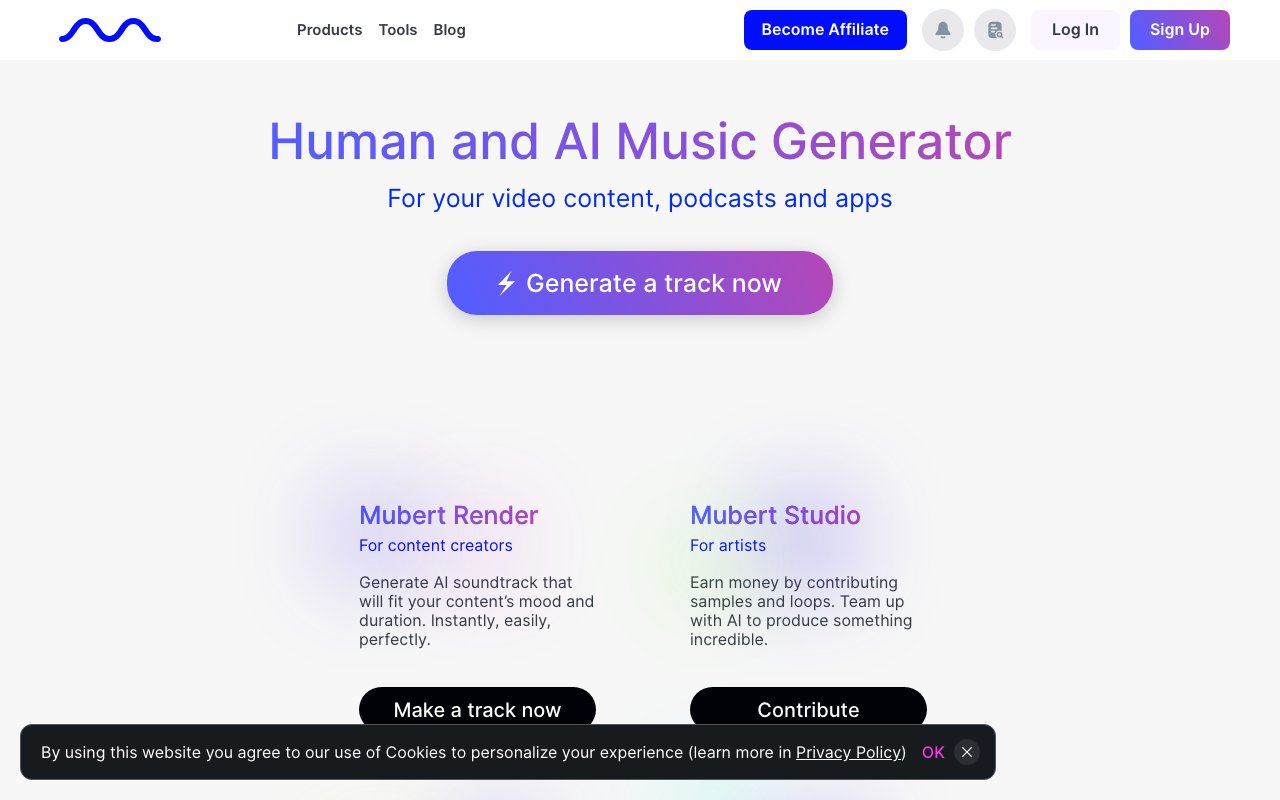
About Mubert
Mubert generates royalty free music on demand using artificial intelligence, creating original tracks the moment you click generate rather than pulling from a library of pre recorded songs. This approach solves the fundamental problem with stock music, which is that everyone using the same library ends up with the same tracks in their content. When Mubert creates a piece of music, it synthesizes something new from parameters you specify, meaning your video or stream doesn't share audio with thousands of other creators who licensed the same popular track. The uniqueness factor alone makes it valuable for creators who want their content to feel distinct rather than generic.
The generation process works through a combination of machine learning models and a catalog of samples contributed by over four thousand musicians. You specify parameters like duration, mood, genre, and intensity, and the system renders a finished track matching those criteria in seconds rather than minutes. The output isn't just a remix of existing songs but a new composition generated from the underlying patterns the AI learned during training. This makes each track technically unique while still sounding like professionally produced music with proper structure, progression, and production quality. The speed of generation means you can try multiple options quickly and pick the one that fits your project best.
Content creators represent the primary audience for Mubert, and the tool addresses their specific pain points directly. YouTubers need background music that won't trigger copyright claims or lead to demonetization after the fact. Podcasters want consistent intro and outro themes without paying composer rates. Streamers need hours of non repetitive audio that doesn't cost thousands in licensing fees or require constant track management. TikTokers and short form creators need quick access to tracks that fit specific moods without spending time searching through massive libraries. For all of these use cases, the ability to generate exactly what you need in seconds eliminates the research and licensing friction that makes stock music libraries tedious to work with.
The platform offers multiple output formats beyond simple background tracks, covering different production needs. You can generate loops for video editors who need seamless repeating sections that maintain continuity across cuts. Mixes provide longer form audio suitable for extended content like podcasts, live streams, or documentary sequences. Jingles target advertising and branding use cases where you need something short, memorable, and distinctive. This variety means Mubert covers the full range of audio needs across creative projects rather than forcing you to use different tools for different formats or content lengths. The flexibility reduces the number of subscriptions and tools creators need to manage.
Licensing is built into the platform rather than requiring separate negotiation or legal review. Every track you generate comes with commercial use rights, covering scenarios like YouTube monetization, advertising, video games, and retail environments. The specifics vary by subscription tier, but the core premise is that anything you download is cleared for the uses content creators actually need. This avoids the complex rights situations that come with licensed music, where a track might be cleared for some uses but not others, or where rights holders can retroactively change terms and leave you scrambling to replace audio in published content. The licensing simplicity is a genuine operational advantage for anyone producing content at volume.
Mubert also operates a creator side program through Mubert Studio, where musicians contribute samples and earn revenue when their sounds are used in generated tracks. This creates a sustainable model where the AI generation benefits from human musicianship while providing ongoing income to contributing artists. The economic arrangement addresses one of the common criticisms of AI music generation, that it extracts value from musicians without fair compensation. Whether the revenue share is adequate is debatable, but the structure at least acknowledges that human creativity underlies the system's outputs and attempts to compensate contributors rather than just training on their work without consent.
The pricing structure offers free access with limitations and paid subscriptions removing those restrictions for serious users. Free tier users can download a limited number of tracks monthly with attribution requirements. Paid subscriptions provide unlimited generation and downloads with full commercial licensing and no attribution obligations. Single track purchases are available for users who need occasional audio without ongoing subscriptions. The free tier is functional enough for testing the system and occasional use, while serious content creators will hit the limits quickly enough to justify subscription costs. For creators currently spending money on stock music libraries, Mubert often represents a cost reduction while providing better fit for specific content needs and eliminating the problem of shared tracks across competitors.
Key Features
- Text-to-music generation by mood, genre, and duration
- Royalty-free license covering web, broadcast, app, and ad use
- Mubert API for real-time music generation inside apps and games
- Mubert Studio marketplace where contributing artists earn royalties
- Mubert Play infinite AI streams across 200+ moods and themes
- Platform-specific checkers for YouTube, TikTok, Twitch, and Instagram
Pros & Cons
What we like
- Generates usable tracks in seconds with simple mood and genre controls
- Clear royalty-free licensing safe for monetized content and ads
- Free Ambassador tier plus single-track perpetual licenses with no subscription
- Developer API makes it easy to embed adaptive music in products
Room for improvement
- Tracks cannot be published to Spotify, Apple Music, or stock libraries
- Generated music cannot be registered with Content ID systems
- Free plan is non-commercial and requires visible Mubert attribution
- Sample-stitching approach gives less fine control than full song models
Frequently Asked Questions
What is Mubert?
How much does Mubert cost?
Who is Mubert for?
Is Mubert music royalty free?
Best For
Featured in
Alternatives to Mubert
View all
Beatoven.ai
Mood-based royalty-free AI background music for videos, podcasts, games, and ads, built from text prompts

Soundraw
AI music generator that builds royalty-free, fully customizable songs from a mood and genre in seconds

Loudly
Berlin-based AI music platform for generating, customizing, and distributing 100% royalty-free tracks

Stable Audio
Stability AI's text-to-audio model for generating original music and sound effects from a written prompt
Reviews (7)
Two months in, no regrets
Have been running Mubert for a while, here is where I land. It just works, day after day, without surprises.
Two months in, no regrets
Started using Mubert casually, now it is pinned in my dock. What stands out is how it handles mubert api for real-time music generation inside apps and games. The output quality holds up better than I expected. Would sign up again without thinking twice.
Genuinely impressed
Found Mubert on a Reddit thread and I am glad I clicked. Got real value out of developer api makes it easy to embed adaptive music in products. Recommending it to people in a similar spot.
Exactly what I needed
Tried Mubert on a side project first, then rolled it out everywhere. The thing I keep coming back to is how reliable it is. Nothing flashy, it simply pulls its weight every day.
Best decision this quarter
Came to Mubert after getting frustrated with what I had before. It handles the boring parts so I can focus on the work that matters. Nothing flashy, it simply pulls its weight every day. Would sign up again without thinking twice.
Decent with some rough edges
Mubert has quietly become part of my daily flow. What stands out is how little babysitting it needs. It has been a fit for embedding adaptive, real-time music in games and apps via the api. It would be a five if not for free plan is non-commercial and requires visible mubert attribution. Would sign up again without thinking twice.
Pulled its weight from week one
Have been running Mubert for a while, here is where I land. Real selling point for me was generates usable tracks in seconds with simple mood and genre controls. It fits well for scoring youtube, tiktok, and reels videos without copyright risk. Hard to imagine going back to my old setup.
Badge builder
Add Mubert to your website
Choose a badge style and size, preview it here, then copy the generated HTML. Badge images are self-contained SVGs and do not require an external script.

<a href="https://toolindex.net/tools/mubert?ref=badge" target="_blank" rel="noopener">
  <img src="https://toolindex.net/badge/mubert/medium.svg" alt="Mubert - Listed on Tool Index" width="180" height="50" />
</a>How to use the badge
- 1. Pick the style, size, and theme that fit your layout.
- 2. Copy the generated HTML from the code block.
- 3. Paste it into your footer, homepage, or press page.
Score badge available
Mubert qualifies for the score and circle badges based on its current top-10 positionin AI Music Generators.
Badge clicks return visitors to this profile with a referral tag so the source remains identifiable.
Related Tools
Soundraw
AI music generator that builds royalty-free, fully customizable songs from a mood and genre in seconds
Stable Audio
Stability AI's text-to-audio model for generating original music and sound effects from a written prompt

Suno
Generate full songs from a prompt, including vocals, lyrics, and all.

Boomy
Make original AI songs in seconds and distribute them to Spotify, Apple Music, and 40+ streaming platforms
Work on Mubert? Request listing access or correction