
Shopify
Hosted commerce platform for storefronts of every size
Gallery

About Shopify
Shopify is the e-commerce platform that powers somewhere around 10% of online stores in the world. It runs everything from the smallest one-product Instagram brand to enormous direct-to-consumer companies doing nine figures. Shopify is not a tool, it is infrastructure for selling things online.
If you are reading a description of Shopify, you probably already know what it is. The interesting question is whether it is right for your specific store. The answer is "almost certainly," with a few real cases where it is not.
I have built Shopify stores for clients and run my own. The honest take follows.
What Shopify does
Shopify is a hosted e-commerce platform. You sign up, pick a theme, add products, configure payments and shipping, and your store is live. The basic flow that takes weeks on a self-hosted stack takes a Saturday on Shopify.
Underneath the simple onboarding is a deep platform. Inventory management, multi-channel sales (online store, social channels, marketplaces, retail POS), tax compliance, fulfillment integration, and analytics are all in the box.
The app store extends almost everything. Need subscriptions, advanced shipping rules, headless storefronts, B2B portals, abandoned cart recovery, or AI product descriptions? There is an app for it, often several.
Shopify Plus is the enterprise tier with higher limits, B2B features, custom checkout, and account management. The platform scales from "side hustle" to "Allbirds-sized brand" without re-platforming.
Who Shopify is for
Almost anyone selling physical or digital products online. The ideal user starts at "I have a product and want to sell it" and goes up to "we are a hundred-person retail brand." The platform meets you where you are.
It is less of a fit for businesses that need extreme custom checkout flows on the standard tier, marketplaces with seller-side tools (Shopify is single-vendor by default), or specific verticals where another platform is better-suited (some adult content categories, some regulated goods, some B2B-heavy flows).
Pricing
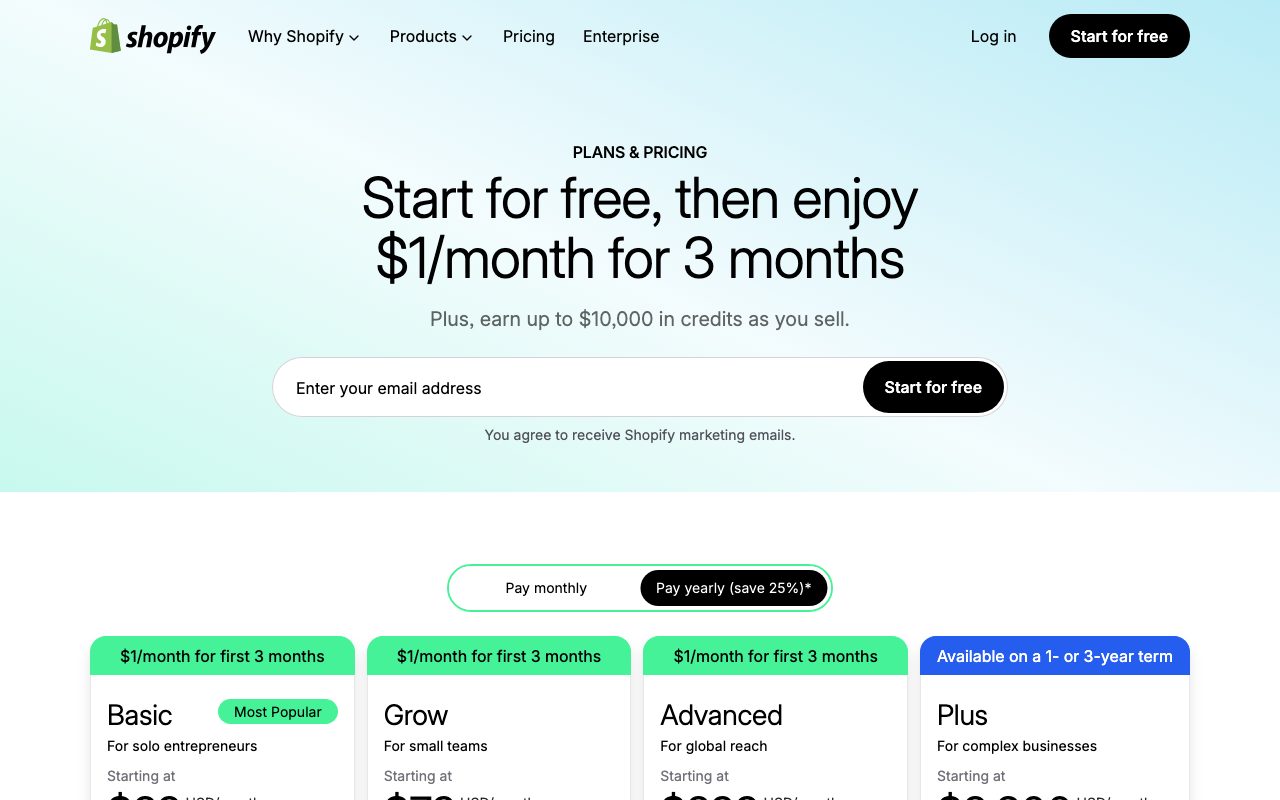
Plans go from Basic Shopify (around 39 dollars) to Shopify, Advanced Shopify, and Plus. Higher tiers reduce the per-transaction fee on Shopify Payments, add staff seats, and unlock more reporting depth.
Payment processing fees apply on top, which is true everywhere. If you use a third-party processor instead of Shopify Payments, additional fees apply, which is the platform's nudge toward its own payment rail.
Apps from the App Store add their own monthly costs. A growing store often runs five to ten apps; budget for that.
Features that earn the dominance
The checkout is the single most-tested checkout on the internet. Conversion rates are usually higher than custom-built alternatives, and the Shop Pay feature (one-tap checkout for returning customers) is a real conversion lift on its own.
The theme system is robust. Free themes are good; the Theme Store has hundreds of paid themes. Liquid is the templating language, and developers can customize freely. Online Store 2.0 made theme structure modular and editor-friendly for non-technical operators.
Inventory and shipping cover almost every common scenario. Multi-location inventory, real-time carrier rates, label printing, and integrations with the major 3PLs are first-class.
The headless option (Hydrogen plus Oxygen, or any other frontend with the Storefront API) lets you build a custom front-end while keeping Shopify's commerce engine. This is what bigger brands choose when their design team wants full control.
Reporting and analytics cover sales, customers, inventory, and traffic. They are not the deepest analytics in the world; integrate with a real BI tool for serious analysis.
Tradeoffs
Transaction fees on third-party payment gateways are the most disliked aspect. If you cannot use Shopify Payments (some industries cannot), the math gets uncomfortable on higher tiers.
The app store can be expensive. Each useful feature is often an app, and "free trial then 29 dollars a month" patterns add up. Audit your apps quarterly.
You do not own the platform. Shopify makes the rules; you live in them. For 99% of stores this is fine. For some specialty categories or businesses requiring deep customization, it is a cap.
Shopify is the path of least resistance for selling online, and the path of least resistance is correct most of the time. Use it unless you have a specific reason not to.
Shopify vs alternatives
Versus WooCommerce, Shopify is hosted and lower-maintenance; WooCommerce is self-hosted on WordPress and more flexible. Pick Shopify if you want to focus on selling, not on hosting.
Versus BigCommerce, Shopify is more popular and has a larger app ecosystem; BigCommerce is competitive on built-in features without app-store sprawl.
Versus Squarespace and Wix, Shopify is more commerce-first; the website builders are more brochure-first with commerce attached.
Versus headless commerce platforms (commercetools, Saleor), Shopify Plus is the practical headless answer for most brands.
See best ecommerce platforms, WooCommerce alternatives, and Shopify vs WooCommerce.
Common questions
Does Shopify charge transaction fees? Yes, with Shopify Payments waiving the platform fee. Can I use my own domain? Yes. Does Shopify handle taxes? Yes, with built-in tax calculation in many regions. Can I sell digital products? Yes, with apps. Is Shopify good for dropshipping? Yes, with integrations like DSers.
Bottom line
Shopify is the default e-commerce platform for a reason. It is not the cheapest, the most flexible, or the most ownership-friendly. It is the most likely to get your store running profitably with the least drama. For most online sellers, that is exactly the trade.
If you are picking an e-commerce platform in 2026, the burden of proof is on the alternatives. Browse tools for ecommerce and the Shopify profile for current details.
Shopify ops, day to day
Order management: orders flow into the admin in real time. Print packing slips, generate shipping labels, mark fulfilled. For most stores this is the daily ritual.
Inventory: stock levels update as orders ship. Multi-location inventory routes orders to the right warehouse. Low-stock alerts fire when you set them.
Customer service: orders, refunds, exchanges, customer notes all live in one place. The customer record is the source of truth.
Marketing: email through Shopify Email or Klaviyo, ads through Meta and Google integrations, abandoned cart through built-in flows or Klaviyo. The integration density is the platform's network effect.
The Shopify app stack to know
Klaviyo for email and SMS. The integration is deep enough to be a default for serious stores.
Loox or Yotpo for product reviews. Reviews increase conversion; the apps automate the request flow.
Recharge for subscriptions if your business is subscription-based. Shopify's native subscriptions are improving and not as feature-rich as Recharge for complex cases.
Shogun or PageFly for landing pages with custom layouts. The Shopify theme system is powerful; sometimes you want a different abstraction.
Going headless
Hydrogen plus Oxygen is Shopify's official headless framework, built on React. The storefront API powers it; you keep all the commerce backend benefits and own the frontend.
Going headless is a real engineering investment. Most stores do not need it. The brands that benefit are the ones with strong design teams and a need for differentiated experience.
Migration to Shopify
From WooCommerce: products, customers, and order history can migrate via export-import. Themes do not transfer; rebuild.
From BigCommerce: similar story. Data migrates; design rebuilds.
From custom builds: case-by-case. Plan a real migration project.
Most agencies do Shopify migrations as a paid project. Budget for it.
Shopify for specific verticals
Direct-to-consumer brands: Shopify is the obvious default. Apps cover subscriptions, reviews, loyalty, the lot.
B2B: Shopify Plus has a B2B feature set with company accounts, payment terms, and price lists. The standard tiers can be retrofitted with apps.
Service businesses: Shopify works for service bookings with apps; not the strongest fit. Use Cal.com or category-specific tools.
Digital products: built-in support is fine. Apps cover advanced licensing, watermarking, and download protection.
Print-on-demand: integrations with Printful, Printify, and others are first-class. Drop-ship without inventory.
Shopify performance optimization
Theme speed matters for SEO and conversion. Lighthouse the storefront; fix the slowest issues first.
App count affects performance. Each app injects scripts; audit and remove what is not earning its load time.
CDN and image optimization are mostly automatic. Larger images on heavy templates still slow the site; compress before upload.
Headless storefront wins on speed when done right. The investment is large; the payoff for big brands is real.
Shopify financial integrations
QuickBooks, Xero, FreshBooks all have Shopify connectors. Sync orders, refunds, and tax data into the books.
Stripe and Shop Pay are first-class for payments. Other gateways exist with surcharge.
Multi-currency selling is supported with regional pricing. Real complexity sits in tax compliance per region; Avalara and TaxJar integrate.
Shopify and the future of retail
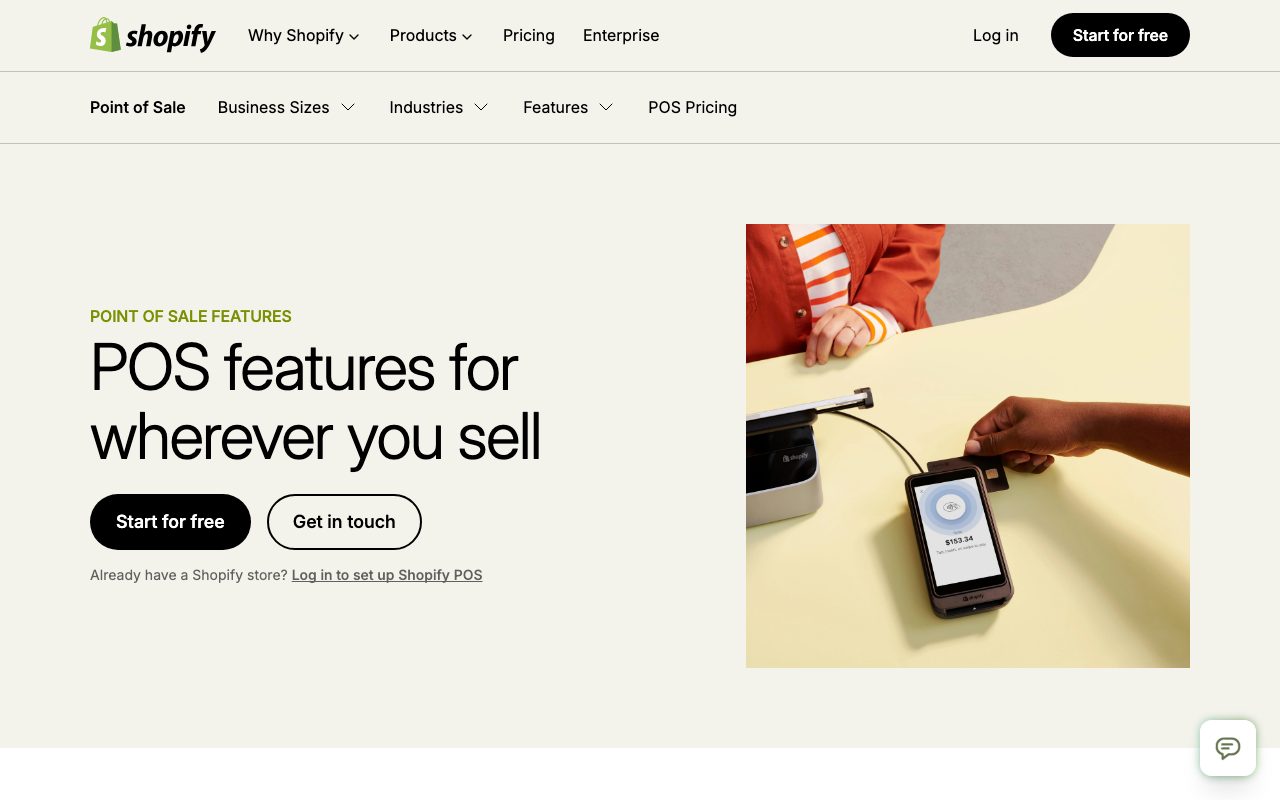
POS integration unifies online and in-store. Inventory across channels stays consistent.
Shop app pulls customers into a discovery surface. Some brands see real traffic; others see noise.
AI features are growing: Sidekick assists merchants, Magic generates copy and images, AI-driven search improves discovery.
The platform's direction is clear: more built-in capability, more network effects, more entrenchment as commerce infrastructure.
Shopify alternatives recap
WooCommerce: self-hosted, flexible, more maintenance.
BigCommerce: hosted, fewer apps but more built-in features.
Squarespace and Wix: simpler, more brochure-first.
Headless commerce platforms: deeper customization, higher engineering investment.
Shopify wins on default; alternatives win on specific tradeoffs.
Tutorial / Demo
Key Features
- Hosted storefronts with themes and customization
- Checkout that includes Shop Pay one-click
- Inventory, orders, and fulfillment
- Payments via Shopify Payments or third parties
- App store with thousands of integrations
- Multichannel selling on social and marketplaces
Pros & Cons
What we like
- Fastest path to a working DTC store
- Massive ecosystem of apps, themes, and agencies
- Battle-tested at huge scale
Room for improvement
- Per-transaction fees if you don't use Shopify Payments
- App costs add up quickly
- Custom checkout customization is gated to Plus
Frequently Asked Questions
How much does Shopify cost?
Shopify vs WooCommerce, which is better?
Does Shopify charge transaction fees?
Can I migrate off Shopify?
Are Shopify themes free?
Best For
Featured in
Tags
Alternatives to Shopify
View all
BigCommerce
Open-architecture e-commerce platform for mid-market and B2B brands

Supliful
Private-label dropshipping for supplements, skincare, coffee, and pet products with no inventory

Webflow
Visual website builder that produces clean, semantic HTML and CSS, with a CMS, e-commerce, and a Webflow-hosted CDN.

Kajabi
All-in-one platform for selling online courses, memberships, and coaching
Our take
Tool Index Editorial · May 2026· 4.8/5
If you're evaluating Shopify, the headline is simple: hosted commerce platform for storefronts of every size, and most teams will get value out of the box.
What it actually does well: Fastest path to a working DTC store, Massive ecosystem of apps, themes, and agencies, and Battle-tested at huge scale. Where it stumbles: Per-transaction fees if you don't use Shopify Payments and App costs add up quickly.
Bottom line: pick Shopify when you need dTC founders launching a first store; look elsewhere if per-transaction fees if you don't use Shopify Payments would be a dealbreaker.
Editorial opinion from the Tool Index team, written from the public product pages. Not a user review.
Reviews (8)
Worth the price of admission
First impression of Shopify was 'huh, this is actually thought through.' Honestly impressed by how battle-tested at huge scale. Got real value out of multichannel selling on social and marketplaces. Easy yes for anyone weighing the same trade-offs.
Pros
- Battle-tested at huge scale
Genuinely impressed
Took a few weeks for Shopify to click, then it stuck. What stands out is how fastest path to a working DTC store. Worth calling out the multichannel selling on social and marketplaces too. It fits well for wholesale and B2B add-ons via Shopify Plus. Hard to imagine going back to my previous setup.
Pros
- Fastest path to a working DTC store
- Massive ecosystem of apps, themes, and agencies
- Battle-tested at huge scale
Solid product, even better support
The pitch for Shopify sounded too good to be true. Mostly true. Where it really wins is massive ecosystem of apps, themes, and agencies. Main use case: established brands consolidating onto a single commerce stack. Not perfect: app costs add up quickly. Easy yes for anyone weighing the same trade-offs.
Pros
- Fastest path to a working DTC store
- Battle-tested at huge scale
Cons
- App costs add up quickly
- Per-transaction fees if you don't use Shopify Payments
Best decision this quarter
Skeptical at first because Shopify looked too simple. It's not. The thing I keep coming back to: fastest path to a working DTC store. Found it works best for established brands consolidating onto a single commerce stack. Still recommending it to people in similar setups.
Recommended without reservation
Got Shopify on the recommendation of someone I trust. The thing I keep coming back to: battle-tested at huge scale. Got real value out of multichannel selling on social and marketplaces. Glad I made the switch.
Pros
- Fastest path to a working DTC store
Hit the Shopify sweet spot
Shopify is one of those tools you stop noticing because it just works. Honestly impressed by how massive ecosystem of apps, themes, and agencies. Worth calling out the payments via Shopify Payments or third parties too. Mostly using it for established brands consolidating onto a single commerce stack. Still recommending it to people in similar setups.
Maybe in a year when they fix the basics
Tried Shopify on a side project first. What stands out is how massive ecosystem of apps, themes, and agencies. It would be a 5 if not for custom checkout customization is gated to Plus. Probably better for someone with different needs.
Pros
- Massive ecosystem of apps, themes, and agencies
- Battle-tested at huge scale
- Fastest path to a working DTC store
Cons
- Per-transaction fees if you don't use Shopify Payments
- Custom checkout customization is gated to Plus
Two months in, no regrets
Shopify is one of those tools you stop noticing because it just works. Honestly impressed by how massive ecosystem of apps, themes, and agencies. The payments via Shopify Payments or third parties is more useful than I expected. Sticking with Shopify.
Pros
- Massive ecosystem of apps, themes, and agencies
- Battle-tested at huge scale
Badge builder
Add Shopify to your website
Choose a badge style and size, preview it here, then copy the generated HTML. Badge images are self-contained SVGs and do not require an external script.

<a href="https://toolindex.net/tools/shopify?ref=badge" target="_blank" rel="noopener">
  <img src="https://toolindex.net/badge/shopify/medium.svg" alt="Shopify - Listed on Tool Index" width="180" height="50" />
</a>How to use the badge
- 1. Pick the style, size, and theme that fit your layout.
- 2. Copy the generated HTML from the code block.
- 3. Paste it into your footer, homepage, or press page.
Score badge available
Shopify qualifies for the score and circle badges based on its current top-10 positionin E-commerce.
Badge clicks return visitors to this profile with a referral tag so the source remains identifiable.
Related Tools

Stripe
Payment infrastructure for the internet

Klaviyo
Email and SMS platform purpose-built for ecommerce, with deep Shopify integration and revenue-attributed flows.

Chancey
Shopify app for selling gacha-style blind boxes with real inventory and transparent odds
Kajabi
All-in-one platform for selling online courses, memberships, and coaching
Work on Shopify? Request listing access or correction