Sponsored editorial review. IndieTools purchased Tool Index's Launch Bundle, which includes this article and a separate seven-day featured placement on Tool Index. Payment covers the work and placement; it does not purchase a favorable verdict, an organic ranking, or a traffic guarantee. Links to IndieTools in this article are qualified as sponsored.
Review scope: We inspected IndieTools' public website in a desktop browser on September 5, 2026. We browsed the catalogue, ran a product search, opened product and technology pages, read the public feed, examined pricing, and followed the submission entry point to its sign-in screen. We did not create an account, submit a product, purchase an IndieTools plan, use private messaging, or access a campaign dashboard. Screenshots below show the actual public interface from that visit.
IndieTools makes its strongest case as a place to give an independent product a durable, understandable public presence. A visitor can move from a short product card to a fuller explanation, see the person associated with it, and explore related products or a declared technology stack. For a founder, that offers a useful starting point: a listing can explain what you built without requiring someone to reconstruct it from scattered social posts.
Our assessment is that the free listing is the sensible first step for a founder whose product fits the directory. The paid visibility option deserves a separate, measurable decision after that listing is ready. The public experience is usable and more informative than a page of names and logos, but our visit does not establish the size of the buying audience or the returns an individual campaign would produce.
What IndieTools is built to do
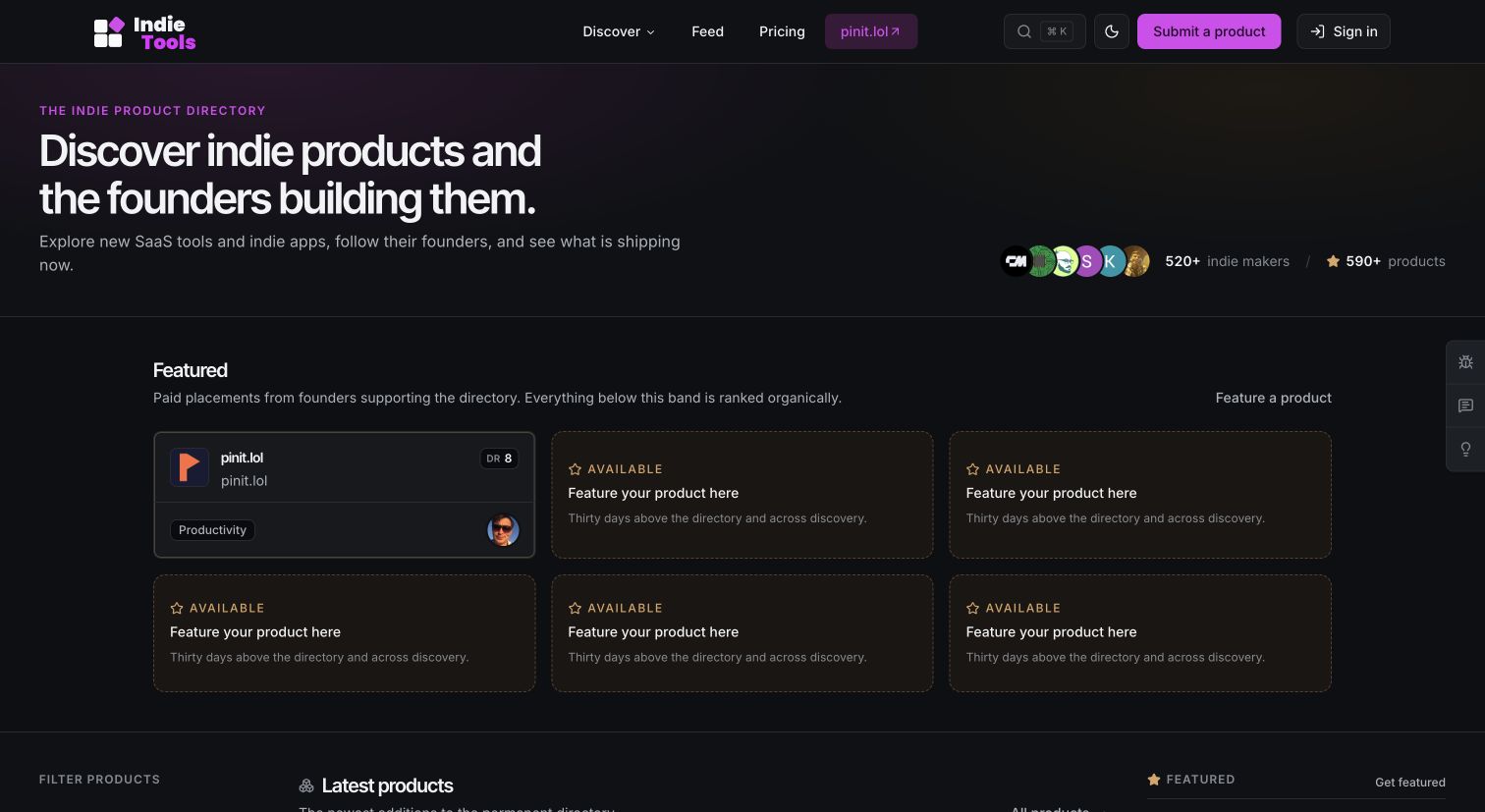
IndieTools brings together a software catalogue and a public view of the founders behind its entries. The useful distinction is the connection between those two things. A product has a page, while a founder can have a separate identity connected to what they build. That makes the directory relevant both to someone looking for software and to a maker trying to make their work easier to discover.
The site describes its audience as independent founders, small teams, and people interested in their products. Its submission guidance includes SaaS, apps, developer tools, courses, and other digital products, with a requirement that the product be publicly usable enough to evaluate. This is a natural fit for a small software business with a working website and a clear use case. An idea with an inaccessible landing page has less to offer a reader, and the published guidance makes that distinction explicit. See the submission requirements.
For someone choosing software, the directory is best used to create a shortlist. A good listing can make a product worth investigating, but the next step should still be the product's own documentation, pricing, and trial where available. Our review evaluates the directory experience, not the quality or security of every product it contains.
A catalogue that is easy to scan
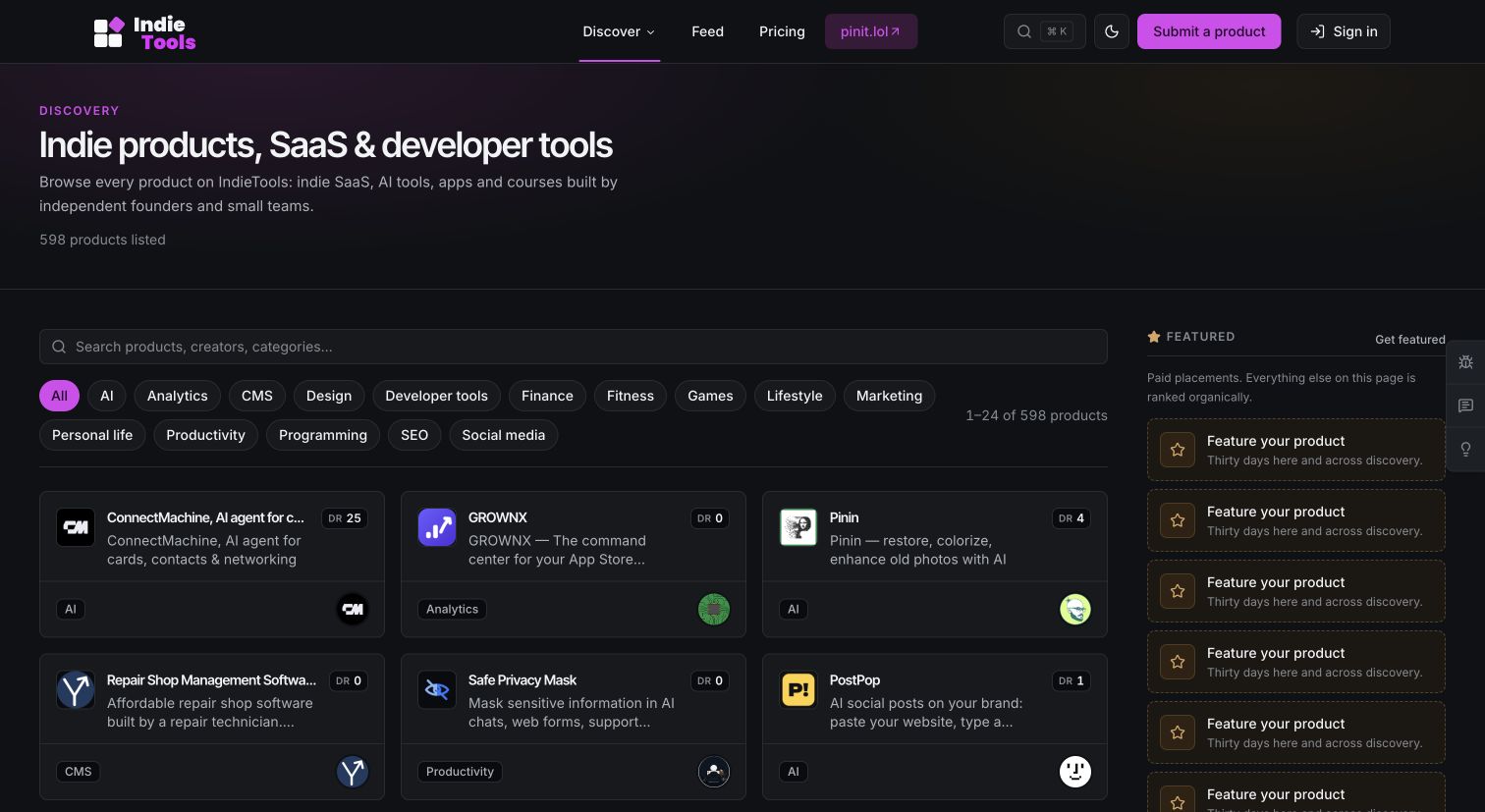
The product catalogue showed a search box, category choices, a result count, and a paginated grid. Cards combined the product name and short explanation with category and founder links. That is a useful amount of information for initial browsing: enough to distinguish several products without opening every page, while keeping the card compact.
The catalogue displayed 598 products during our visit. Treat that as a dated observation of the site's own catalogue counter, not a measure of visitors, customers, or active founders. Some public pages and cached search results showed different counts, so a live counter should not be turned into a permanent audience claim. The practical question is whether the relevant category contains products you can actually evaluate.
From a reader's perspective, the clearest benefit is reduced switching. You can scan names, explanations, and categories in one view, then open a promising entry for details. From a founder's perspective, that also makes concise copy important. If a short description only says the product is revolutionary, it wastes the part of the card that should explain the problem solved.
What our search check actually showed
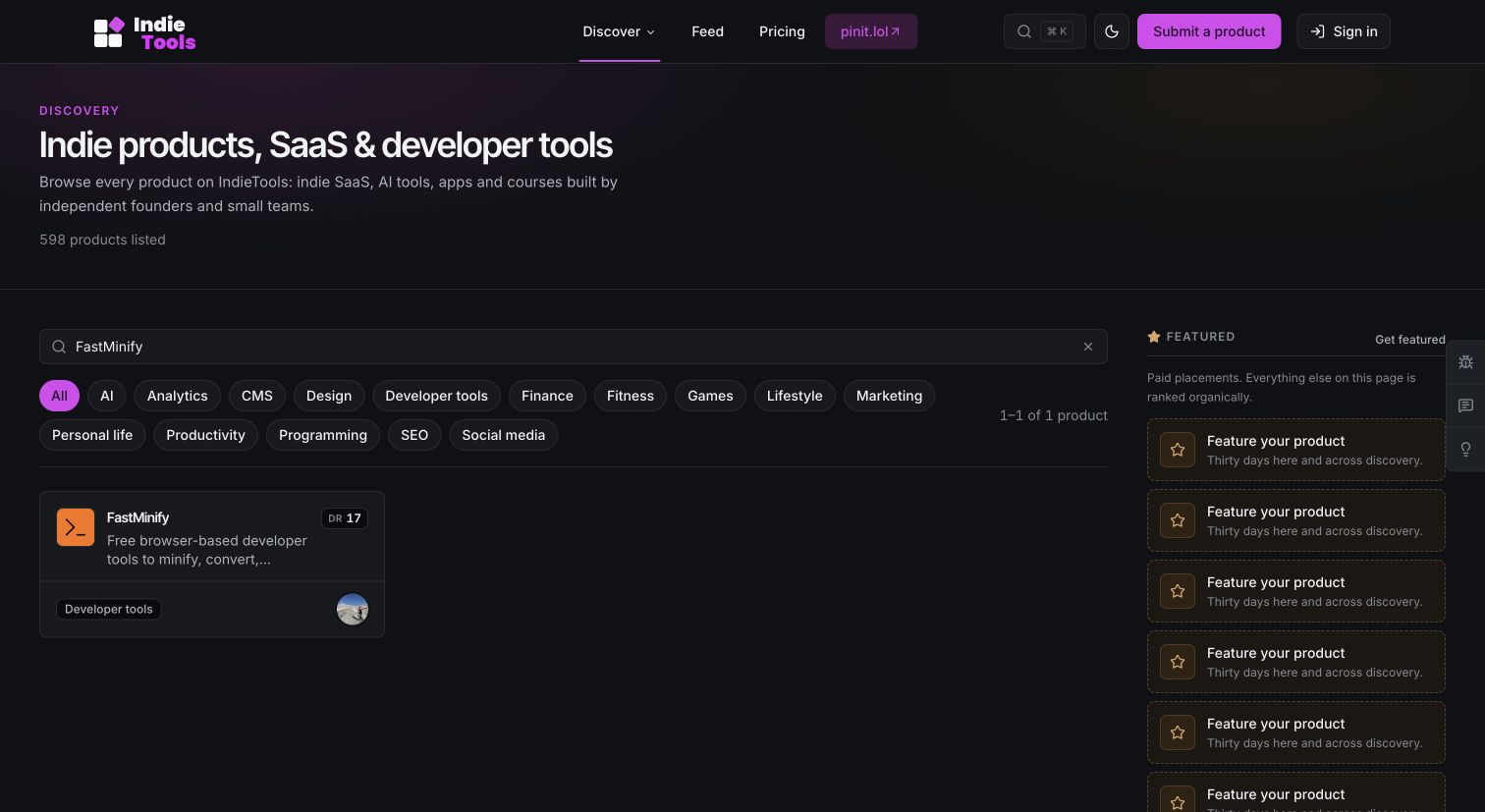
We entered FastMinify, a product already visible in the catalogue, into the search field. After the results updated, the page showed one matching product and the query appeared in the URL. Opening that result led to its public product page. That confirms a straightforward discovery path worked in the session: search for a known name, identify the result, and inspect its details.
This was a narrow functional check. We did not benchmark typo tolerance, large query sets, response times, or recommendation quality. A founder should therefore read the result as evidence of a working basic search path, not a claim that every buyer will find every relevant product. For your own listing, a useful follow-up is to check both its exact name and the plain-language problem it solves once it is published.
The query URL is also convenient when returning to a search or showing someone what you found. That small detail matters in an exploratory workflow: discovery often happens over several visits, rather than in a single uninterrupted browsing session. Our observed result is available at the FastMinify search page, although the catalogue can change.
Product pages add context beyond a link
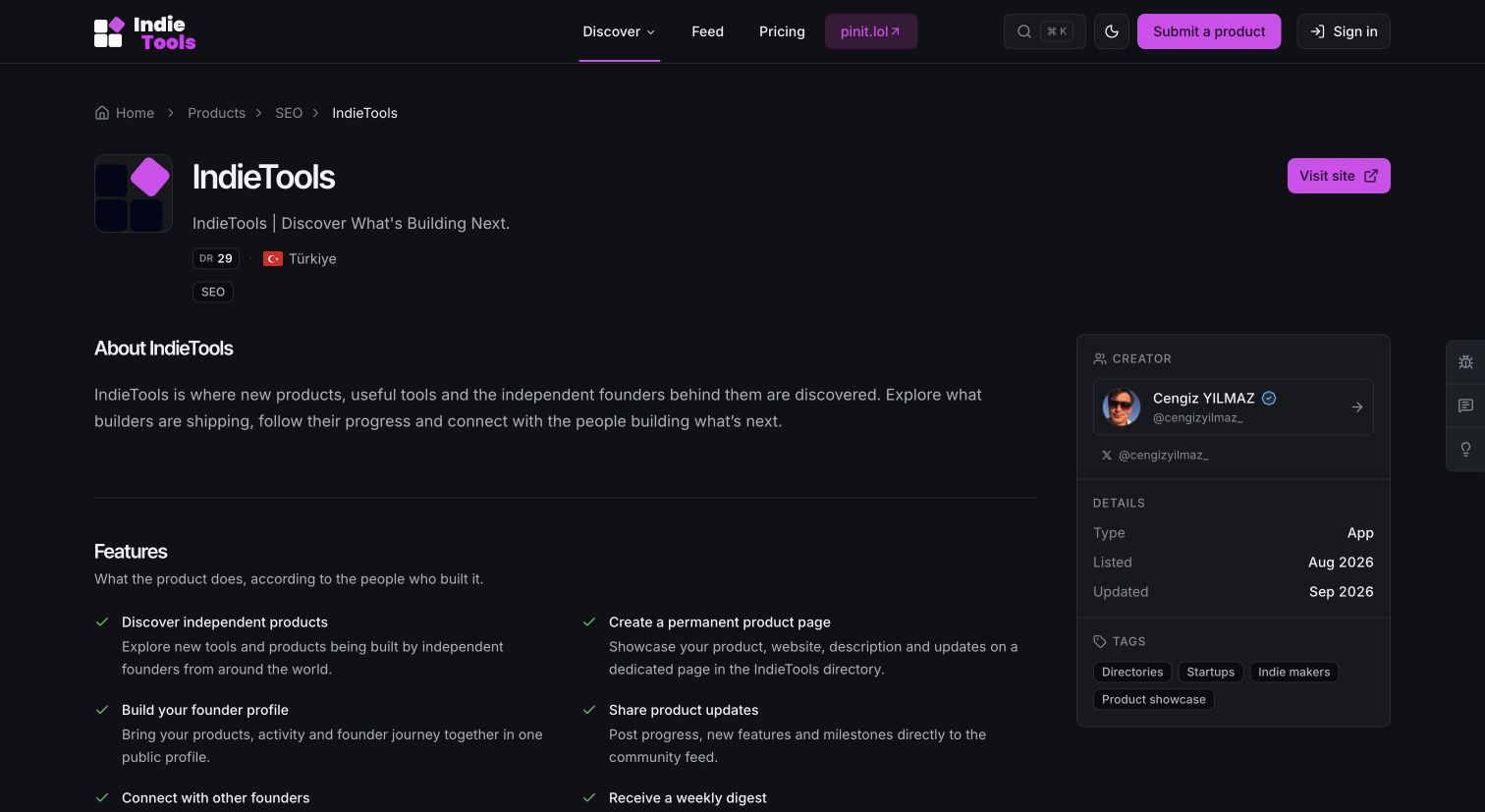
The FastMinify profile we opened included a longer explanation, a visit-site link, category, creator information, dates, tags, declared technology, and a screenshot section. We are describing those page elements, not independently endorsing the listed product's performance or privacy claims.
IndieTools' own profile demonstrates another layout variation, including feature descriptions and a linked release update. These fields help a reader ask more useful questions before leaving the directory. What does the product do? Who is connected to it? Is there a screenshot that explains the workflow? Has the maker described a recent change? A listing becomes more useful when those questions have concrete answers.
We also appreciated that the interface identifies some details as founder-provided. A declared stack or growth channel tells you what the maker recorded; it is not the same as an independent technical audit. Likewise, the visible verified-founder tooltip described an approved product on IndieTools. That specific meaning should not be stretched into a security certification, a guarantee of identity checks beyond the stated process, or an endorsement of everything the person publishes.
Technology discovery is useful, with a coverage caveat
We opened the Next.js discovery page. It showed five products listing that technology, including FastMinify and IndieTools. This is a different way to browse from a conventional product category: a developer can look for examples associated with a particular stack and then inspect those products and their makers.
The wording matters. These are products that list Next.js in their records, not necessarily every Next.js product in the catalogue. Missing stack details can make this view incomplete. For a reader, the page is a source of examples rather than an estimate of technology adoption. For a founder, filling in accurate technology details can provide an additional route by which someone discovers the product.
We would use this feature for qualitative exploration. It can help you find another small product built with a familiar framework, but it does not answer infrastructure questions that require documentation, source access, or a conversation with the maker. Declared technology is useful context when its limits remain visible.
The founder feed gives the catalogue a time dimension
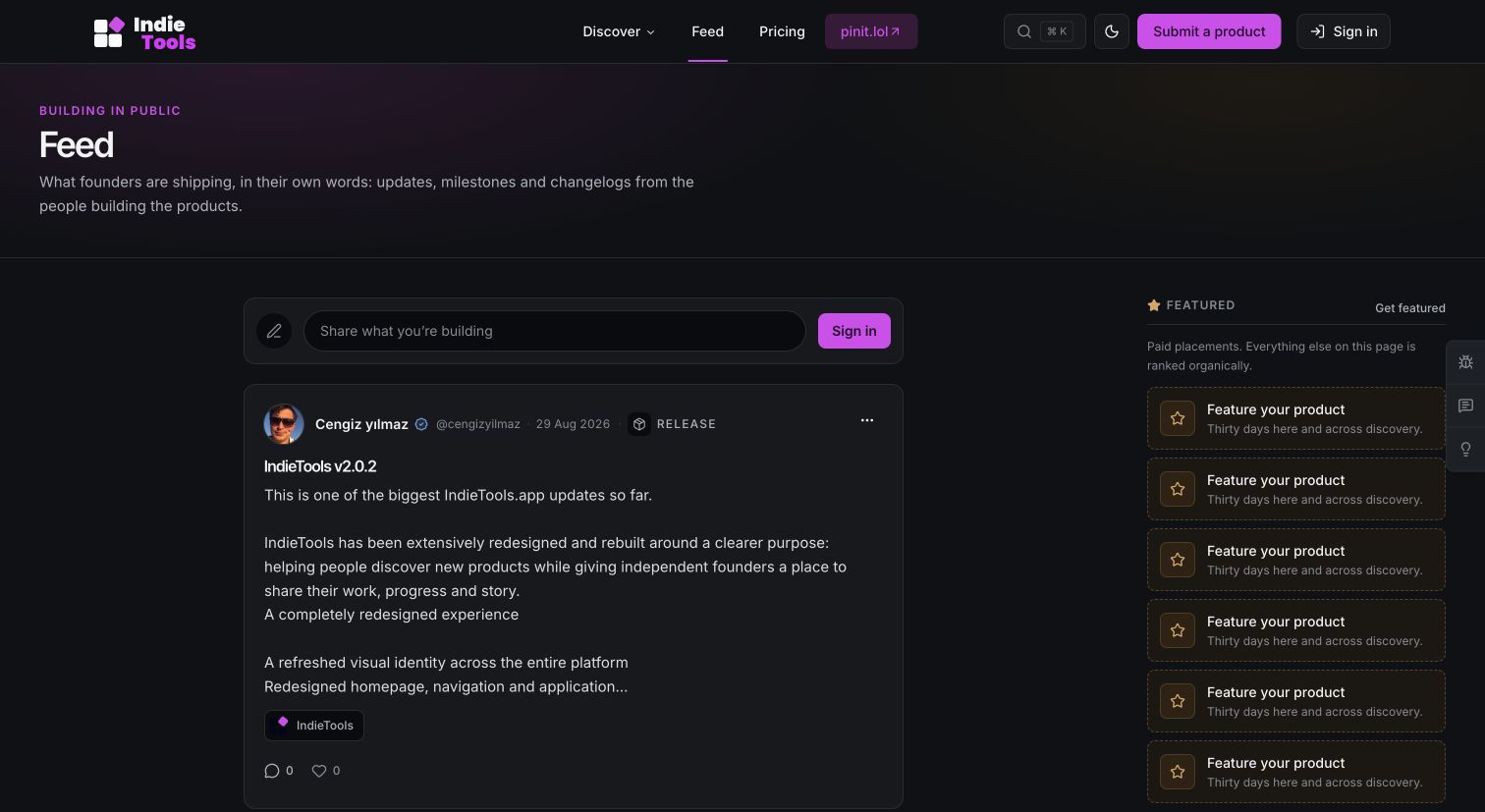
The public feed displayed product-related posts with labels such as release and update, dates, founder links, and links back to the associated products. We saw an IndieTools release post and a separate product update. Posting required sign-in, and we did not publish or react to anything.
This is a useful complement to a static listing. A feature announcement or a clear changelog can explain why someone should revisit a product after first discovering it. It also gives a founder a place to describe progress alongside the product record instead of repeatedly rewriting the main description.
Our visit does not establish that the feed has a highly active community. The visible posts and interaction counters are a snapshot, and they should not be generalized into engagement claims. The feature's value to an individual maker will depend on whether they have substantive updates to share and whether the people who encounter those updates are a good fit for the product.
Submission has a clear public starting point
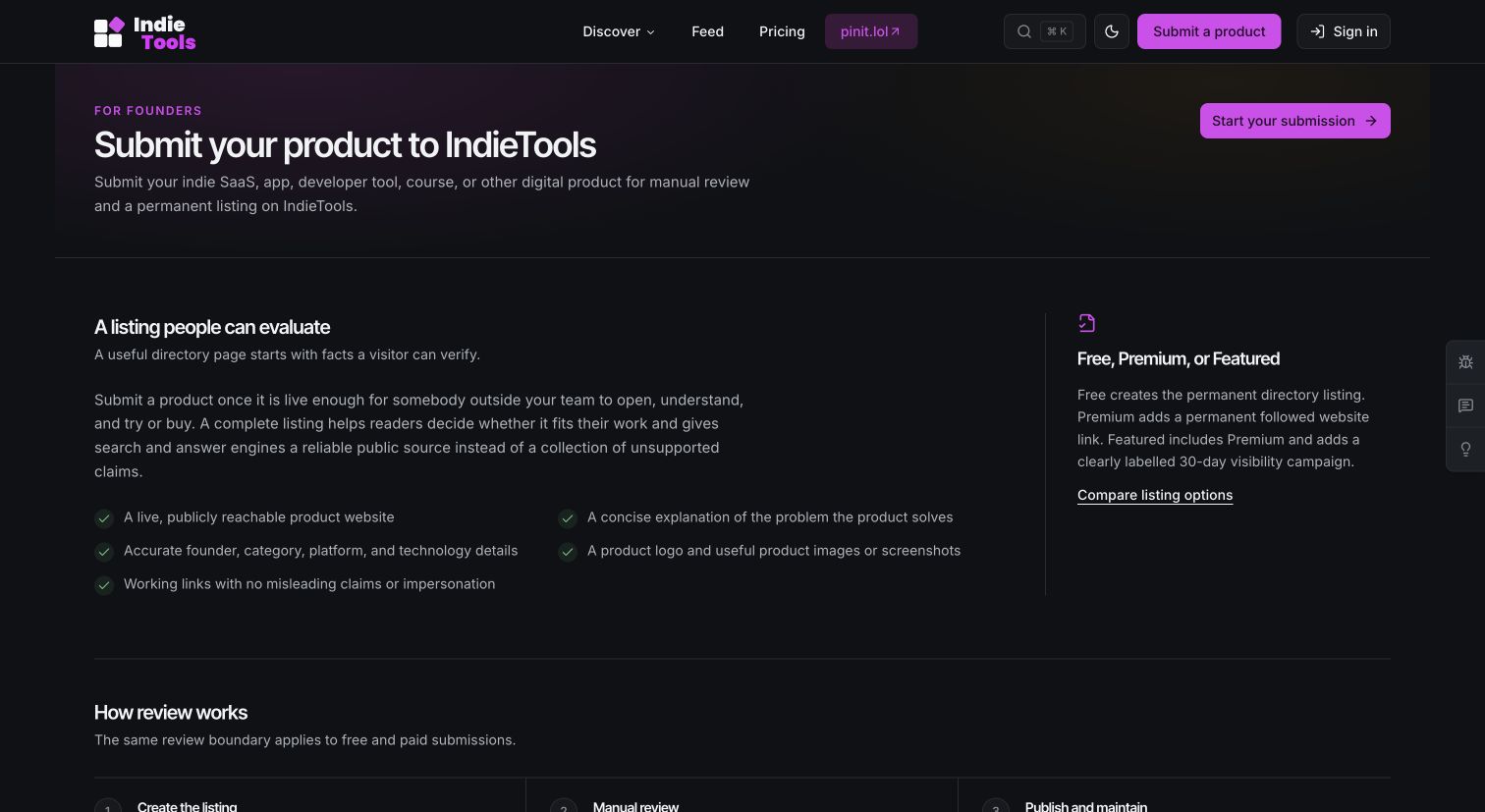
The submission page explains what to prepare: a working product URL, a specific description, relevant details, a logo, and useful product images. It describes manual review for both free and paid submissions and says approved owners can update their records. When we selected the submission entry point, it led to the sign-in page. We stopped there, so the account dashboard and final submission process remain outside this review's firsthand scope.
The public explanation is useful because it lets a founder assemble the material before creating the record. We would prepare a short answer to three questions: who the product helps, what they can accomplish, and what distinguishes this implementation. Then choose screenshots that demonstrate that workflow. Screenshots of an empty dashboard or a generic hero statement give a reader less to evaluate than a populated, understandable example.
There is also a planning implication: manual review means a listing should not be assumed to appear the instant it is submitted. Anyone coordinating several launch activities should leave room for that dependency and check their actual approval state before sharing the final listing URL.
Free and paid options serve different decisions
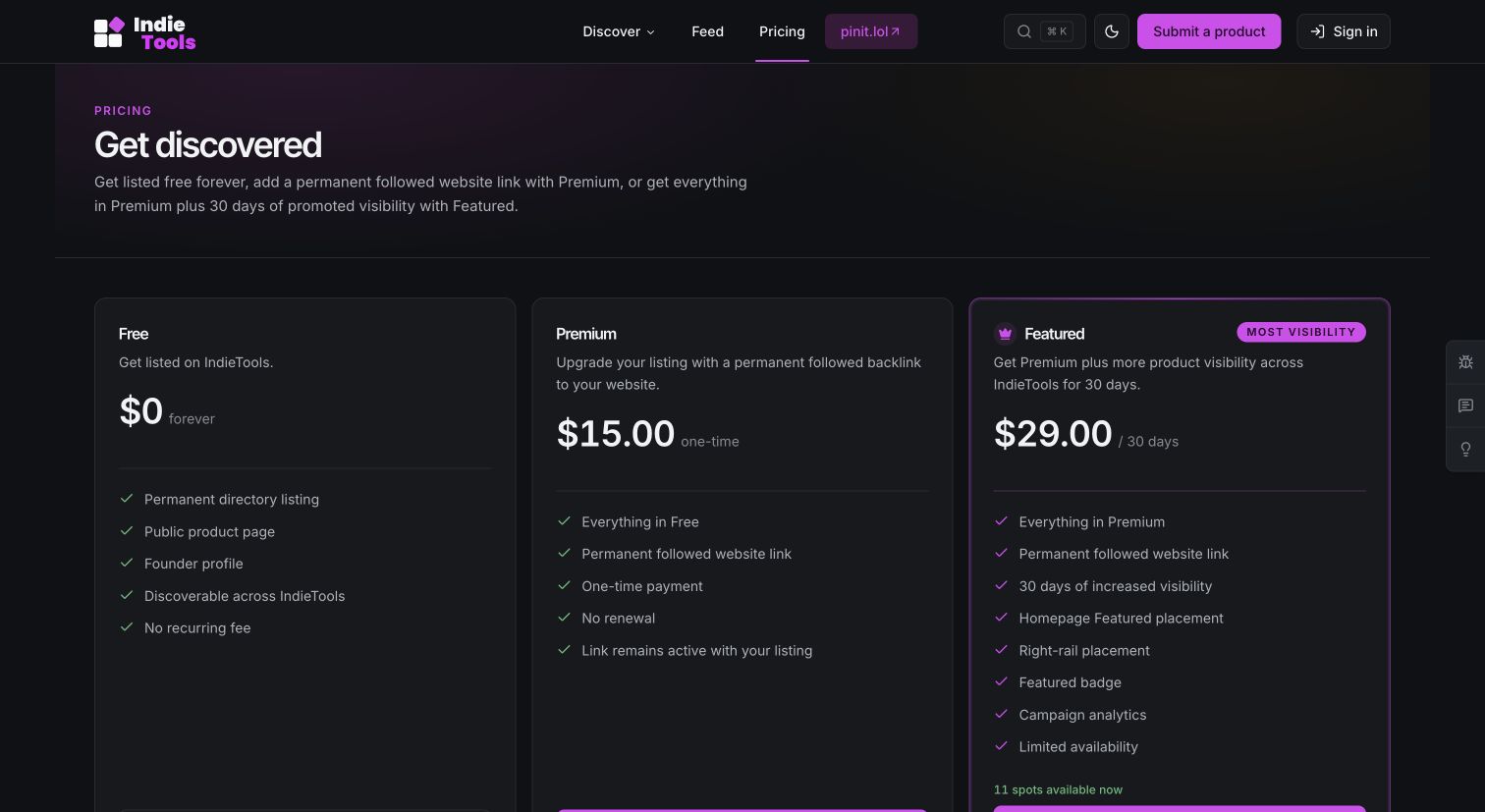
On September 5, 2026, the published pricing showed a free permanent listing, Premium at $15 once, and Featured at $29 for 30 days. Premium was described as adding a permanent followed website link. Featured included Premium plus homepage and right-rail visibility, a badge, and campaign analytics. Availability was limited, so these are observed prices and inclusions rather than a promise that a slot will be available later.
For a founder, we would separate the decision to create a useful profile from the decision to buy attention for it. The free option lets you establish the record first. A paid campaign becomes easier to assess when the description is clear, the destination website works, and there is a meaningful next action for a visitor.
We would also treat the vendor's followed-link wording as a description of the advertised link attribute, not a prediction about search rankings. IndieTools' pricing FAQ itself declines to promise a ranking improvement. This sponsored Tool Index article uses qualified outbound links and makes no promise about the search impact of a purchase.
Measure visits to your business, not just a placement click
The campaign FAQ makes a useful distinction: a recorded placement click opens the product's IndieTools page. Visits onward to the founder's own website are measured by the founder's analytics. It describes impression and click reporting, including a distinction between a card appearing on screen and a page merely loading. We read this public explanation; we did not inspect or audit a paid campaign dashboard.
That distinction should shape an experiment. A placement can attract attention while the product page loses visitors, or the product page can send visitors onward while the destination website fails to explain the offer. Those are different problems. Before buying visibility, decide which event matters to your business: a qualified visit, a trial, a mailing-list signup, or a completed purchase.
A practical review after a campaign would compare the placement report with your own referral data and the downstream action you chose. Keep the definitions separate and allow for attribution limits. A small campaign with a few visits may still teach you something about the offer, but it cannot establish a reliable conversion rate from a tiny sample. These are our evaluation suggestions, not results achieved in this review.
Directory opportunities adds a useful planning resource
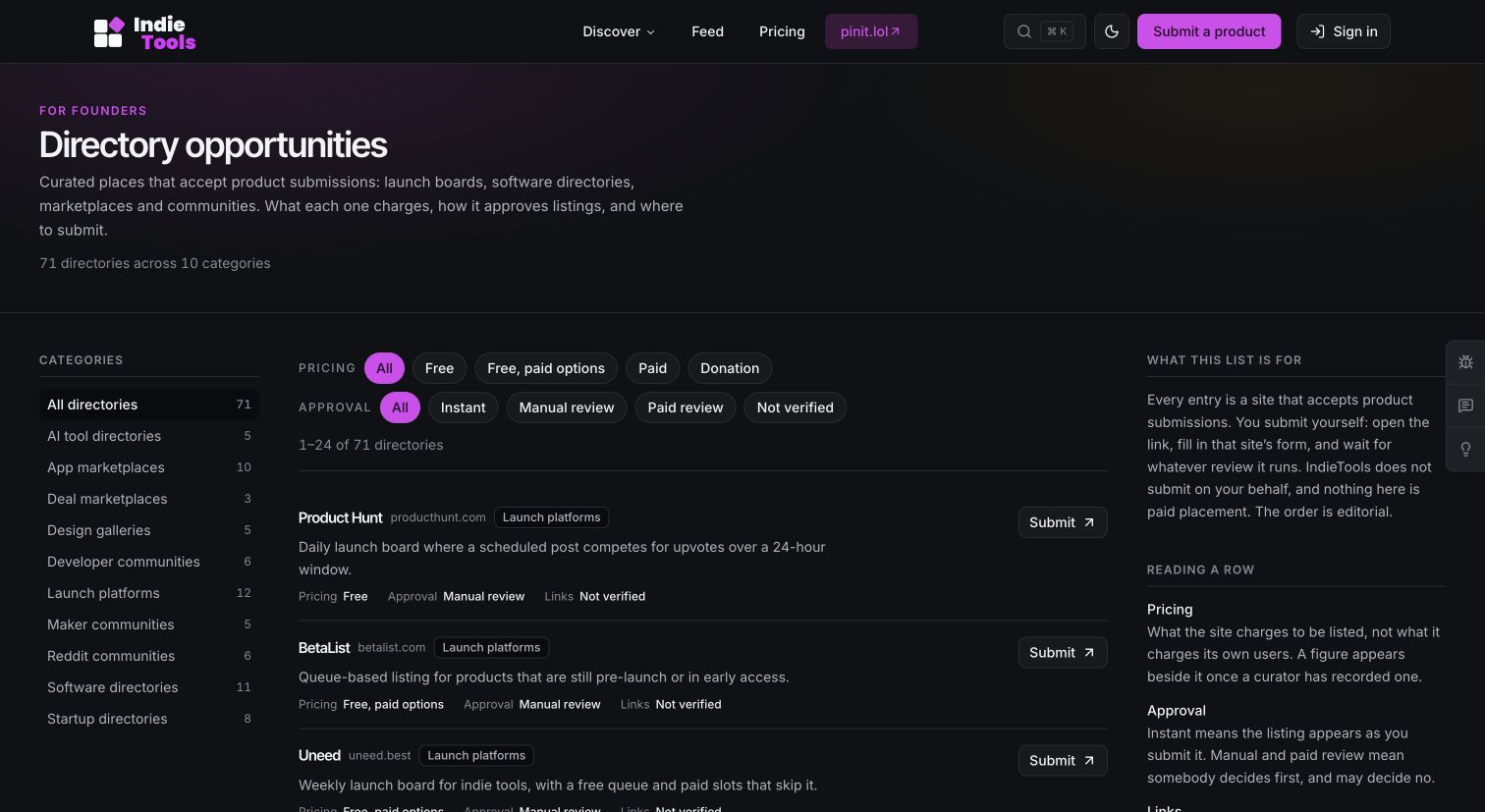
The live Directory opportunities page displayed 71 entries across 10 categories when we visited. It grouped other submission destinations and exposed pricing and approval filters. Visible rows included a short description, an approval type, link-status information, and a destination link. This gives founders another activity to undertake after preparing their own product materials.
We would treat this as a research starting point rather than a completed distribution service. The page explains that founders submit to the destinations themselves. We did not verify every third-party entry or carry out those submissions. Before investing time or paying another directory, check its current requirements directly; a list can help discovery without guaranteeing that each destination still operates exactly as described.
The resource also suggests a useful way to compare launch approaches without assuming one is universally superior. A timed launch, a permanent directory profile, a specialist community post, and a founder-owned article each serve different purposes. Choose according to the audience you want to reach and the material you can maintain, rather than treating the number of submissions as the main measure of progress.
Who should consider it, and where we would be cautious
IndieTools is a reasonable fit for a solo founder or small independent team that already has a usable product and wants a clear public record connected to its maker. It is also useful to a reader who enjoys exploring smaller software products and following the people behind them. The combination of a catalogue, fuller profiles, stack details, and product updates supports that kind of discovery.
It is a weaker fit if the immediate requirement is a guaranteed volume of sales leads, a procurement-grade software assessment, or an outsourced launch campaign. None of those outcomes was demonstrated by our inspection. A public listing can support a marketing effort; it does not remove the need for an understandable offer, a working product, and a suitable audience.
Our main practical reservations concern evidence and coverage. Product facts can be founder-provided, stack discovery depends on populated records, and visible catalogue counts do not establish buyer demand. Private messaging, account management, paid campaign delivery, and newsletter receipt were not tested. Those limits are reasons to begin with a small, observable workflow and expand only when the result is useful.
Our verdict
IndieTools offers a coherent public discovery experience with a worthwhile connection between products and their founders. In our visit, browsing, exact-name search, product profiles, declared-technology discovery, the feed, and the submission entry point all gave us concrete information or a clear next step. The free permanent listing is the easiest part of the proposition to justify for an eligible maker who is willing to prepare accurate copy and screenshots.
Paid Featured placement should be evaluated as a limited visibility campaign. Start with a useful listing, decide what success means on your own website, and review the actual results before repeating the spend. The product is worth considering for its discoverable profiles and founder context; our recommendation does not depend on an invented audience number or an untested promise of growth.
You can explore IndieTools and read its current submission guidance before deciding whether to list your product.
See the IndieTools listing on Tool Index for its product details.