
Substack
Hosted newsletter and publication platform with built-in payments, recommendations, and an audience network for writers.
Gallery
About Substack
Substack is the publishing platform for writers who want a newsletter, a website, and a way to charge readers without becoming a Stripe expert. It started as a paid newsletter platform, expanded into podcasts, video, and a social network on top, and is now a publishing ecosystem with millions of writers and readers.
The platform's growth has been one of the more interesting media stories of the decade. Writers leave traditional outlets to start independent newsletters; some make more money than they did at the outlet. The model works, with caveats most newcomers underestimate.
I have run a Substack and consulted on others. The honest take follows.
What Substack does
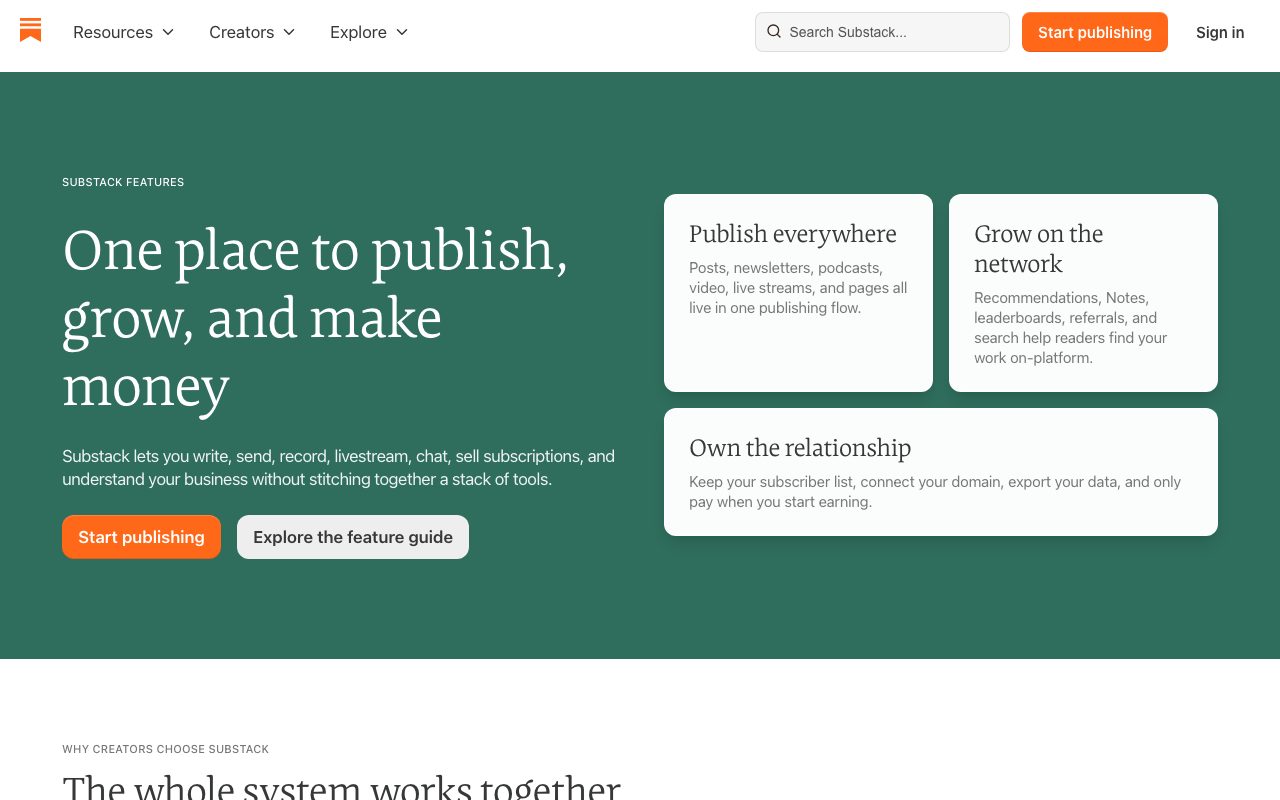
Substack hosts your newsletter, a website that doubles as the newsletter archive, and the subscription billing on top. You write a post, hit publish, and it sends to your email list and posts to your site simultaneously. There is no theme to configure, no plugin to install, no SMTP server to set up.
The free product covers everything you need to publish and grow. Substack takes a 10% cut of paid subscriptions; payments go through Stripe at standard rates. There is no monthly platform fee.
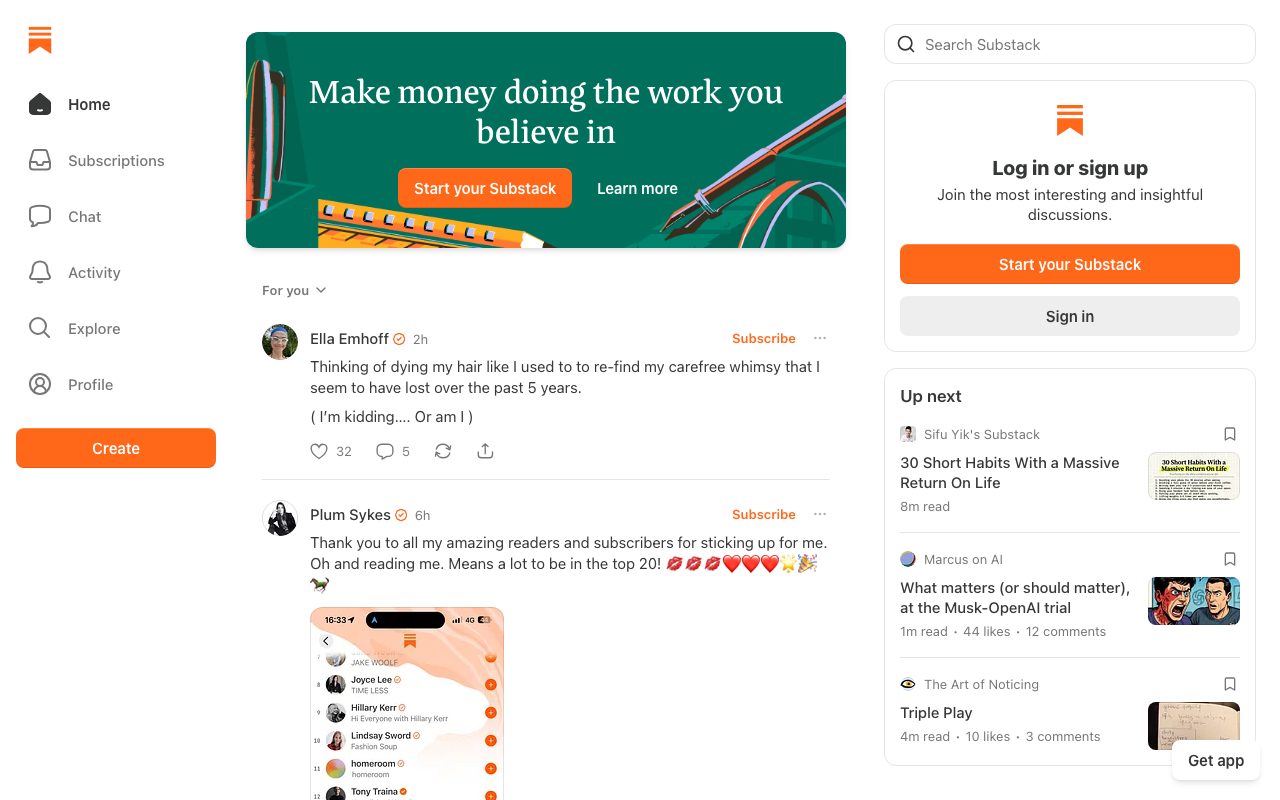
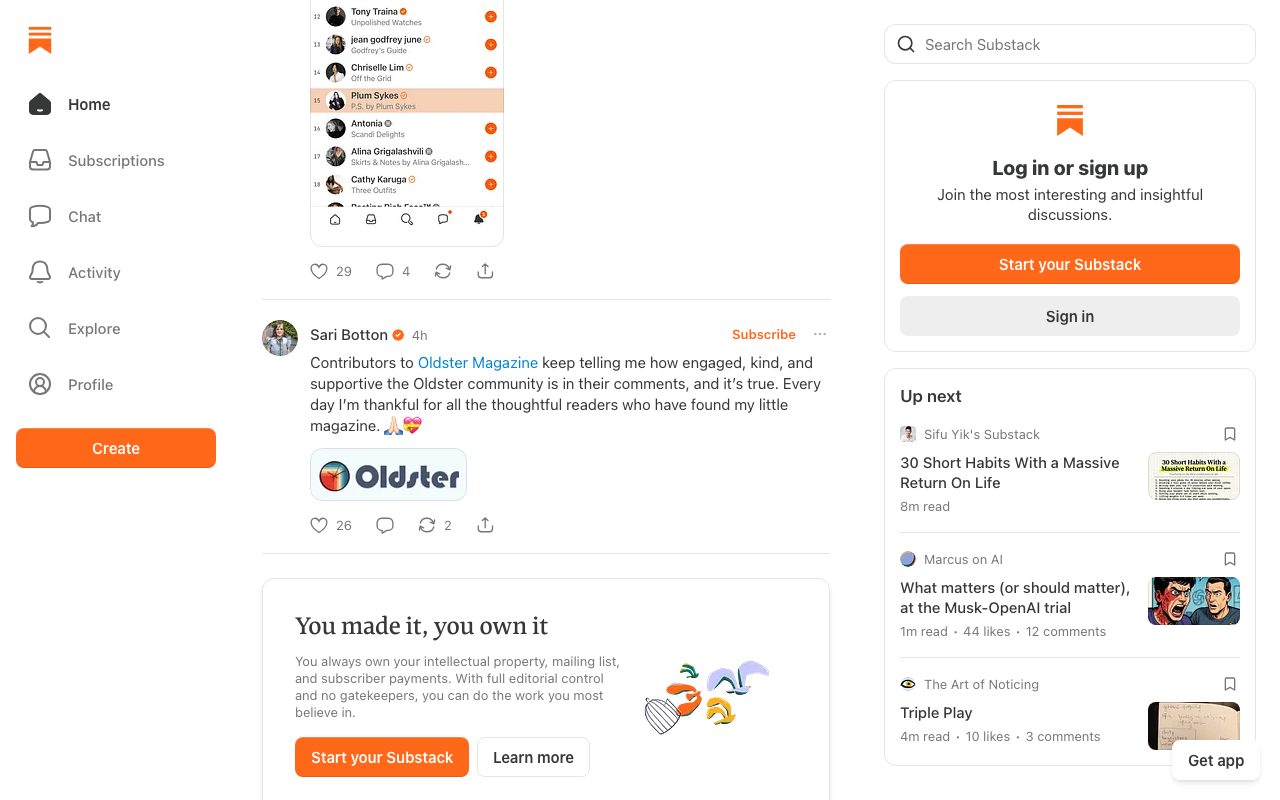
The product expanded into podcasts (RSS-distributed audio), video, chat (a built-in community), Notes (Twitter-style short posts), and Substack Reader (an aggregator that competes with Twitter for distribution).
Who Substack is for
Independent writers who want to own their list and audience. Journalists going solo. Newsletter operators who started on Mailchimp or ConvertKit and want a simpler setup. Hobbyists who write for fun and may eventually monetize.
It is less of a fit for marketers running aggressive automated funnels (use ConvertKit or Beehiiv), creators who want full design control over emails (use Ghost or roll your own), or businesses where the newsletter is a marketing arm of a bigger product (use a tool that integrates with your stack).
Pricing
Substack is free to use for free newsletters. If you charge for subscriptions, Substack takes 10% of paid revenue, plus Stripe's standard processing fees. There is no monthly subscription, no per-subscriber pricing.
The math gets interesting at scale. A newsletter doing six figures pays Substack a meaningful amount. Some larger writers have moved off Substack for that reason; many stay because the value of distribution and discovery beats the percentage.
Features that work
Email deliverability is solid. Substack handles the sending infrastructure, manages the reputation of the IPs, and ships emails that consistently land in the inbox. This is harder than it sounds, and it is the single biggest gift the platform gives writers.
The web archive is auto-generated. Every post is also a webpage with shareable URL, comments, and SEO basics. Search engines index newsletters; readers find old posts; growth compounds.
The recommendation system inside Substack drives a meaningful chunk of new subscriber growth for active writers. The platform pushes readers from one publication to similar ones, and being on Substack participates in that flywheel.
Notes (the Twitter-style feed) and the Substack Reader app extend the engagement model beyond email. Some writers build audiences on Notes that become subscribers; others ignore it.
The chat and community features let paid subscribers participate in subscriber-only discussion. This is a real feature that competitors are still catching up to.
Tradeoffs
You do not own the platform. Substack can change rules (and has). Some content moderation decisions have been controversial; some writers left over them. The list is yours; the platform is not.
Customization is intentionally limited. The newsletter format and website template are mostly fixed. Writers who want full design control on the email or web experience are happier on Ghost or self-hosted stacks.
The 10% cut is the right price for most beginning writers and the wrong price for established ones. If your newsletter is doing real revenue, the math comparing Substack to Beehiiv plus a Ghost site changes.
Substack is the right starting point for most writers. The right ending point is "where you are still happy." Those are not always the same place.
Substack vs alternatives
Versus Beehiiv, Beehiiv is more newsletter-business-flavored, with referral programs, ad networks, and growth tools. Substack is more writer-creator-flavored. Pick Substack for content; pick Beehiiv if newsletter is your business.
Versus Ghost, Ghost is open-source self-hosted (or hosted by Ghost Pro) with full design and tech control. Substack is locked-down and frictionless. Different shapes of the same problem.
Versus ConvertKit, ConvertKit is a creator marketing tool with email at the center. Substack is publishing-first with monetization built in.
Versus Medium, Substack lets you build your own list and own the relationship with readers. Medium owns the audience.
See best newsletter platforms, Substack alternatives, and Substack vs Beehiiv.
Common questions
Is Substack free? Yes, for free newsletters. Does Substack take a cut? 10% of paid subscription revenue. Can I export my list? Yes, you own the email list and can leave with it. Do they handle taxes? They handle the platform side; your tax obligations are yours. Can I use a custom domain? Yes, on the paid bump.
Bottom line
Substack is the simplest path from "I want to write" to "I have a newsletter, a website, and a paid subscription business." It is not the most powerful, the most ownership-friendly, or the most cost-efficient at scale. For most writers most of the time, it is the right starting place.
If you outgrow Substack later, that is a great problem to have. Browse tools for content creators and the Substack profile for current details.
Growing a Substack
Recommendations matter most. Get other Substack writers to recommend you; they drive a meaningful chunk of new subscribers. Reach out, build relationships, recommend others.
Notes is the discovery layer. Posting on Notes (the Twitter-style feed) puts you in front of readers who do not yet subscribe. Some writers convert Notes followers to subscribers at a real rate.
Cross-promotion campaigns with peer writers grow lists faster than ads. Find writers in adjacent niches; swap mentions; both grow.
Free posts that go viral seed the funnel. Paid subscribers come from the readers who are already on your free list. Optimize the free funnel first; the paid conversion follows.
Pricing strategy
Most Substacks price at five to ten dollars per month, fifty to one hundred dollars per year. The yearly discount is meaningful; many readers prefer it.
Founding Member tiers (higher price for early supporters) work for a portion of audiences. Test it; some niches respond, others do not.
Group subscriptions for organizations are real revenue once you have B2B-relevant content. Substack supports them; pitch them to companies that should care.
When to leave Substack
Established writers doing six figures often consider Beehiiv plus Ghost (or self-hosted) to keep the 10% Substack would have taken. The math is real and the work is real.
Writers who want full design control, a custom website, deep email automation, or specific integrations move off Substack to fit their needs.
The migration tooling for leaving Substack is reasonable. Email lists export; archives can be migrated; subscribers usually follow if you keep the email list intact.
Common Substack pitfalls
Treating Substack like a blog. Email is the format that drives Substack; if you write web-first, you miss the open-rate compounding.
Posting too often. Most successful Substacks post weekly or biweekly, not daily. The reader's inbox is finite.
Going paid too early. Build the free list, build the relationship, then introduce paid. Paid before audience kills both.
Substack content strategy
Niche over breadth. The Substacks that grow are the ones with a clear point of view on a specific topic. "Tech news" is too broad; "AI policy in the EU" is workable.
Cadence consistency. Readers learn when to expect you. Weekly Tuesday morning beats sporadic posting on whichever day.
Free archive depth. New readers arrive and judge by the back catalog. Depth signals seriousness.
Original takes over rehashing. Aggregators do not retain readers; the writers with strong opinions do.
Substack technical details
Custom domain on paid plans. The DNS setup is documented; takes an hour.
RSS feed exists for every Substack. Readers can subscribe in any RSS reader; some prefer it.
Email sending IPs are managed by Substack. Deliverability is strong because the team handles the reputation work.
The web archive is indexed by search engines. SEO is decent; not as good as a fully owned site optimized for search, and good enough for most writers.
Reader app and discovery
The Substack Reader app aggregates subscribed and recommended publications. Some writers see meaningful growth from the recommendation surface; others ignore it.
Notes is the embedded social layer. Posting drives discovery; some writers love it; some find it distracting.
Cross-posting between Notes and Twitter or Bluesky is manual. Some tools automate it; results are mixed.
Substack ecosystem
Substack Reader is the aggregator app. Some readers consume newsletters here; others stay in inbox.
Notes is the social feed. Functions as Twitter for the writing community.
Chat is the subscriber-only community surface.
Audio and video posts work alongside text. Multi-format publishing without a separate tool.
Substack tax considerations
Substack handles platform-side tax obligations. Your subscription revenue is yours; reporting and remittance for income tax is your responsibility.
VAT and sales tax on digital services apply in many regions. Substack handles some of this; consult a tax professional for your specific jurisdiction.
1099 forms in the US arrive at the right time of year for paid subscription revenue above the threshold.
Tutorial / Demo
Key Features
- Hosted email and web archive in one
- Free, paid, and founding-member subscription tiers
- Built-in Stripe payments and tax handling
- Notes feed and cross-publication recommendations
- Podcast hosting and audio newsletters
- Comments, threads, and chat for subscribers
Pros & Cons
What we like
- Zero upfront cost, revenue share only on paid subs
- Discovery and recommendation network drives growth
- Writers keep ownership of their list and content
Room for improvement
- Limited design and customization control
- Less suited to brand-style newsletters or rich landing pages
Frequently Asked Questions
Does Substack take a cut of paid subscriptions?
Substack vs Beehiiv, which one wins?
Can I take my subscribers and posts with me if I leave?
Can I use a custom domain on Substack?
Is Substack a good fit for a niche B2B newsletter?
Best For
Featured in
Tags
Alternatives to Substack
View all
Kajabi
All-in-one platform for selling online courses, memberships, and coaching

Post Bridge
Schedule and cross-post content to up to nine social platforms from one simple dashboard

Buttondown
Minimalist newsletter tool built for writers who prefer Markdown, plain text, and quietly powerful tooling under the hood.

Loops
Modern email platform built for SaaS teams, combining transactional, marketing, and lifecycle messages with a clean API.
Our take
Tool Index Editorial · May 2026· 4.8/5
What Substack is really selling — beyond the marketing copy — is hosted newsletter and publication platform with built-in payments, recommendations, and an audience network for writers.
Worth highlighting: Zero upfront cost, revenue share only on paid subs, Discovery and recommendation network drives growth, and Writers keep ownership of their list and content. The friction points: Limited design and customization control and Less suited to brand-style newsletters or rich landing pages.
In short: Substack is a strong pick when you need independent writers monetizing through paid subscriptions, and a harder sell if limited design and customization control would be a dealbreaker.
Editorial opinion from the Tool Index team, written from the public product pages. Not a user review.
Reviews (6)
Genuinely impressed
Found Substack on a Reddit thread, glad I clicked. Genuine strength: discovery and recommendation network drives growth. One thing that bugs me: less suited to brand-style newsletters or rich landing pages.
Cons
- Limited design and customization control
- Less suited to brand-style newsletters or rich landing pages
Did exactly what I needed
Got Substack on the recommendation of someone I trust. Genuine strength: writers keep ownership of their list and content. Got real value out of built-in Stripe payments and tax handling. Wish they'd address how less suited to brand-style newsletters or rich landing pages.
Pros
- Zero upfront cost, revenue share only on paid subs
- Discovery and recommendation network drives growth
Best decision this quarter
Two months of using Substack, here's what holds up. What stands out is how writers keep ownership of their list and content. Got real value out of podcast hosting and audio newsletters. Mostly using it for independent writers monetizing through paid subscriptions. Hard to imagine going back to my previous setup.
Pros
- Discovery and recommendation network drives growth
- Zero upfront cost, revenue share only on paid subs
- Writers keep ownership of their list and content
Cons
- Less suited to brand-style newsletters or rich landing pages
- Limited design and customization control
Solid daily driver
The pitch for Substack sounded too good to be true. Mostly true. Genuine strength: discovery and recommendation network drives growth. Worth calling out the hosted email and web archive in one too. Found it works best for niche journalism and analyst publications. Easy yes for anyone weighing the same trade-offs.
Pros
- Zero upfront cost, revenue share only on paid subs
- Discovery and recommendation network drives growth
Solid daily driver
Substack has quietly become part of my daily flow. Real selling point: writers keep ownership of their list and content. Worth calling out the comments, threads, and chat for subscribers too. Mostly using it for independent writers monetizing through paid subscriptions.
Genuinely impressed
Hadn't planned on switching, but Substack was hard to ignore. Honestly impressed by how zero upfront cost, revenue share only on paid subs. The podcast hosting and audio newsletters is more useful than I expected. It fits well for independent writers monetizing through paid subscriptions. Glad I made the switch.
Pros
- Writers keep ownership of their list and content
Badge builder
Add Substack to your website
Choose a badge style and size, preview it here, then copy the generated HTML. Badge images are self-contained SVGs and do not require an external script.

<a href="https://toolindex.net/tools/substack?ref=badge" target="_blank" rel="noopener">
  <img src="https://toolindex.net/badge/substack/medium.svg" alt="Substack - Listed on Tool Index" width="180" height="50" />
</a>How to use the badge
- 1. Pick the style, size, and theme that fit your layout.
- 2. Copy the generated HTML from the code block.
- 3. Paste it into your footer, homepage, or press page.
Score badge available
Substack qualifies for the score and circle badges based on its current top-10 positionin Communication.
Badge clicks return visitors to this profile with a referral tag so the source remains identifiable.
Related Tools

Apatero AI
The creator studio for AI image, video, audio, 3D, and avatars, now at apatero.ai.

SEObot
Autonomous AI SEO agent that runs your blog and link building on autopilot

MailerLite
Friendly, affordable email marketing tool with newsletters, automations, landing pages, and a growing creator toolkit.

Twist
Calmer team messaging where threads replace the firehose of channels
Work on Substack? Request listing access or correction