
Zendesk
Enterprise customer service suite for ticketing, chat, and voice
Gallery
About Zendesk
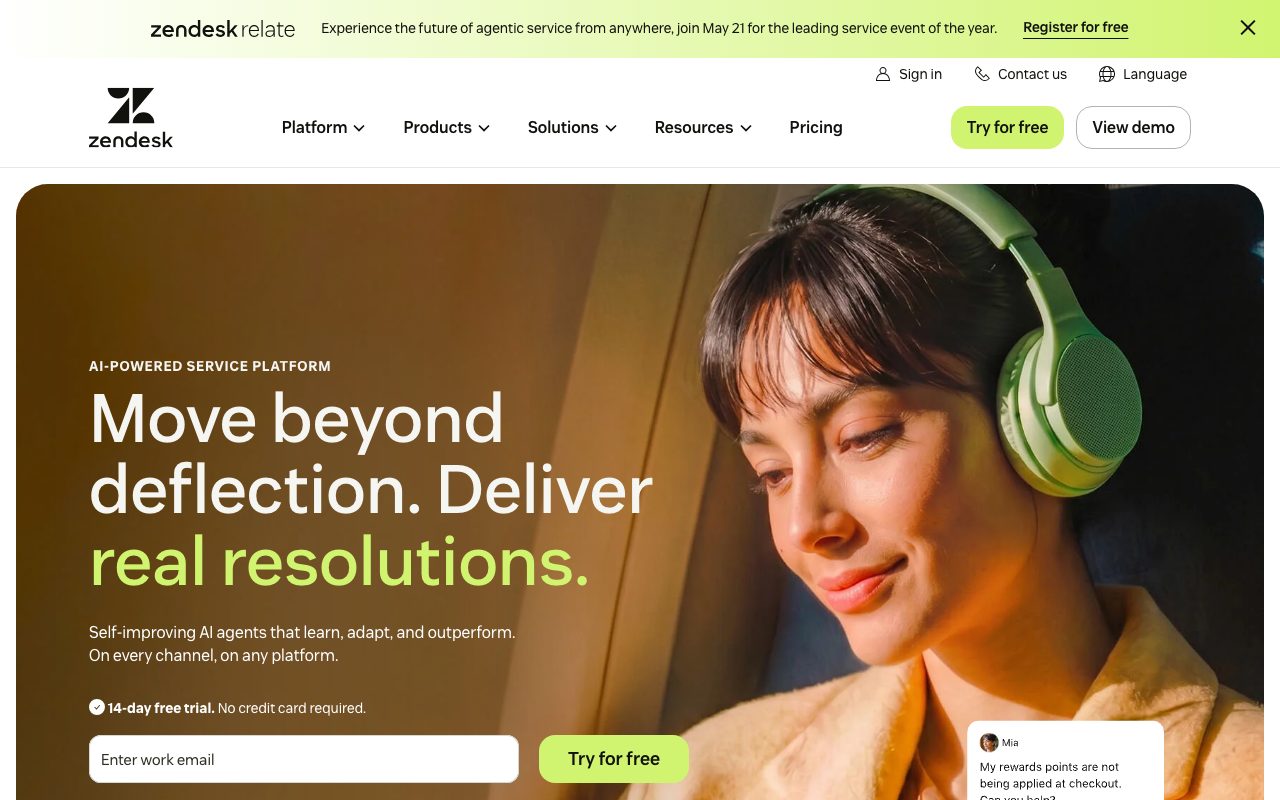
Zendesk is one of the original cloud customer service platforms. The product launched in 2007 and has grown into a full enterprise customer experience suite covering support tickets, live chat, voice, knowledge bases, and AI agents. Most large support organizations have evaluated or deployed Zendesk at some point.
The pitch is "everything customer experience in one stack". Zendesk wants to be the system of record for every customer interaction, from the first signup question to the eighth product upsell call. It's deep, configurable, and extremely capable.
What Zendesk actually does
Zendesk Support is the ticketing core. Customer messages from email, chat, social, voice, and forms become tickets that route through workflows, assignments, and automations. SLAs, business rules, and macros keep heavy queues moving.
Around Support, Zendesk ships Guide for help centers, Chat for live conversations, Talk for voice, Sell for CRM, Explore for analytics, and a growing AI suite. It's a full customer experience platform.
Who Zendesk is built for
Zendesk is built for mid-market and enterprise customer experience teams. Big retailers, telcos, software companies, and service brands all show up in the customer list. The platform shines when you have many agents, many channels, and complex routing.
Smaller teams sometimes find Zendesk heavier than they need. SMBs with simple email-only support often prefer lighter tools.
Zendesk pricing
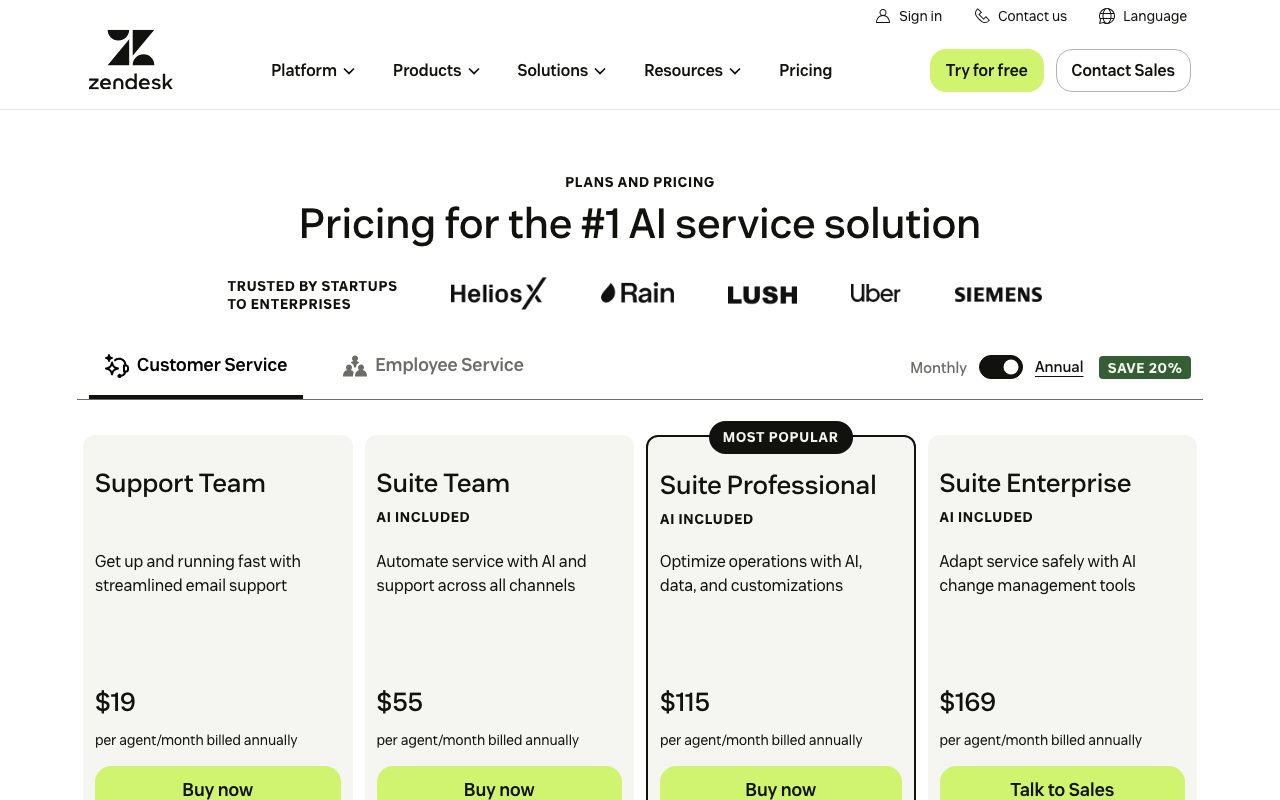
Zendesk pricing tiers go from Suite Team up to Enterprise Plus. Each tier adds channels, AI, advanced analytics, and admin controls. The price per agent is on the higher end of the customer service category.
Real total cost depends on tier, add-ons, and AI usage. Compare carefully against Zendesk alternatives for your specific channel mix.
Features that define Zendesk
Triggers and automations are the workhorse. You define rules that fire on ticket events and update tickets automatically. Big teams build out elaborate routing and notification workflows.
The omnichannel inbox brings email, chat, social, voice, WhatsApp, and forms into one queue. Agents handle any channel without context switching. Macros and saved replies speed up common answers.
Zendesk AI agents handle tier-1 conversations end to end. The AI suite drafts replies, summarizes long threads, suggests articles, and detects intent. The newer Agentic AI products extend this further.
Zendesk is the enterprise default. It's not always the cheapest or simplest, but it's almost always on the shortlist for serious support teams.
Tradeoffs and rough edges
The price ladder gets steep at higher tiers. Features that competitors include in mid tiers sit in Zendesk's enterprise plans. Procurement teams need to budget carefully.
The configuration depth is a double edge. Power is great. Complexity is real, and large Zendesk instances can become a swamp of triggers, automations, and macros that nobody fully understands.
Zendesk vs alternatives
The big comparisons are Zendesk versus Intercom, Help Scout, and Freshdesk. Intercom is stronger on chat-led customer engagement. Help Scout is simpler and human-feeling. Freshdesk is a budget alternative.
Zendesk's edge is breadth, channels, and enterprise polish. Read Zendesk vs Intercom and browse the best customer support tools.
Common questions about Zendesk
Is Zendesk good for small teams? It can be overkill. Help Scout or Freshdesk often fit smaller teams better.
Does Zendesk include voice? Yes, via the Talk product.
How does Zendesk pricing compare to Intercom? Both are enterprise priced. Total cost depends on your channel mix and AI usage.
Bottom line on Zendesk
Zendesk is the enterprise customer experience platform that anchors a serious support stack. It's the right choice if you have many agents, many channels, and enterprise needs. Browse tools for customer support for the broader stack.
If you're a 50-agent support team running across email, chat, and voice, Zendesk is on your shortlist.
Zendesk for omnichannel teams
The biggest Zendesk workloads run dozens of channels through one Agent Workspace. Email, chat, voice, social, WhatsApp, and even SMS land in the same queue. Agents triage by priority instead of switching apps.
Zendesk Talk handles voice with browser-based calling, IVR, and call recording. Big support orgs use it to consolidate phone support into the same platform. The numbers are provisioned through Zendesk directly.
Zendesk AI in practice
The AI agents resolve a meaningful share of tier-1 tickets without human handoff. Customers get fast answers, and human agents focus on complex cases. The exact resolution rate depends on the knowledge base quality.
Reply suggestions and summarization speed up agent productivity. Long ticket threads collapse into a few bullet points. New agents ramp up faster because they don't need to read every thread end to end.
Tutorial / Demo
Key Features
- Omnichannel ticketing across email, chat, voice, and social
- Help center and knowledge base
- Workflow automation and SLAs
- AI-assisted replies and triage
- Reporting and CSAT
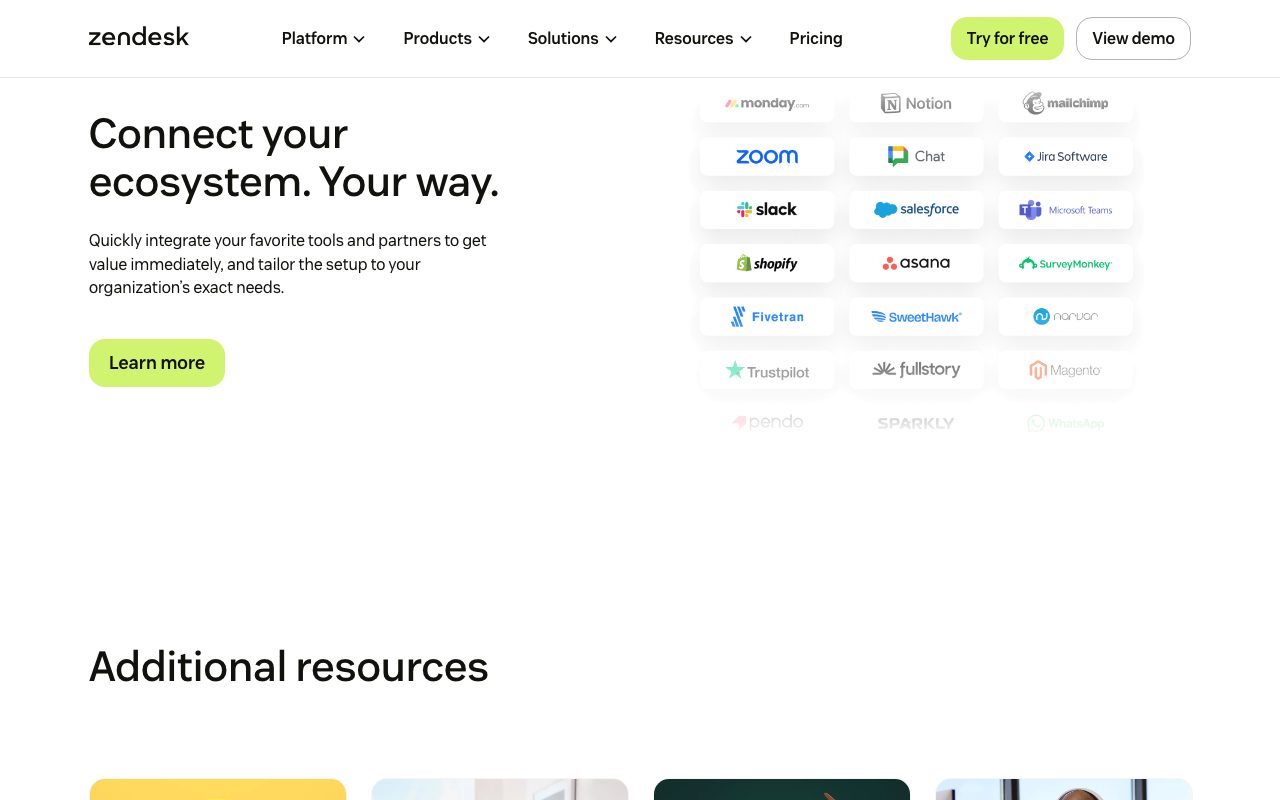
- Marketplace of 1,000+ integrations
Pros & Cons
What we like
- Battle-tested at enterprise scale
- Wide integration ecosystem
- Strong reporting and admin controls
Room for improvement
- Per-agent pricing climbs quickly with add-ons
- Configuration depth is a double-edged sword
- Newer competitors feel snappier for small teams
Frequently Asked Questions
How much does Zendesk cost?
Zendesk vs Intercom, which one?
Is Zendesk overkill for a small startup?
Does Zendesk have AI features?
Can I migrate off Zendesk easily?
Best For
Featured in
Tags
Alternatives to Zendesk
View all

Our take
Tool Index Editorial · May 2026· 4.8/5
Zendesk positions itself as enterprise customer service suite for ticketing, chat, and voice, and on the whole it earns the framing.
On the strengths side: Battle-tested at enterprise scale, Wide integration ecosystem, and Strong reporting and admin controls. What to watch for: Per-agent pricing climbs quickly with add-ons and Configuration depth is a double-edged sword.
In short: Zendesk is a strong pick when you need mid-market and enterprise support orgs, and a harder sell if per-agent pricing climbs quickly with add-ons would be a dealbreaker.
Editorial opinion from the Tool Index team, written from the public product pages. Not a user review.
Reviews (5)
Stuck the landing for our team
Honest take: Zendesk delivers most of what the marketing promises. Real selling point: strong reporting and admin controls. Got real value out of marketplace of 1,000+ integrations.
Pros
- Wide integration ecosystem
Honest take after three months
Tried Zendesk on a side project first. Genuine strength: wide integration ecosystem. Their take on AI-assisted replies and triage is solid. Easy yes for anyone weighing the same trade-offs.
Pros
- Battle-tested at enterprise scale
- Strong reporting and admin controls
- Wide integration ecosystem
Did exactly what I needed
Found Zendesk on a Reddit thread, glad I clicked. Where it really wins is strong reporting and admin controls. Sticking with Zendesk.
Pros
- Wide integration ecosystem
Cancelled after three months
Took a few weeks for Zendesk to click, then it stuck. What stands out is how battle-tested at enterprise scale. Worth calling out the workflow automation and SLAs too. One thing that bugs me: per-agent pricing climbs quickly with add-ons.
Cons
- Configuration depth is a double-edged sword
- Newer competitors feel snappier for small teams
Solid product, even better support
Started using Zendesk casually, now it's pinned in my dock. Genuine strength: strong reporting and admin controls. Found it works best for mid-market and enterprise support orgs. Honest gripe: per-agent pricing climbs quickly with add-ons. Worth the price for what I get out of it.
Pros
- Wide integration ecosystem
- Strong reporting and admin controls
- Battle-tested at enterprise scale
Badge builder
Add Zendesk to your website
Choose a badge style and size, preview it here, then copy the generated HTML. Badge images are self-contained SVGs and do not require an external script.

<a href="https://toolindex.net/tools/zendesk?ref=badge" target="_blank" rel="noopener">
  <img src="https://toolindex.net/badge/zendesk/medium.svg" alt="Zendesk - Listed on Tool Index" width="180" height="50" />
</a>How to use the badge
- 1. Pick the style, size, and theme that fit your layout.
- 2. Copy the generated HTML from the code block.
- 3. Paste it into your footer, homepage, or press page.
Score badge available
Zendesk qualifies for the score and circle badges based on its current top-10 positionin Customer Support.
Badge clicks return visitors to this profile with a referral tag so the source remains identifiable.
Related Tools

Probed
Customer chat, feedback, and public roadmaps in one shared space

QuickPing
A dead-simple contact link so customers can message you and you reply from one inbox
Crisp
Multichannel customer messaging platform with a generous free tier
Front
Customer operations platform built on a shared inbox
Work on Zendesk? Request listing access or correction