Best SEO Tools in 2026
SEO tooling spans keyword research, site audits, content briefs, backlink analysis, and rank tracking. This draft groups listed products by their stated functions; it does not represent hands-on testing or a completed evidence-backed ranking.
Top 10 ranked by ToolIndex Score
Download Top 10 PNG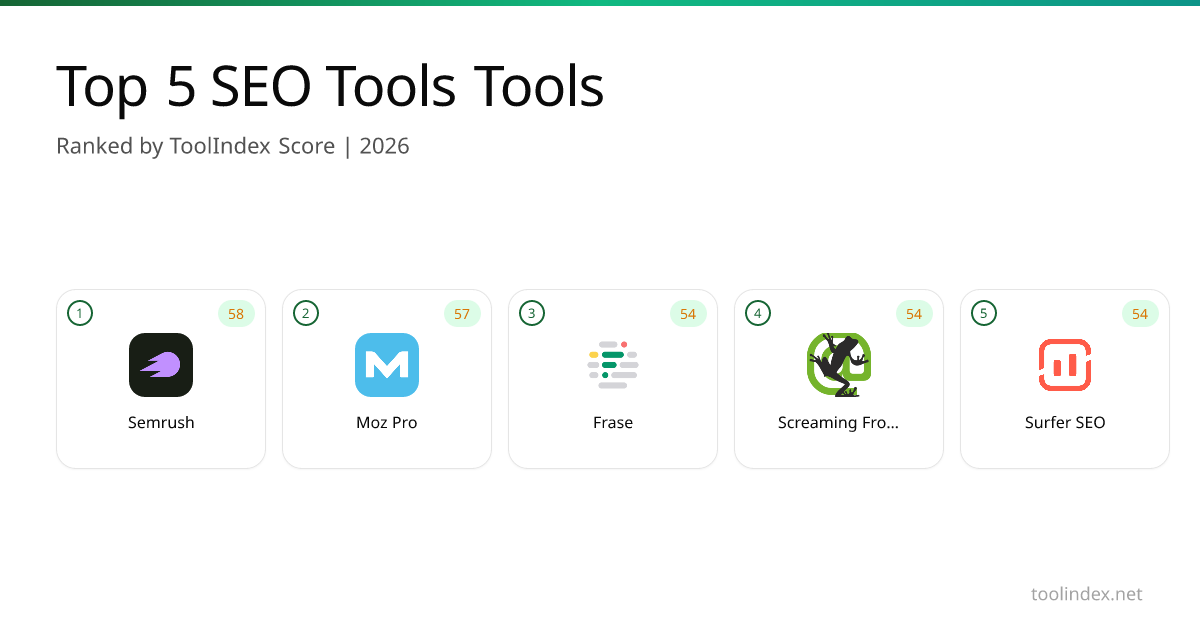
Postdex
An exclusive marketplace for finished, human-made articles. Every piece sells once.

Rank Compound
SEO content that compounds. What actually moved rankings, measured, with the failures shown.

Moz Pro
SEO toolset with keyword research, site audits, link analysis, and the well-known Domain Authority and Page Authority metrics.
Frase
AI-assisted SEO content tool that turns SERP research into briefs, outlines, and optimized drafts inside one editor.
Screaming Frog SEO Spider
Desktop website crawler trusted by SEO professionals for technical audits, broken link checks, and structured data analysis.

Semrush
Comprehensive SEO and digital marketing suite covering keywords, backlinks, competitive research, content, and PPC.

SEOdata.dev
Simple API for keyword search volume, CPC, and competition data

AI Visibility
Audit how ready your website is to be crawled, understood, and cited by AI answer engines

AgentScore
See how AI search represents your business and what to fix first
SEO.bike
Free SEO and GEO tools plus a managed service to rank on Google and get cited by AI
Surfer SEO
Content optimization tool that scores drafts in real time against the top-ranking pages for any target keyword.

Encited
Technical and Content optimization platform for SEO and AI search. Alternative to Prerender.io, Rankability, Profound
What to Look For
Data Depth & Refresh Rate
A great SEO tool indexes a meaningful chunk of the live web and refreshes its keyword and backlink data on a schedule that matches how fast the SERP moves. Look for transparency on index size, refresh cadence, and how country and language coverage maps to where your audience actually is.
Crawl & Audit Accuracy
Technical audit tools have to render the page the way Google does, follow redirects honestly, and flag the issues that actually move rankings instead of noise. Test the crawler on a site you know well and see whether it surfaces the same issues your dev team already filed.
Content Briefing & On-page Guidance
Modern SEO tools should generate content briefs that go beyond keyword density: competing page coverage, semantic terms, recommended headings, FAQ candidates, and internal-link suggestions. Tools that turn the brief into a usable outline save hours per article.
Workflow & Pricing Fit
Most SEO tools price by tracked keywords, project count, or crawl volume. Pick the metric that matches how you actually work, and make sure the tool exports data cleanly so you are never locked into one dashboard. Free alternatives like Search Console plus a lightweight rank tracker beat overpaying for a heavy suite you barely use.