
Ringee
Open-source calling infrastructure for human teams and AI voice agents
Gallery
About Ringee
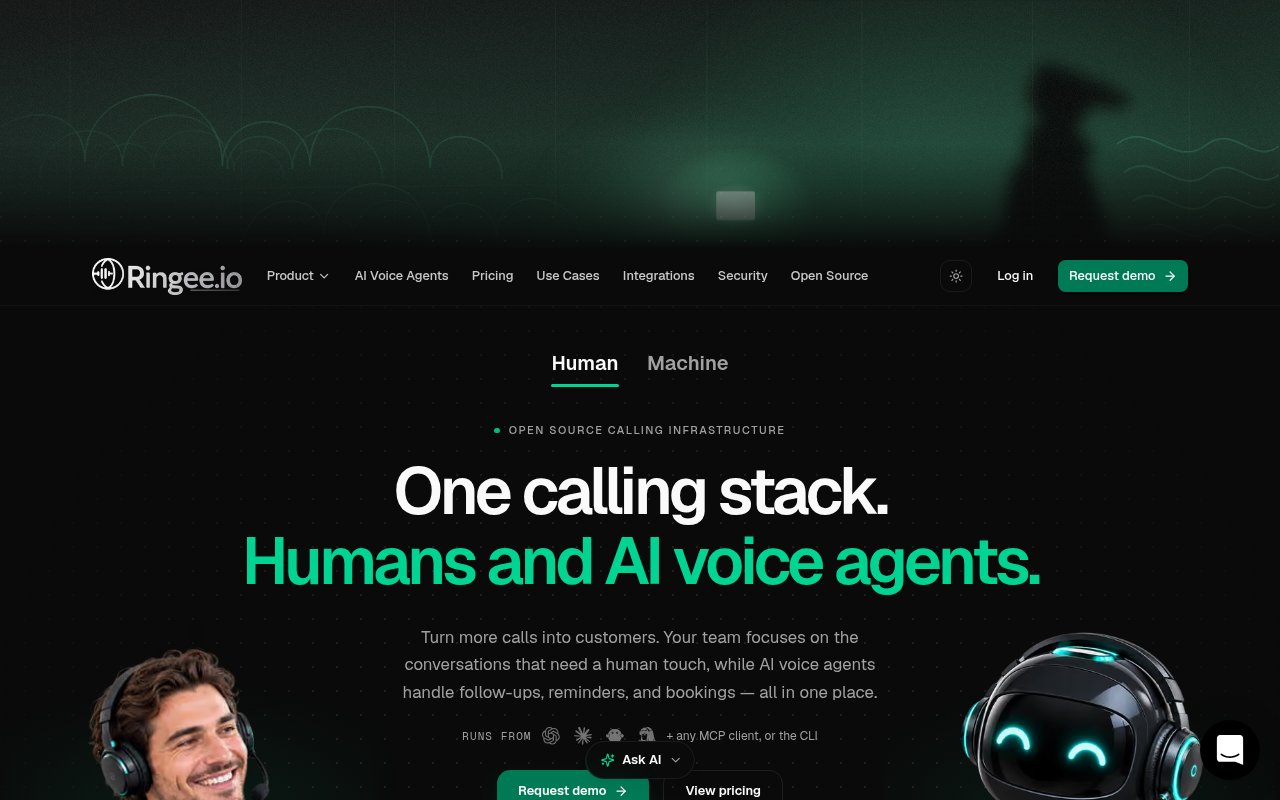
Ringee is open-source calling infrastructure for outbound teams that want human callers and AI voice agents to work from the same system. It brings phone numbers, contacts, call history, recordings, transcripts, outcomes, and follow-up into one workspace instead of splitting them between a dialer and a separate AI experiment. Human reps can place calls from the web app, mobile apps, or Chrome extension, while configured voice agents can originate calls and handle live conversations. Both kinds of work return to the same operational record. That makes Ringee useful for teams that need to increase calling capacity without losing track of who called, what happened, and what should happen next.
For human-led outreach, Ringee covers both manual and campaign dialing. A rep can call an individual contact or work through a prepared queue, see prior attempts, and record the outcome as soon as the call ends. Recording and real-time transcription can run during the conversation, and callbacks or meetings can be scheduled from the resulting record. Activity stays synchronized across the web, mobile, and extension surfaces, so a call placed from one device doesn't create a separate trail somewhere else. Ringee can also write calls, outcomes, and notes back to supported CRMs. The current integration set includes Attio and Odoo, while Apollo and Prospeo can supply and enrich leads. Google Calendar supports meeting booking from a call.
The AI side has two distinct modes. ChatGPT, Claude, any compatible MCP client, or the Ringee CLI can prepare and coordinate the workflow around a human call. An agent can search for prospects, import contacts, create a call session, log an outcome from the transcript, and arrange the next touch. Ringee also offers voice agents that take the live conversation themselves. A team configures the agent's voice, model, company context, knowledge sources, greeting, instructions, per-call variables, and result fields. The voice agent can retrieve indexed information during a call, check real calendar availability, book an accepted slot, schedule a callback, or request human follow-up. Afterward it returns the recording, transcript, outcome, optional summary and sentiment, and configured extracted fields to Ringee.
It fits SDR teams, recruiters, agencies, startups, freelancers, and other operators with repeatable outbound work. A small sales team can use campaigns and shared history without paying for each new seat. A recruiter can keep candidate calls and callbacks tied to the right contact. An agency can separate work through organization workspaces, while a developer can trigger calls and follow-up through the API, SDK, MCP server, webhooks, or command line. Browser testing lets a team speak with a voice agent before it calls a real person, and those tests don't consume phone calling credit. The product is broad enough for regular dialing, but its strongest case is an operation that wants human and automated calling to share one source of truth.
Ringee stands apart through its open codebase and programmable posture. The project is MIT licensed, available on GitHub, and self-hostable for teams that want control over data location, storage, and connections. Its hosted service uses Telnyx for calls, Clerk for authentication, and Stripe for payments. Organization membership scopes contacts, campaigns, numbers, credits, and other workspace data. Recording can be configured at the organization or user level, though the caller remains responsible for local notice and consent rules. Ringee is also candid that it hasn't completed SOC 2 or ISO 27001 certification. For AI voice agents, operational safeguards stay in the platform, calendar bookings must use current availability, and failed tools or requests for a person can create a human follow-up instead of pretending the call is complete.
Access combines a free hosted entry point with usage billing and an open-source self-hosting option. The Freelancer plan is $0 per month for one person and includes manual calling, contacts, recordings, transcription, integrations, and automation, but not teams or campaigns. Calling credit is separate and rates depend on the destination, with Ringee advertising calls from $0.012 per minute. The Organization plan is $20 per month for unlimited members and adds team workspaces and campaigns without a per-seat charge. AI voice agents require that team plan, and their calls add telephony, voice, and model usage based on the chosen configuration. This structure is attractive when headcount is the expensive part of a conventional dialer, though prospective users should calculate their actual call mix and compliance needs before moving a production workflow.
Key Features
- Human and AI outbound calling
- Campaign and manual dialers
- Real-time recording and transcription
- MCP, API, CLI, and SDK
- CRM and calendar integrations
- Shared structured call outcomes
Pros & Cons
What we like
- Keeps human and AI calls in one history
- Open source with a self-hosting path
- Flat team plan avoids per-seat fees
- Supports both no-code and developer workflows
Room for improvement
- Calling, voice, and model usage cost extra
- AI voice agents require the Organization plan
- No SOC 2 or ISO 27001 certifications
- Recording consent remains the operator's responsibility
Frequently Asked Questions
What is Ringee?
Can Ringee's AI voice agents make real calls?
Is Ringee free?
Can Ringee be self-hosted?
Best For
Featured in
Alternatives to Ringee

Close
Inside-sales CRM with calling and email built in
HubSpot
All-in-one CRM and growth platform for marketing, sales, and service teams

Upscale B2B
Done-for-you cold email and AI outreach agency that books qualified B2B meetings on your calendar

Prosp
AI LinkedIn outbound that personalizes messages, voice notes, and multi-account campaigns at scale
Reviews (0)
Badge builder
Add Ringee to your website
Choose a badge style and size, preview it here, then copy the generated HTML. Badge images are self-contained SVGs and do not require an external script.

<a href="https://toolindex.net/tools/ringee?ref=badge" target="_blank" rel="noopener">
  <img src="https://toolindex.net/badge/ringee/medium.svg" alt="Ringee - Listed on Tool Index" width="180" height="50" />
</a>How to use the badge
- 1. Pick the style, size, and theme that fit your layout.
- 2. Copy the generated HTML from the code block.
- 3. Paste it into your footer, homepage, or press page.
Standard badge available
The standard listing badge is available now. Score and circle badges are limited to tools currently ranked in the top 10 of a category.
Badge clicks return visitors to this profile with a referral tag so the source remains identifiable.
Related Tools

Boilerroom
An all-in-one outbound sales platform for dialing, sequencing, and follow-up
Close
Inside-sales CRM with calling and email built in
Apollo.io
B2B prospecting database fused with a sales engagement platform
lemlist
Cold email and multichannel outreach with personalized images and video
Work on Ringee? Request listing access or correction