Salesloft
Revenue orchestration platform for enterprise sales teams
Gallery
About Salesloft
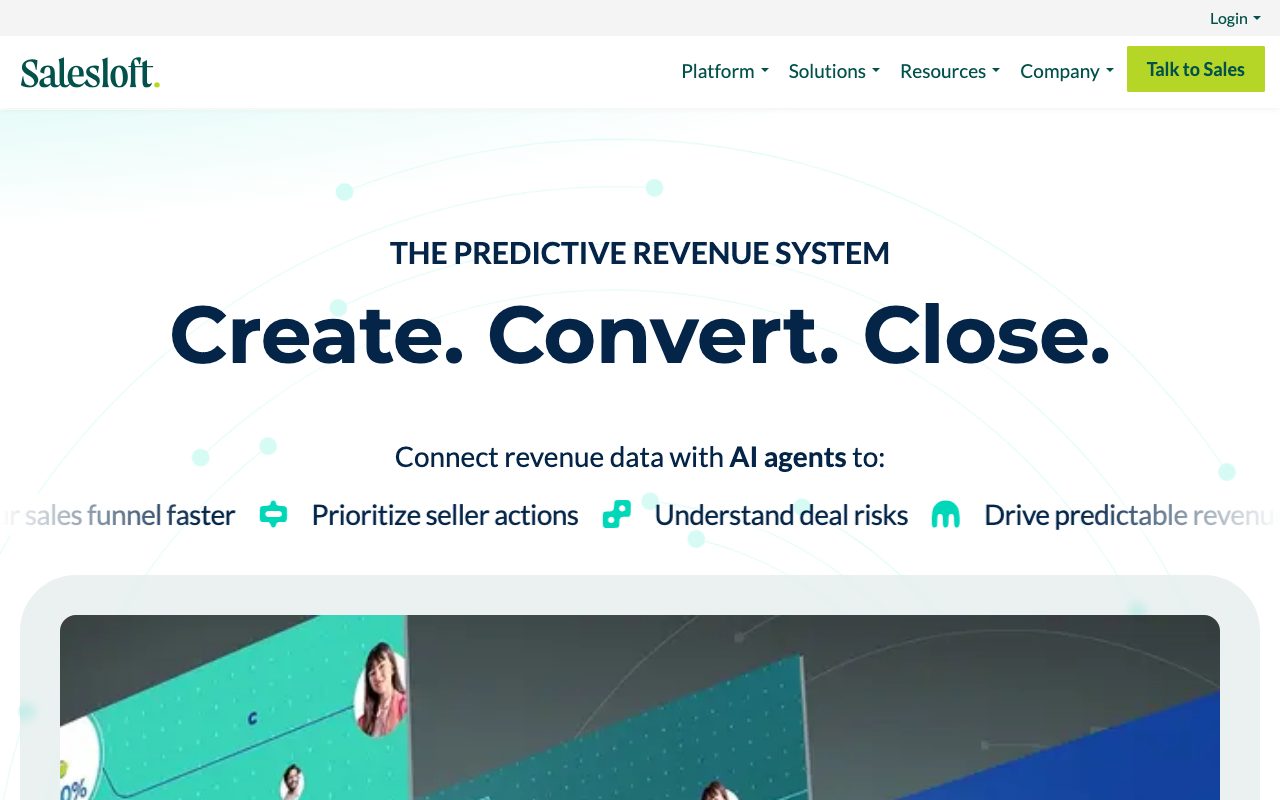
Salesloft is the revenue orchestration platform built for enterprise sales teams. Cadences, conversation intelligence, deal forecasting, coaching dashboards. The product that lets a 50-person SDR team run consistent outbound at scale without the wheels falling off.
If you've ever watched a small sales team grow into a confused multi-region org and wished there was a tool that brought structure without crushing the autonomy, Salesloft is one of the answers people pay real money for.
It's not for solo founders or 10-person sales teams. It's for the moment when "everyone has their own way of doing outbound" stops scaling and you need a system. At that scale, Salesloft and Outreach are the two names you'll evaluate.
What Salesloft actually does
Cadences are sequenced outreach plans across email, phone, LinkedIn, and other channels. SDRs work the cadence; reps know the next-best action. The platform tracks every step, every touch, every reply.
Conversation intelligence transcribes calls, surfaces patterns, and ties moments back to deal outcomes. Coaching managers can review specific call moments without listening to entire recordings.
Pipeline and deal forecasting turn rep activity into pipeline predictability. Salesloft's AI scoring identifies deals at risk and reps who need help. Forecasting accuracy improves measurably for the orgs that use it well.
Tight Salesforce sync keeps the CRM clean. Activity logs, opportunity updates, and contact data flow in both directions without manual syncing.
Who Salesloft is for
Enterprise SDR and AE teams of 50 or more reps. The orchestration value compounds with team size. Standardizing across regions and segments is where Salesloft earns its keep.
Companies running outbound across multiple geographies. Local cadences, language adjustments, time-zone-aware sending. Salesloft handles the multi-region coordination smaller tools punt on.
Sales operations leaders responsible for pipeline forecasting accuracy. The activity-to-forecast linkage makes Salesloft a real revenue-operations tool, not just an outbound platform.
If you're a 5-person sales team, Salesloft is overkill. Look at Apollo or HubSpot Sales Hub.
Pricing breakdown
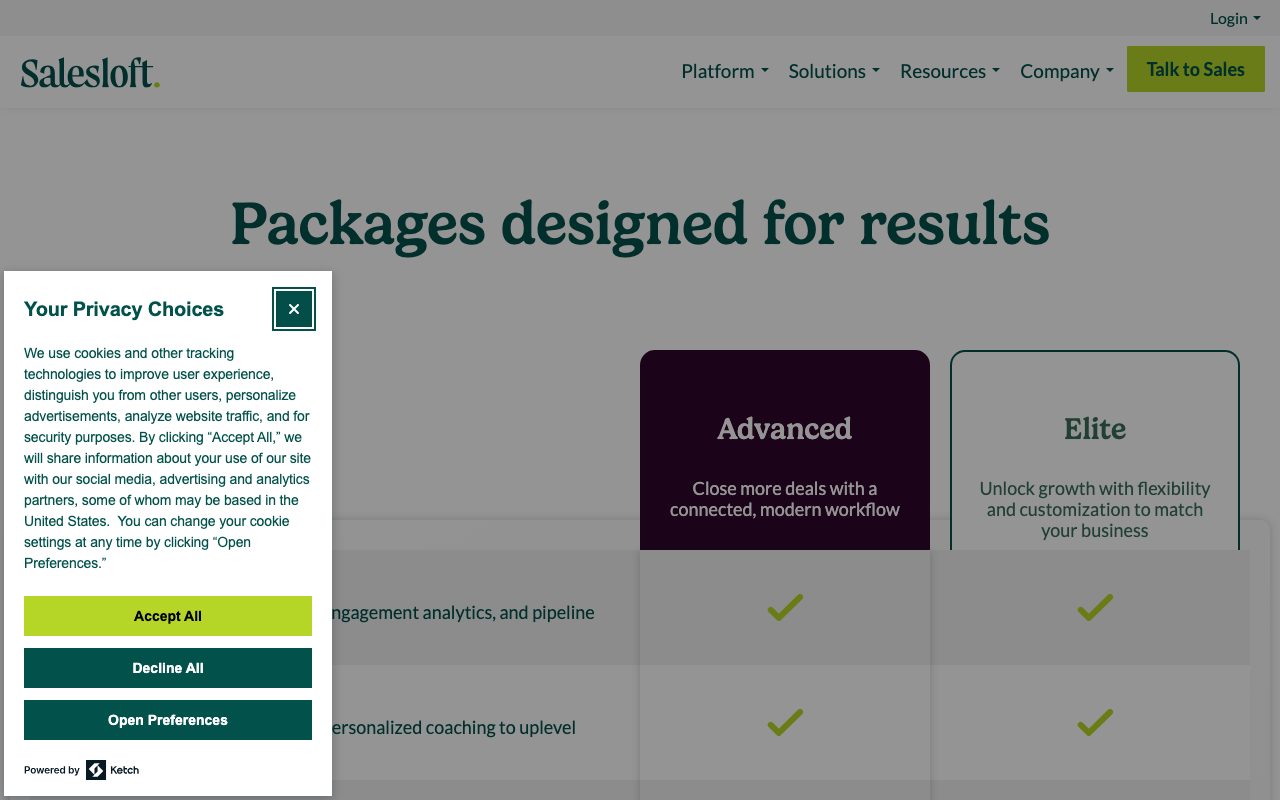
Salesloft pricing is gated behind a sales call. There's no public price page. Industry chatter puts entry-tier seat costs around $125 to $165 per user per month, scaling up significantly for full platform access.
Conversation intelligence and forecasting often live in higher tiers. Implementation services run several thousand dollars and several weeks. Plan for the full project, not just the license.
Annual contracts are standard. Negotiation room exists, especially for larger seat counts and multi-year commitments.
Standout features in Salesloft
Multi-channel cadences are the foundation. Salesloft handles email, phone dials, LinkedIn touches, and custom steps in a single sequence. Reps execute one play; managers track the play, not individual outreach.
Conversation intelligence is mature. Call transcription, talk-time ratios, keyword tracking, and competitor mentions all surface in a coaching-friendly interface.
Deal and pipeline forecasting tied to rep activity. Reps update deals; the platform flags risk patterns; managers focus where it matters. The marriage of activity and outcome data is the real product.
Coaching dashboards
Sales managers get a single place to coach. Recordings tagged by event, call snippets to share, scorecards for repeated rep behaviors. The coaching workflow is genuinely useful, not just a checkbox feature.
Honest tradeoffs
Pricing is opaque. No published page, sales-led process, contract negotiation. Buyers used to PLG SaaS find it tedious.
Implementation projects run weeks. Process design, Salesforce field mapping, cadence migration, manager training. Budget realistic time and consultant fees.
Overkill for small teams. The platform's complexity adds friction below 25-30 reps. Smaller orgs are better served by lighter tools.
Salesloft is a real platform investment. It rewards teams who treat sales as a measurable system and resent teams who hoped it would fix culture problems by itself.
Salesloft vs alternatives
Versus Outreach, the two are direct competitors. Salesloft is often praised for cleaner UI; Outreach for AI-driven prioritization. The choice often comes down to existing CRM and team culture. See the comparison.
Versus Apollo, Salesloft is enterprise; Apollo is broader (data + outreach) and serves smaller teams.
Versus HubSpot Sales Hub, Salesloft is purpose-built for managed enterprise sales orgs. HubSpot is broader but shallower in the cadence-and-forecasting layer.
For more options, see the best sales engagement platforms and Salesloft alternatives.
Bottom line
Salesloft is the right call for enterprise sales orgs that need orchestration, coaching, and forecasting in one platform. The depth justifies the price for teams large enough to benefit.
Plan the implementation seriously. Train managers on coaching workflows, not just rep tooling. The product is a multiplier on disciplined process, not a substitute for it.
Implementing Salesloft well
Plan four to eight weeks for a real implementation. Process design, Salesforce integration, cadence migration, manager training. Compressed timelines lead to half-baked rollouts that get torn down later.
Standardize cadences before importing them. Reps who built bespoke cadences shouldn't bring all of them into Salesloft. Pick the templates that worked, retire the rest.
Train managers on coaching workflows separately from training reps on cadence execution. Manager adoption drives team adoption; skip it and the platform underperforms.
Cadences that actually work
Multi-channel by default. Email-only cadences underperform; mixing email, phone, and LinkedIn lifts response rates measurably.
Personalization at the start, automation in the middle, escalation at the end. Reps focus their time on the high-value first touches.
Iterate based on data. Salesloft's reports show step-level drop-off. Fix the underperforming step, watch the conversion rate move.
Salesloft and Salesforce
The integration is the strongest in the category. Activity logs, opportunity updates, contact data, and custom fields flow bidirectionally with minimal config.
Field mapping decisions matter. Sloppy mapping creates duplicate records, missed activities, and reporting headaches later. Get a Salesforce admin involved during implementation.
Many enterprise sales teams treat Salesloft as the daily UI and Salesforce as the system of record. The pattern works well when the integration is configured cleanly.
Common Salesloft questions
How does Salesloft compare to Outreach? Direct competitors. Often comes down to existing tooling, integration fit, and team preference. Both are excellent at the enterprise tier.
Can Salesloft handle European GDPR requirements? Yes, with proper configuration. Data residency, consent capture, and right-to-be-forgotten workflows are supported.
Is Salesloft worth it for a 10-person sales team? Usually no. Look at Apollo, HubSpot Sales Hub, or other lighter tools first.
Browse more at tools for sales.
Salesloft Rhythm and signal-driven selling
Rhythm is Salesloft's recommendation engine. It surfaces the next best action across deals based on engagement signals. Reps work the prioritized list rather than guessing.
The signal model improves with usage. The first month feels noisy; by month three the recommendations track real revenue impact.
Trust the signals, but verify. Reps who blindly follow recommendations miss judgement calls; reps who ignore them leave revenue on the table. The middle path works best.
Salesloft for managers
Coaching dashboards show rep activity, win rates, and conversation quality at a glance. Spot underperformers early and intervene before quotas slip.
Run weekly call reviews using the conversation intelligence transcripts. Pick one good call and one rough call per rep. Coach from specific moments, not vague impressions.
Forecasting accuracy improves measurably for managers who use the tools. The platform shows where forecast confidence is high vs shaky; managers focus the right deals.
Salesloft administration
Plan a real admin role for Salesloft. Process changes, integration tuning, and report customization need someone whose job it is. Without dedicated administration, the platform underperforms.
Final thoughts on Salesloft
Salesloft is enterprise infrastructure for sales orgs that have outgrown ad-hoc tooling. The depth justifies the price; the implementation work justifies the patience.
Don't underestimate the change-management dimension. Tool adoption is a cultural shift; rep buy-in matters more than feature lists. Plan for the human side or the platform underperforms.
Browse other options at the best sales tools and outbound sales tools.
Quick recap
Salesloft fits enterprise sales orgs, multi-region outbound teams, and revenue ops leaders who need orchestration plus forecasting in one platform. The depth justifies the price at scale.
It struggles for small teams who'd find it overkill. Apollo, HubSpot Sales Hub, or simpler tools fit better below 25-30 reps.
Plan the implementation seriously. Process design, Salesforce integration, and manager training each deserve real time. Skip them and the platform underperforms.
Browse more options at the best sales engagement tools, the revenue operations category, and Salesloft alternatives.
Salesloft closing notes
The tool is one input into a high-functioning sales organization. The other inputs are people, process, and product. Don't expect Salesloft to fix gaps in those areas; the platform multiplies what's working, not what's broken.
For revenue ops leaders evaluating Salesloft against Outreach, run a real pilot with the same sales team using both for two months. Most teams come out with a clear preference based on workflow fit, not feature lists.
The platform's roadmap leans heavily into AI prioritization and conversation intelligence. Both areas mature monthly; expect continuous improvement.
Browse more sales options at the best sales platforms and the broader enterprise sales category.
Tutorial / Demo
Key Features
- Multi-channel cadences across email, phone, and LinkedIn
- AI-powered next-best-action prioritization
- Conversation intelligence with call transcription
- Deal and pipeline forecasting
- Tight Salesforce sync
- Coaching dashboards for sales managers
Pros & Cons
What we like
- Strong fit for managed enterprise sales orgs
- Conversation intelligence and cadences in one platform
- Robust admin controls for large teams
Room for improvement
- Pricing is opaque and gated behind a sales call
- Overkill for small teams or solo founders
- Implementation projects can run weeks
Frequently Asked Questions
Salesloft vs Outreach, which is better?
Is Salesloft right for a small startup?
How much does Salesloft cost?
Does Salesloft integrate with Salesforce?
Does Salesloft have AI for call coaching?
Best For
Featured in
Alternatives to Salesloft
View allApollo.io
B2B prospecting database fused with a sales engagement platform
HubSpot
All-in-one CRM and growth platform for marketing, sales, and service teams

Close
Inside-sales CRM with calling and email built in
lemlist
Cold email and multichannel outreach with personalized images and video
Our take
Tool Index Editorial · May 2026· 4.6/5
What Salesloft is really selling — beyond the marketing copy — is revenue orchestration platform for enterprise sales teams.
On the strengths side: Strong fit for managed enterprise sales orgs, Conversation intelligence and cadences in one platform, and Robust admin controls for large teams. What to watch for: Pricing is opaque and gated behind a sales call and Overkill for small teams or solo founders.
Verdict: Salesloft comfortably earns its spot in the category — a smart default when you need enterprise SDR and AE teams of 50+ reps.
Editorial opinion from the Tool Index team, written from the public product pages. Not a user review.
Reviews (6)
Best decision this quarter
Salesloft solves a real problem for me, but it's not magic. Genuine strength: strong fit for managed enterprise sales orgs. Main use case: enterprise SDR and AE teams of 50+ reps. Still recommending it to people in similar setups.
Hit the Salesloft sweet spot
First impression of Salesloft was 'huh, this is actually thought through.' The biggest win has been robust admin controls for large teams. The AI-powered next-best-action prioritization is more useful than I expected. Still recommending it to people in similar setups.
Pros
- Robust admin controls for large teams
- Strong fit for managed enterprise sales orgs
Best decision this quarter
Started using Salesloft casually, now it's pinned in my dock. Where it really wins is conversation intelligence and cadences in one platform. Main use case: enterprise SDR and AE teams of 50+ reps. Hard to imagine going back to my previous setup.
Cons
- Overkill for small teams or solo founders
Bought it for one feature, stayed for ten
Hadn't planned on switching, but Salesloft was hard to ignore. The biggest win has been strong fit for managed enterprise sales orgs. Their take on AI-powered next-best-action prioritization is solid. It fits well for standardizing outbound across multiple regions. Sticking with Salesloft.
Pros
- Strong fit for managed enterprise sales orgs
- Robust admin controls for large teams
Underrated honestly
A couple of cycles of using Salesloft, here's what holds up. Honestly impressed by how strong fit for managed enterprise sales orgs. Main use case: standardizing outbound across multiple regions.
Pros
- Conversation intelligence and cadences in one platform
- Strong fit for managed enterprise sales orgs
- Robust admin controls for large teams
Salesloft, better than expected
Honest take: Salesloft delivers most of what the marketing promises. What stands out is how robust admin controls for large teams. Ai-powered next-best-action prioritization works the way you'd hope. Main use case: enterprise SDR and AE teams of 50+ reps. That said, overkill for small teams or solo founders is a real gripe.
Pros
- Conversation intelligence and cadences in one platform
- Robust admin controls for large teams
Cons
- Pricing is opaque and gated behind a sales call
Badge builder
Add Salesloft to your website
Choose a badge style and size, preview it here, then copy the generated HTML. Badge images are self-contained SVGs and do not require an external script.

<a href="https://toolindex.net/tools/salesloft?ref=badge" target="_blank" rel="noopener">
  <img src="https://toolindex.net/badge/salesloft/medium.svg" alt="Salesloft - Listed on Tool Index" width="180" height="50" />
</a>How to use the badge
- 1. Pick the style, size, and theme that fit your layout.
- 2. Copy the generated HTML from the code block.
- 3. Paste it into your footer, homepage, or press page.
Score badge available
Salesloft qualifies for the score and circle badges based on its current top-10 positionin Sales.
Badge clicks return visitors to this profile with a referral tag so the source remains identifiable.
Related Tools

Boilerroom
An all-in-one outbound sales platform for dialing, sequencing, and follow-up
Close
Inside-sales CRM with calling and email built in
Apollo.io
B2B prospecting database fused with a sales engagement platform
lemlist
Cold email and multichannel outreach with personalized images and video
Work on Salesloft? Request listing access or correction