
Supliful
Private-label dropshipping for supplements, skincare, coffee, and pet products with no inventory
Gallery
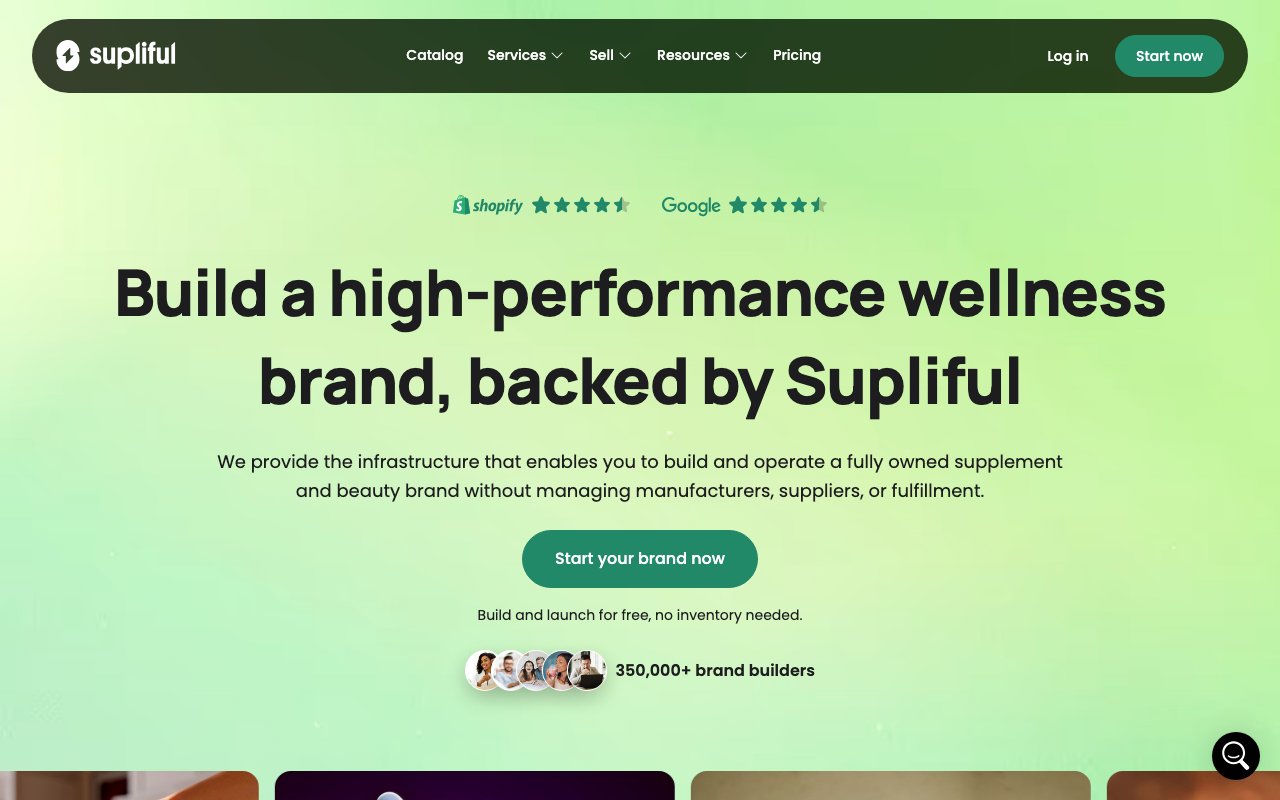
About Supliful
Key Features
- 150-plus white-label product catalog
- On-demand US fulfillment in 3 to 5 days
- Canva-integrated label design
- Shopify and ClickFunnels integrations
- No minimum order quantities
- Brand Accelerator launch program
Pros & Cons
What we like
- No inventory or upfront stock cost to start a physical brand
- US-based fulfillment keeps shipping times reasonable
- Free to design and preview before committing to a paid plan
Room for improvement
- Per-unit fulfillment cost cuts into margins versus bulk manufacturing
- Catalog is fixed, so you can't create truly custom formulations
- Monthly membership is required before you can sell anything
- US-centric fulfillment is a constraint for sellers targeting other regions
Frequently Asked Questions
Do I need to hold any inventory with Supliful?
How much does Supliful cost?
Where does Supliful ship from and how long does it take?
Can I create my own custom supplement formula?
What stores does Supliful integrate with?
Best For
Featured in
Alternatives to Supliful

Shopify
Hosted commerce platform for storefronts of every size

BigCommerce
Open-architecture e-commerce platform for mid-market and B2B brands
Stan
All-in-one creator storefront for selling digital products and courses straight from your bio
Gumroad
Simple storefront for creators selling digital products
Our take
Tool Index Editorial · Jun 2026· 4.2/5
Supliful nails the hardest part of starting a physical-product brand, which is removing the inventory and logistics risk that kills most first attempts. Free design and preview, no minimum orders on the core catalog, and US fulfillment in 3 to 5 days make it a genuinely low-stakes way to test a supplement, coffee, or skincare concept. For creators sitting on an audience, that's a fast on-ramp to a real brand.
The catch is the same one every on-demand model carries. Per-unit costs are higher than buying in bulk, so your margins will always trail a brand that commits to inventory, and the fixed catalog means you can't ship a truly differentiated formulation without paying for custom work. If your customers live outside the US, the domestic-first fulfillment will pinch. Treat it as a launchpad and validation tool, not the forever home for a brand that scales into real volume.
Editorial opinion from the Tool Index team, written from the public product pages. Not a user review.
Reviews (8)
Surprised how much we use this
Took a few weeks for Supliful to click, then it stuck. What stands out is how no inventory or upfront stock cost to start a physical brand. The on-demand US fulfillment in 3 to 5 days is more useful than I expected. Honest gripe: catalog is fixed, so you can't create truly custom formulations.
Pros
- Free to design and preview before committing to a paid plan
Cons
- Catalog is fixed, so you can't create truly custom formulations
- US-centric fulfillment is a constraint for sellers targeting other regions
Good for most of what we need
Picked Supliful for the lower price, stayed for the actual quality. What stands out is how US-based fulfillment keeps shipping times reasonable. Worth calling out the 150-plus white-label product catalog too. It fits well for creators turning an audience into a branded skincare or coffee shop.
Pros
- Free to design and preview before committing to a paid plan
Cons
- Per-unit fulfillment cost cuts into margins versus bulk manufacturing
- Catalog is fixed, so you can't create truly custom formulations
Honest take after two months
Supliful isn't perfect but it's the best I've used in this category. Where it really wins is US-based fulfillment keeps shipping times reasonable. Main use case: creators turning an audience into a branded skincare or coffee shop. Worth the price for what I get out of it.
Pros
- US-based fulfillment keeps shipping times reasonable
Surprised how much we use this
Skeptical at first because Supliful looked too simple. It's not. Real selling point: US-based fulfillment keeps shipping times reasonable. It fits well for first-time founders testing a CPG brand without warehouse risk. One thing that bugs me: US-centric fulfillment is a constraint for sellers targeting other regions. Hard to imagine going back to my previous setup.
Pros
- US-based fulfillment keeps shipping times reasonable
Cons
- Catalog is fixed, so you can't create truly custom formulations
- Monthly membership is required before you can sell anything
Supliful, better than expected
Been using Supliful for the past year now. Genuine strength: free to design and preview before committing to a paid plan. Got real value out of brand Accelerator launch program.
Easy 5 from me
Honest take: Supliful delivers most of what the marketing promises. Real selling point: no inventory or upfront stock cost to start a physical brand. Shopify and clickfunnels integrations works the way you'd hope. Mostly using it for fitness influencers launching their own supplement line.
Pros
- Free to design and preview before committing to a paid plan
Best decision this quarter
Picked Supliful for the lower price, stayed for the actual quality. The biggest win has been no inventory or upfront stock cost to start a physical brand.
Pros
- Free to design and preview before committing to a paid plan
- US-based fulfillment keeps shipping times reasonable
Cons
- Per-unit fulfillment cost cuts into margins versus bulk manufacturing
Stuck the landing for our team
Adopted Supliful for one project, ended up using it for more. The biggest win has been US-based fulfillment keeps shipping times reasonable. Wish they'd address how per-unit fulfillment cost cuts into margins versus bulk manufacturing.
Pros
- Free to design and preview before committing to a paid plan
Cons
- Catalog is fixed, so you can't create truly custom formulations
Badge builder
Add Supliful to your website
Choose a badge style and size, preview it here, then copy the generated HTML. Badge images are self-contained SVGs and do not require an external script.

<a href="https://toolindex.net/tools/supliful?ref=badge" target="_blank" rel="noopener">
  <img src="https://toolindex.net/badge/supliful/medium.svg" alt="Supliful - Listed on Tool Index" width="180" height="50" />
</a>How to use the badge
- 1. Pick the style, size, and theme that fit your layout.
- 2. Copy the generated HTML from the code block.
- 3. Paste it into your footer, homepage, or press page.
Score badge available
Supliful qualifies for the score and circle badges based on its current top-10 positionin E-commerce.
Badge clicks return visitors to this profile with a referral tag so the source remains identifiable.
Related Tools

Stripe
Payment infrastructure for the internet

Klaviyo
Email and SMS platform purpose-built for ecommerce, with deep Shopify integration and revenue-attributed flows.

Chancey
Shopify app for selling gacha-style blind boxes with real inventory and transparent odds

Kajabi
All-in-one platform for selling online courses, memberships, and coaching
Work on Supliful? Request listing access or correction