
SupplementDEX
Compare supplement evidence by ingredient, condition, effect size, and study quality
Gallery
About SupplementDEX
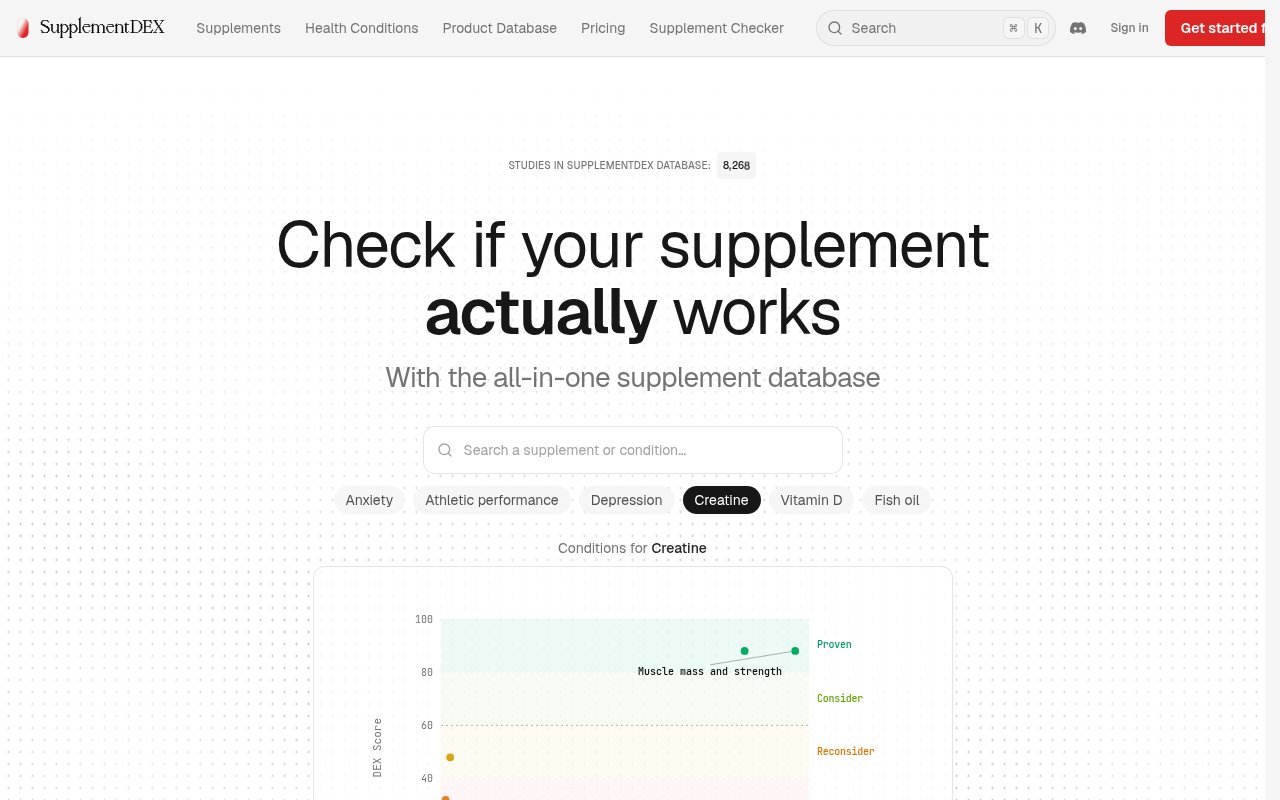
SupplementDEX is an evidence reference and analysis platform for comparing supplements against the health conditions people use them for. Its central checker accepts either a supplement or a condition, then connects the two through graded evidence reviews rather than treating an ingredient as uniformly useful. That distinction matters because the same supplement can have strong support for one purpose and weak support for another. The product is aimed primarily at healthcare practitioners who need a faster way to inspect efficacy, dosing context, safety notes, and primary research, though its Simple view also makes the material more approachable for readers without a research background.
The Supplement Checker is the quickest entry point. A search for an ingredient can show the conditions that have been studied, while a condition search can surface relevant ingredients. Each pairing is handled as its own evidence question. The interface can switch between Simple and Practitioner explanations, and full reviews include the trail of studies used to reach a rating. This keeps the output from becoming a generic list of supplement claims. A user can see what was studied, how large or reliable the evidence base appears to be, and where the product's conclusion came from before deciding whether the information deserves further attention.
A major part of the system is the DEX Score. SupplementDEX says this weighted score evaluates effect size, the amount of relevant human evidence, and trust in that evidence, using meta analyses and randomized controlled trials where available. Scores are calculated for individual supplement and condition pairings. The platform also presents summary statistics across a supplement's studied uses, including range, mean, median, and standard deviation. Those views help reveal whether an ingredient has one well supported application or a more even record across several conditions. Effect heatmaps and graphs provide another route into the same evidence rather than reducing every decision to one unexplained number.
The database extends beyond research summaries. Members can browse supplements and health conditions, review dosage and safety information where the literature supports it, and search a product catalog by name, brand, ingredient, and dose. Paid access includes DEX Scores, purchase guidance shown through star ratings, full study trails with links to papers, and both explanation modes. The site currently states that it covers 152 clinically graded ingredients and more than 2,600 supplement and condition reviews. It explicitly favors graded depth over an inflated ingredient count, so the catalog may be smaller than broad consumer databases even while individual covered topics receive more structured treatment.
This is best suited to clinicians, dietitians, allied health professionals, researchers, and careful consumers who want to move from a marketing claim to the underlying evidence. It can support a consultation, a literature check, or an early comparison of options, but it is not a diagnosis or treatment service. The company describes SupplementDEX as clinical decision support and says it should be used alongside professional judgment, local guidance, and direct patient assessment. It also says drug and supplement interactions are not yet covered comprehensively. Safety notes and contraindications may appear on individual pages, but users still need a dedicated interaction resource or pharmacist for prescription questions.
Its independence policy is a meaningful differentiator in a category full of affiliate content. SupplementDEX says it does not take money from supplement manufacturers, use affiliate links, sell sponsored ratings, or accept paid score upgrades. Member subscriptions fund the human evidence review, score maintenance, and product work. That does not remove the need to inspect methods or read source papers, and the DEX Score remains the platform's own weighted framework. It does, however, make the business model easier to understand. The site also publishes a handbook for readers who want more detail about how the score's inputs are weighted.
Access is freemium. A free Demo plan includes the checker, supplement and condition directories, a preview of roughly 100 products, and a complete St. John's Wort review after sign in. The Practitioner plan unlocks the full evidence library and product catalog, with monthly, annual, and lifetime payment choices. The site currently lists a seven day free trial for new Practitioner subscriptions and a money back period after the first charge. The free layer is useful for judging the presentation and navigating the public catalog, while clinicians who need scores, heatmaps, study trails, and repeat access to the full review set will need the paid product.
Key Features
- Supplement and condition checker
- Condition-specific DEX Scores
- Simple and practitioner review modes
- Linked clinical study trails
- Evidence heatmaps and graphs
- Searchable supplement product database
Pros & Cons
What we like
- Grades supplements for specific conditions instead of broadly
- Connects conclusions to individual papers and study summaries
- Offers both plain language and practitioner level views
- States a clear policy against affiliate and manufacturer funding
Room for improvement
- Full evidence tools require a paid plan
- Covers fewer ingredients than broad consumer catalogs
- Drug interaction coverage is not yet comprehensive
- DEX Score still requires method review and clinical judgment
Frequently Asked Questions
What is SupplementDEX?
How does the DEX Score work?
Is SupplementDEX free?
Does SupplementDEX replace medical advice?
Best For
Featured in
Alternatives to SupplementDEX
Notionlytics
Page-view analytics and reader feedback widgets for public Notion pages

Cometly
Marketing attribution for B2B SaaS that ties ad spend to pipeline and closed-won revenue

Amplitude
Digital analytics platform for product, growth, and marketing teams to analyze user behavior across web and mobile.

Simple Analytics
Cookieless, GDPR-friendly web analytics that needs no consent banner
Reviews (0)
Badge builder
Add SupplementDEX to your website
Choose a badge style and size, preview it here, then copy the generated HTML. Badge images are self-contained SVGs and do not require an external script.

<a href="https://toolindex.net/tools/supplementdex?ref=badge" target="_blank" rel="noopener">
  <img src="https://toolindex.net/badge/supplementdex/medium.svg" alt="SupplementDEX - Listed on Tool Index" width="180" height="50" />
</a>How to use the badge
- 1. Pick the style, size, and theme that fit your layout.
- 2. Copy the generated HTML from the code block.
- 3. Paste it into your footer, homepage, or press page.
Standard badge available
The standard listing badge is available now. Score and circle badges are limited to tools currently ranked in the top 10 of a category.
Badge clicks return visitors to this profile with a referral tag so the source remains identifiable.
Related Tools

Sleep Suivour
Track your sleep, improve your rest
Notionlytics
Page-view analytics and reader feedback widgets for public Notion pages
Mixpanel
Product analytics tool for tracking user events, funnels, retention, and cohorts to understand how people use your app.

Simple Analytics
Privacy-friendly web analytics with a clean dashboard, event tracking, and a strong stance against personal data collection.
Work on SupplementDEX? Request listing access or correction