
ActiveCampaign
Email marketing, automation, and CRM in one platform aimed at SMBs that need branching, conditional customer journeys.
Gallery
About ActiveCampaign
ActiveCampaign sits in an awkward, useful place. It's the email tool that wants to be a CRM, the CRM that wants to do SMS, and the automation engine that competes with both. For small and mid-size businesses that have outgrown Mailchimp but can't justify HubSpot's price tag, ActiveCampaign keeps showing up on shortlists. That's not an accident.
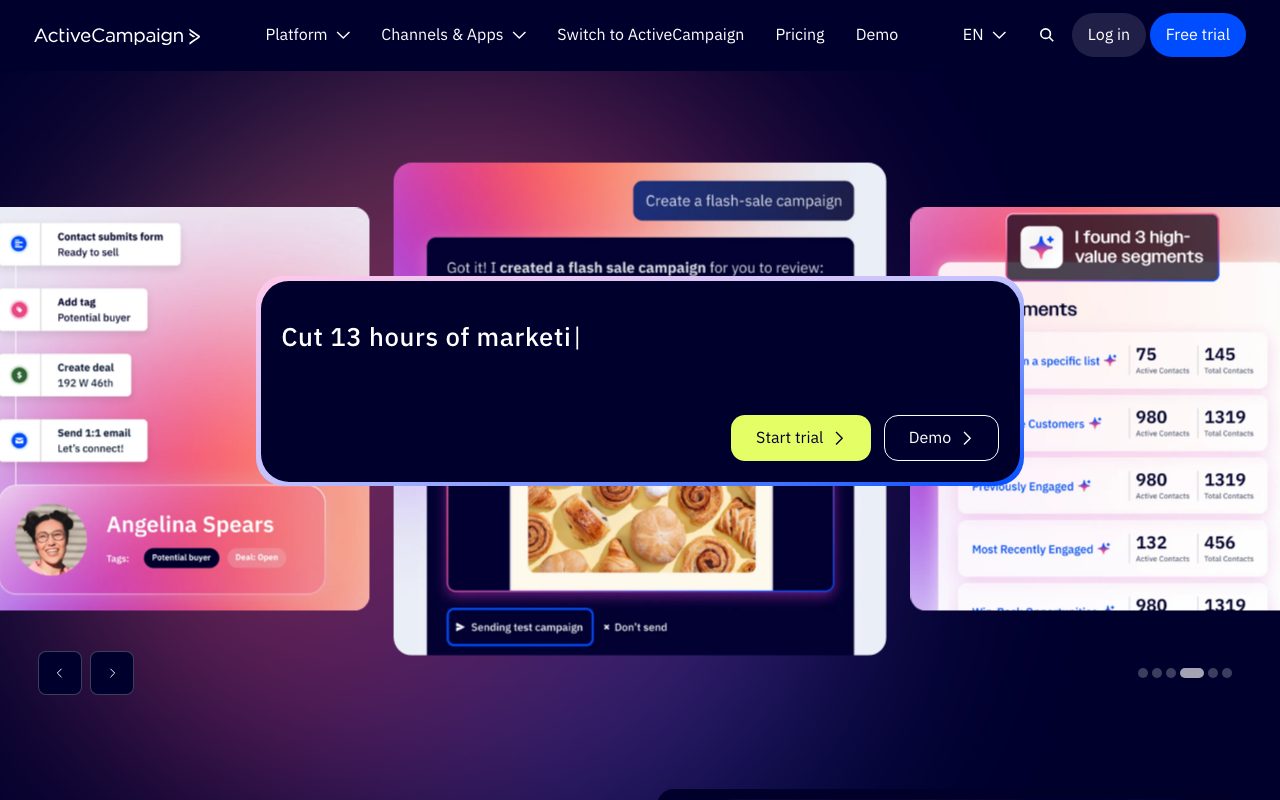
If you've tried other "marketing automation" platforms and walked away muttering about clunky builders or surprise upsells, ActiveCampaign feels different. The visual automation canvas is actually usable. Branching, conditional logic, goal tracking, and split testing all live in the same screen.
It's not perfect. The pricing structure punishes growth. But for the right team, ActiveCampaign delivers more than its tier suggests.
What ActiveCampaign actually does
At the core, ActiveCampaign is three products fused together. There's email marketing for newsletters, broadcasts, and sequences. There's a lightweight CRM with deal pipelines and contact records. And there's the automation builder that ties everything together.
The automation builder is the headline feature. You drag triggers, conditions, and actions onto a canvas. You can branch on tags, custom fields, page visits, deal stages, or replies to specific emails.
SMS sits inside the same builder, so you can send a text 30 minutes after someone abandons a cart, then follow up with email two days later. Site messages let you trigger in-app prompts based on the same logic. It's genuinely multi-channel without bolting on a separate tool.
Who ActiveCampaign is for
The sweet spot is roughly 10 to 250 employees. That's the range where you're past one-person email blasts but not yet drowning in enterprise sales overhead. Ecommerce stores running Shopify or WooCommerce get a lot from the deep behavioral triggers.
SaaS founders use ActiveCampaign for lifecycle messaging that follows the customer journey. Onboarding day one, day three, day seven. Trial-to-paid nudges. Win-back flows for churned accounts. The branching logic handles all of that without a developer.
If you're a solo creator with 500 subscribers, this is overkill. Look at ConvertKit or Beehiiv. If you're enterprise with a 50-person sales team, you'll want HubSpot or Salesforce Marketing Cloud.
Pricing breakdown
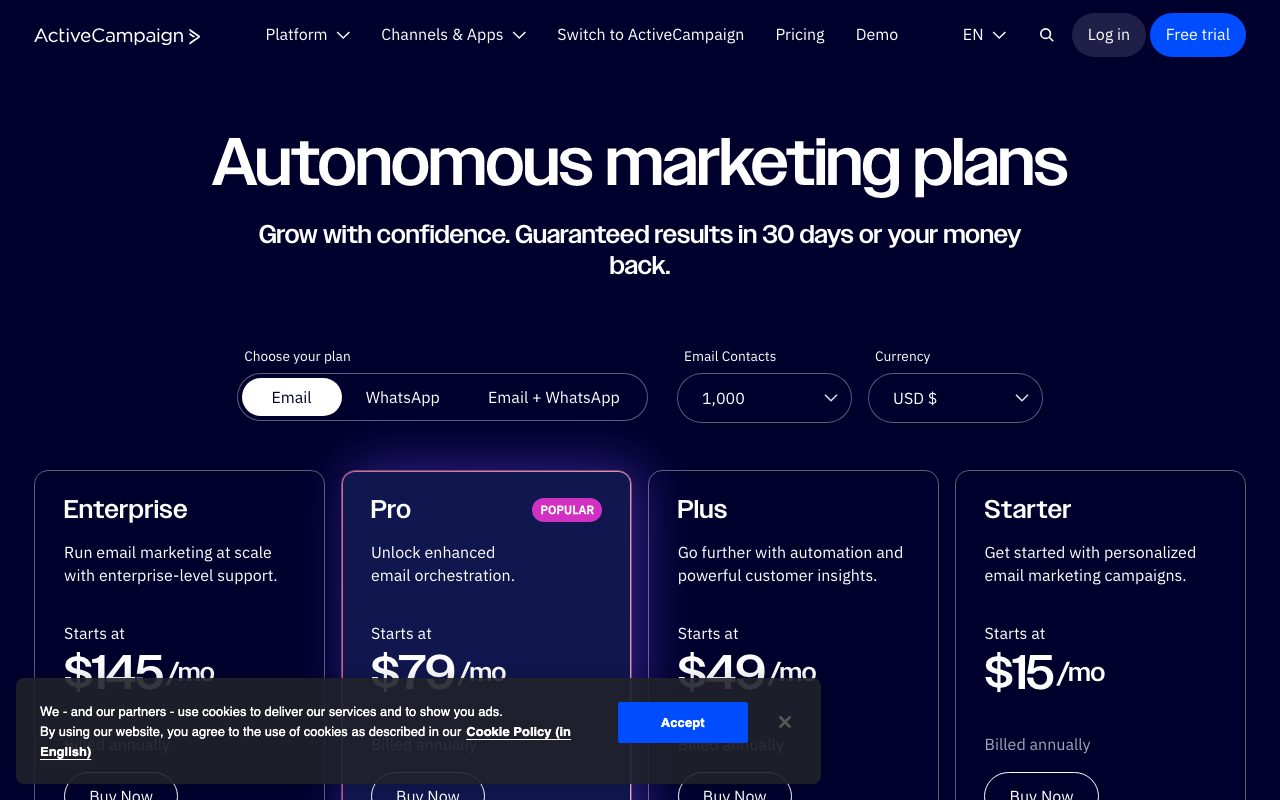
ActiveCampaign uses contact-based pricing across four tiers. Starter, Plus, Pro, and Enterprise. The contact tier doubles the price as your list grows from 1,000 to 5,000 to 10,000 and beyond.
Starter is bare bones. You get email, basic automations, and not much else. Most users will need Plus or Pro to unlock the lead scoring, custom reporting, and deeper CRM bits that make the platform worth it.
Watch the contact growth curve. A 5,000-contact Plus plan is reasonable. A 50,000-contact Pro plan is hundreds per month, fast.
Standout features in ActiveCampaign
The automation map view is underrated. You can zoom out and see every flow a contact passes through. For teams managing dozens of overlapping sequences, this saves real debugging time.
Predictive sending is genuinely useful. ActiveCampaign learns when each contact tends to open and schedules sends individually. Open rates lift in a measurable, not-snake-oil way.
Lead scoring works on rules you actually understand. Add 10 points for a pricing-page visit, subtract 5 after 30 days of no opens, trigger a sales handoff at 100. No black box.
The CRM that came along for the ride
ActiveCampaign's CRM won't replace Salesforce. It will replace a spreadsheet or a janky Pipedrive setup for a small team. Deal pipelines, tasks, notes, and tight email integration cover the basics.
Sales reps can run cadences out of the same tool marketing uses. The handoff between marketing-qualified and sales-accepted leads is the smoothest part.
Honest tradeoffs
The learning curve is real. The automation builder rewards experimentation, but new users often get stuck their first week. Tutorials help. Support is responsive on Plus and up.
Reporting is fine, not great. You can answer most questions, but advanced cohort analysis or attribution modeling requires exporting to a warehouse. Mixpanel-style depth isn't here.
If your automations are simple, you're paying for power you won't use. If they're complex, ActiveCampaign earns its keep faster than almost anything in the category.
ActiveCampaign vs alternatives
Versus Mailchimp, ActiveCampaign wins on automation depth and CRM. Mailchimp wins on simplicity and brand recognition. See the full comparison.
Versus HubSpot, ActiveCampaign is dramatically cheaper for similar marketing-automation reach. HubSpot wins on the unified CRM-marketing-sales-service experience and ecosystem. If you only need marketing, ActiveCampaign is the better deal.
Versus Klaviyo, the answer depends on whether you're an ecommerce-first business. Klaviyo's Shopify integration goes deeper. ActiveCampaign covers more verticals.
Want a wider set of options? Check the best email marketing tools and the ActiveCampaign alternatives page.
Bottom line
ActiveCampaign rewards teams willing to learn it. The automation builder is among the best in its tier. The CRM is a real CRM, not a glorified contact list.
If your customer journey has any branching at all, ActiveCampaign is on the shortlist. Start on Plus, not Starter, and budget for the contact-growth curve. You'll know within 30 days whether it fits.
Getting started with ActiveCampaign
The first week defines your relationship with the tool. Resist the temptation to build a complex automation on day one. Start with a single welcome series and a basic lead-scoring rule. Watch how it behaves on real subscribers.
Import your contact list cleanly. Tag aggressively. Tags are the connective tissue of every meaningful automation you'll build later, and renaming them after you've shipped 30 flows is painful.
Set up the tracking script on your marketing site. Site tracking unlocks the behavioral triggers that separate ActiveCampaign from a basic newsletter tool. Without it, you're paying for a feature set you can't fully use.
Common first automations
A welcome series for new subscribers, branched on signup source. A re-engagement sequence for contacts inactive for 60 days. A lead-scoring rule that fires a notification to sales when a lead crosses 100 points.
These three together cover most of the value for a small SaaS or ecommerce team. Build them, watch them run, then expand. Premature complexity is the most common ActiveCampaign mistake.
Integration ecosystem
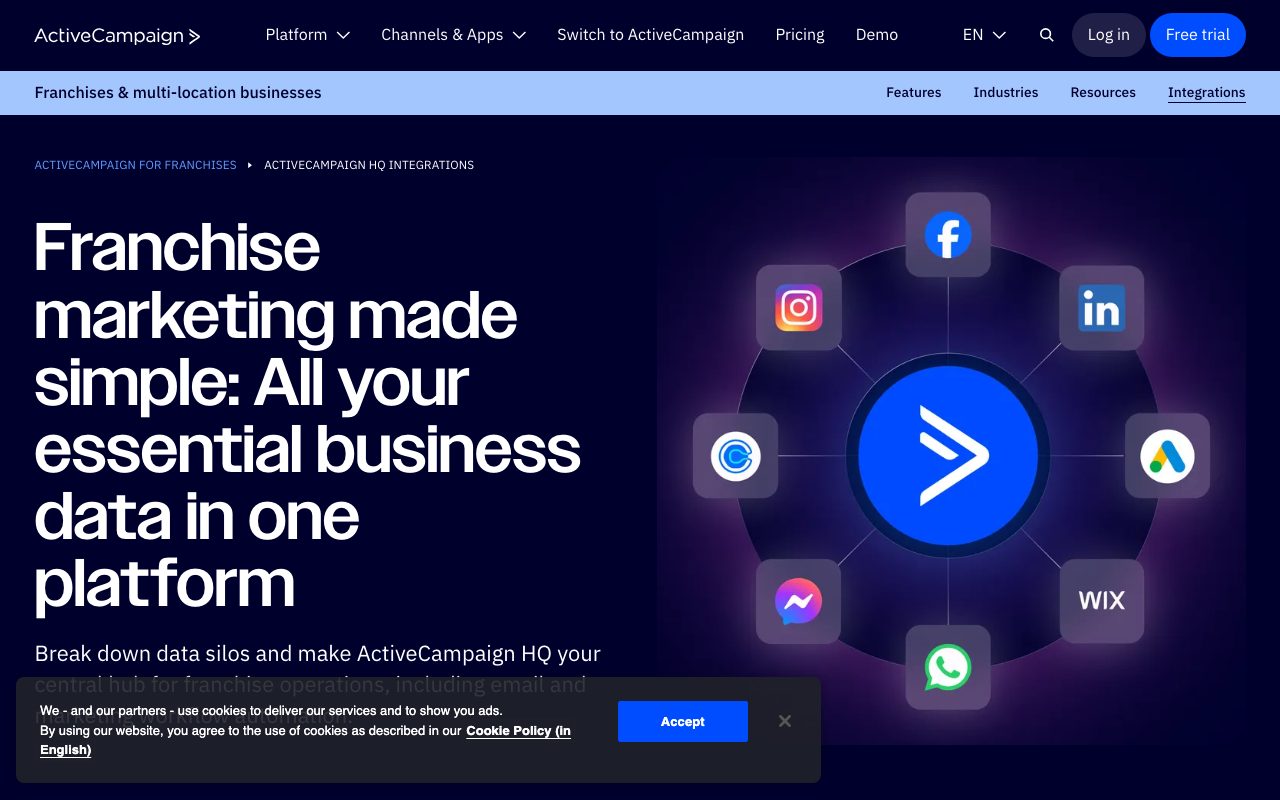
ActiveCampaign integrates natively with Shopify, WooCommerce, BigCommerce, and most major ecommerce platforms. The data flow is bidirectional; orders and customer events update contact records automatically.
Zapier and Make extend the catalog further. Native connections to Calendly, Typeform, and the major CRMs cover most stack permutations. The API is solid for custom needs.
Salesforce integration exists but is shallower than the native CRM features. Most ActiveCampaign users skip Salesforce entirely; the bundled CRM is enough.
Common ActiveCampaign questions
Is ActiveCampaign worth the price? For teams using more than basic broadcast email, yes. The automation depth pays back quickly. For pure newsletter use, cheaper alternatives win.
Can ActiveCampaign replace a CRM? For small B2B teams, yes. For sales orgs over 10 reps, you'll outgrow it.
How does ActiveCampaign handle deliverability? Generally well. Dedicated IPs are available on higher tiers. Warmup is automatic; sender reputation tools surface in higher plans.
Browse tools for email marketing for related options.
The 30-day ActiveCampaign verdict
By day 30, most teams know whether the platform fits. The signals are: have you built more than three working automations, are your contact tags useful enough to segment by, and is anyone outside marketing using the CRM. Three yeses and you'll stay. Two and you'll churn.
Stuck on yes-counts? The fix is usually a half-day workshop where the marketing lead and one engineer together rebuild the most important automation from scratch. The "from scratch" matters; you spot mistakes you'd rather not have shipped.
ActiveCampaign for ecommerce specifically
Cart abandonment, post-purchase, and win-back flows are the three automations that pay for ActiveCampaign on an ecommerce store. Build those first; layer the rest.
Native Shopify integration handles product data, order events, and customer attributes well. Klaviyo goes deeper specifically for ecommerce; ActiveCampaign covers the same ground for businesses that aren't pure-play ecommerce.
Revenue attribution per email is genuinely useful. Watch the dollar amounts attached to specific automations and prune the ones that don't pay.
Migrating from Mailchimp to ActiveCampaign
Export contacts and segments cleanly. ActiveCampaign's import handles the basics; you'll re-tag and re-segment to take advantage of the more powerful model.
Don't try to recreate every Mailchimp automation. Most of them were workarounds for Mailchimp's limitations. Rebuild from the desired outcome, not the existing implementation.
Run both tools for a month with new subscribers split between them. Compare engagement. Switch fully when you're confident ActiveCampaign is delivering.
Final thoughts on ActiveCampaign
The platform punishes shallow use and rewards deep use. If your team commits to learning the automation builder, the CRM, and the segmentation model together, ActiveCampaign earns its keep many times over.
Treat it as marketing infrastructure, not a single tool. The investment pays back over years, not weeks. The teams that get the most from it are the ones that hire or train someone to be the in-house expert.
For more options, browse tools for marketing automation and check the best CRM tools.
Quick recap
The tool fits when you have branching customer journeys, a need for SMS plus email, and the patience to learn the automation builder. The recurring pattern in successful adoptions is the in-house champion who learns it deeply.
The tool struggles when teams expect plug-and-play simplicity. The depth that makes it valuable also makes it overwhelming. Plan the learning curve realistically.
Pricing rewards smaller lists and punishes growth. Model the contact-tier curve before signing an annual contract. Most teams underestimate how fast lists grow once acquisition starts working.
Want broader coverage? See tools for automation, the best email tools, and the ActiveCampaign alternatives directory.
Tutorial / Demo
Key Features
- Visual multi-channel automation builder
- Native lightweight CRM with deal pipelines
- Lead scoring and attribution reporting
- Email, SMS, and site message campaigns
- A/B testing on subject lines and content
- Contact-level engagement timelines
Pros & Cons
What we like
- Automation builder is genuinely powerful
- CRM is included rather than a separate purchase
- Strong attribution and reporting for the price tier
Room for improvement
- Steeper learning curve than basic newsletter tools
- Costs climb fast as contact count grows
Frequently Asked Questions
Does ActiveCampaign have a free tier?
ActiveCampaign vs Mailchimp, what's the difference?
Does ActiveCampaign include a CRM?
What's the learning curve like?
Can I migrate from Mailchimp or HubSpot to ActiveCampaign?
Best For
Featured in
Tags
Alternatives to ActiveCampaign
HubSpot
All-in-one CRM and growth platform for marketing, sales, and service teams
Pipedrive
Visual sales CRM built around the deal pipeline
Brevo
Marketing platform combining email, SMS, WhatsApp, transactional sending, and a basic CRM under volume-based pricing.

Customer.io
Event-driven messaging platform for product teams that want to send email, push, SMS, and in-app messages from real user behavior.
Our take
Tool Index Editorial · May 2026· 4.6/5
ActiveCampaign sits in a crowded category, differentiating itself as email marketing, automation, and crm in one platform aimed at smbs that need branching, conditional customer journeys.
On the strengths side: Automation builder is genuinely powerful, CRM is included rather than a separate purchase, and Strong attribution and reporting for the price tier. Honest gripes: Steeper learning curve than basic newsletter tools and Costs climb fast as contact count grows.
Bottom line: pick ActiveCampaign when you need lifecycle email automation for SaaS and ecommerce; look elsewhere if steeper learning curve than basic newsletter tools would be a dealbreaker.
Editorial opinion from the Tool Index team, written from the public product pages. Not a user review.
Reviews (5)
Did exactly what I needed
Started using ActiveCampaign casually, now it's pinned in my dock. Where it really wins is CRM is included rather than a separate purchase. The lead scoring and attribution reporting is more useful than I expected. Easy yes for anyone weighing the same trade-offs.
ActiveCampaign, better than expected
Came to ActiveCampaign after frustration with what I had before. Honestly impressed by how CRM is included rather than a separate purchase. Found it works best for re-engagement campaigns based on site behavior.
Recommended without reservation
Came to ActiveCampaign after frustration with what I had before. Genuine strength: automation builder is genuinely powerful. The a/B testing on subject lines and content is more useful than I expected. It fits well for lead scoring and sales handoff for small B2B teams. Would buy again without thinking twice.
Pros
- Automation builder is genuinely powerful
Hit the ActiveCampaign sweet spot
The pitch for ActiveCampaign sounded too good to be true. Mostly true. Genuine strength: strong attribution and reporting for the price tier. Worth calling out the lead scoring and attribution reporting too. Still recommending it to people in similar setups.
Hit the ActiveCampaign sweet spot
Hadn't planned on switching, but ActiveCampaign was hard to ignore. The thing I keep coming back to: CRM is included rather than a separate purchase. Visual multi-channel automation builder works the way you'd hope. Main use case: multi-channel nurture sequences across email and SMS. Worth the price for what I get out of it.
Badge builder
Add ActiveCampaign to your website
Choose a badge style and size, preview it here, then copy the generated HTML. Badge images are self-contained SVGs and do not require an external script.

<a href="https://toolindex.net/tools/activecampaign?ref=badge" target="_blank" rel="noopener">
  <img src="https://toolindex.net/badge/activecampaign/medium.svg" alt="ActiveCampaign - Listed on Tool Index" width="180" height="50" />
</a>How to use the badge
- 1. Pick the style, size, and theme that fit your layout.
- 2. Copy the generated HTML from the code block.
- 3. Paste it into your footer, homepage, or press page.
Standard badge available
The standard listing badge is available now. Score and circle badges are limited to tools currently ranked in the top 10 of a category.
Badge clicks return visitors to this profile with a referral tag so the source remains identifiable.
Related Tools
Apatero AI
The creator studio for AI image, video, audio, 3D, and avatars, now at apatero.ai.

SEObot
Autonomous AI SEO agent that runs your blog and link building on autopilot

Substack
Hosted newsletter and publication platform with built-in payments, recommendations, and an audience network for writers.

MailerLite
Friendly, affordable email marketing tool with newsletters, automations, landing pages, and a growing creator toolkit.
Work on ActiveCampaign? Request listing access or correction