onPanda
Inspect, branch, and correct LLM output one token at a time
Gallery
About onPanda
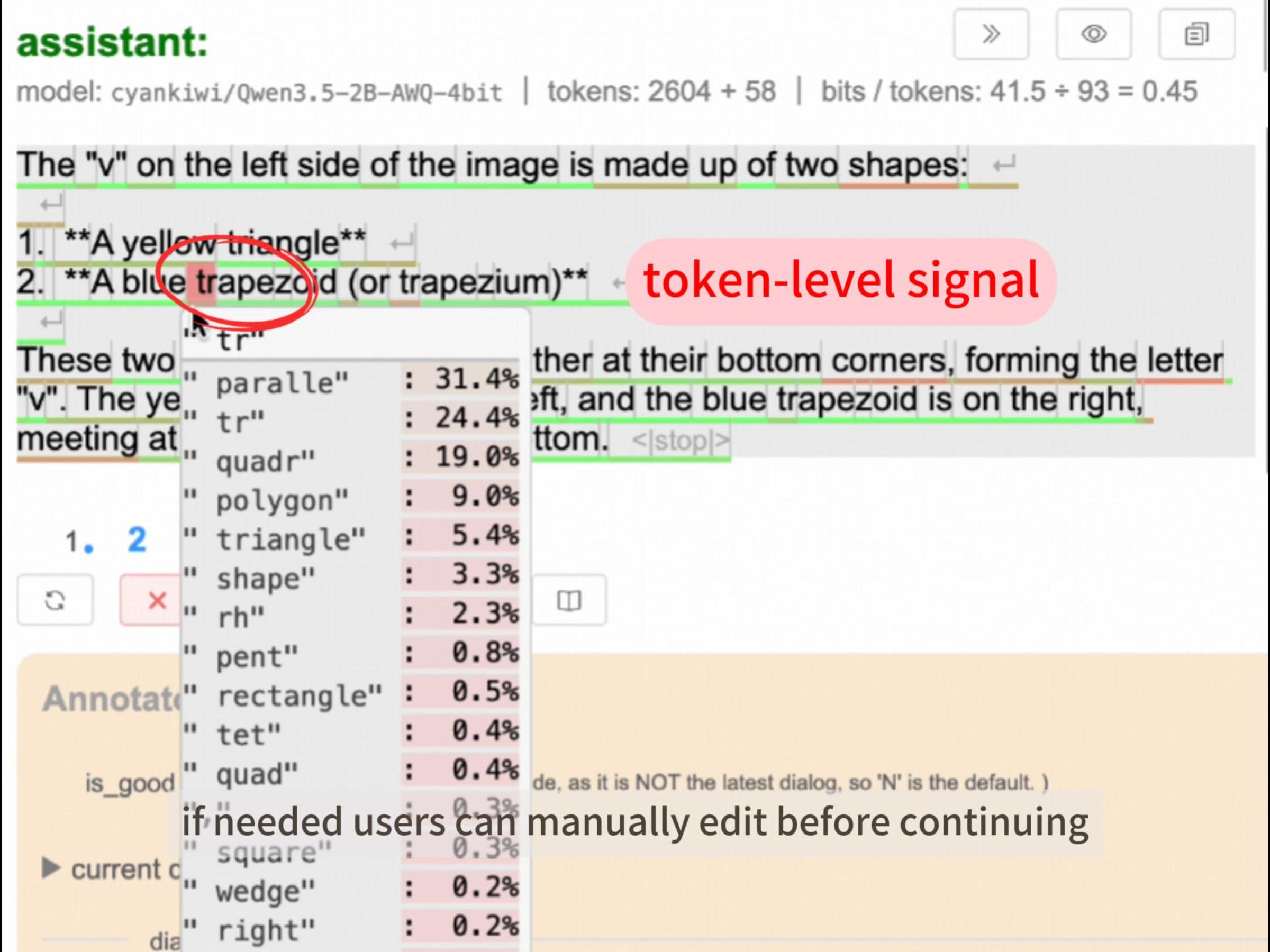
onPanda is an open-source web app for looking inside an LLM response and steering it at the token level. Instead of treating a completed answer as one block of text, it exposes token probabilities and alternative candidates directly in the conversation. A user can hover over a token, choose another candidate or type a replacement, then continue generation from that exact point. That makes it useful when a prompt gets a model close to the right answer but a particular word, reasoning step, or tool decision sends the rest of the response in the wrong direction. The project expands this interaction into a workspace for model inspection, prompt exploration, and alignment data annotation.
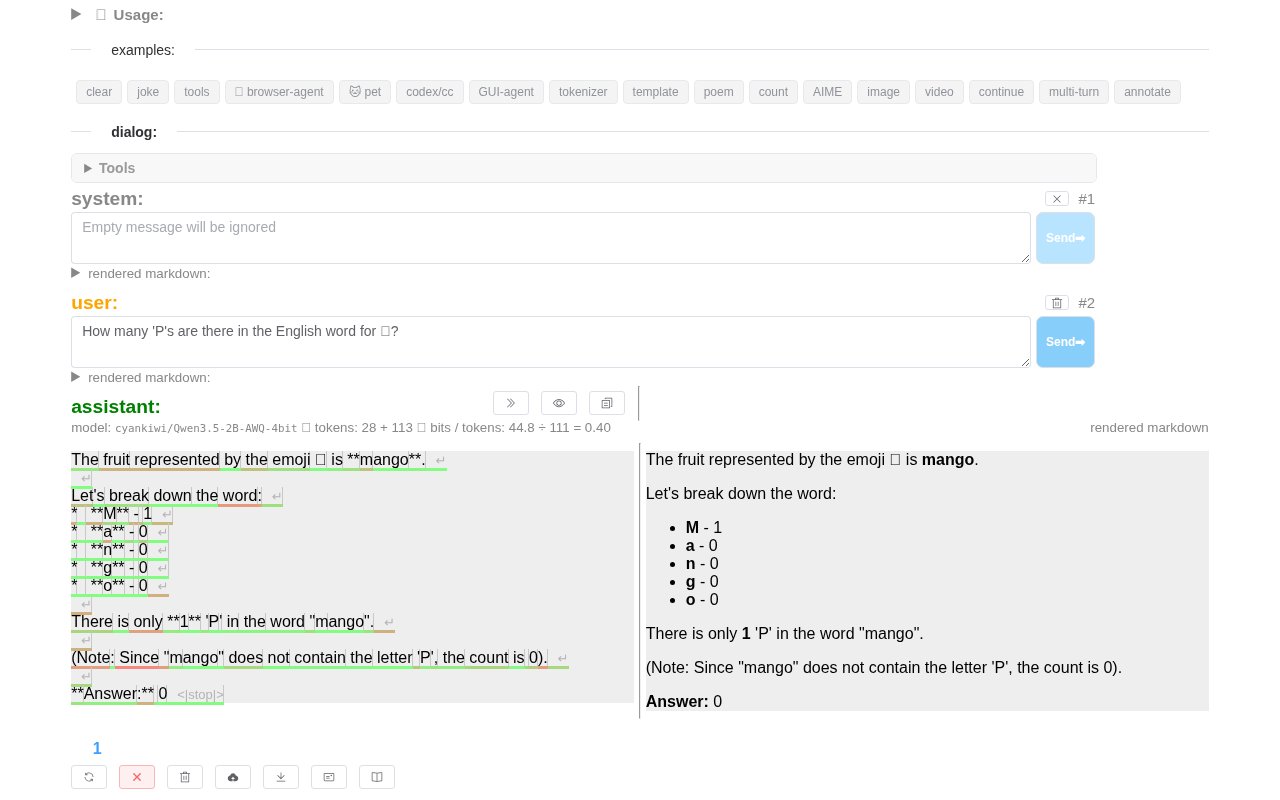
The central workflow is deliberately visual. Candidate tokens and their probabilities appear alongside the generated output, so a reviewer can inspect what the model considered rather than seeing only the final selection. Clicking an alternative creates a different continuation, while direct editing gives the reviewer freedom to supply a better token or passage. onPanda records these paths in a tree, which preserves branch history instead of flattening every experiment into a single transcript. Prompts can be edited in place, tool calls can be branched, and the interface can expose reasoning or other response content made available by the connected model. The result is a much closer view of generation than ordinary chat history provides.
The app goes beyond plain text sessions. Its published interface supports images, video, audio, and tool calls, and it can connect MCP servers for tasks that need tools in a real environment. It also connects with coding harnesses including Claude Code, Codex, and OpenCode, giving curious users a way to compare their tools, system prompts, skills, and memory mechanisms. A bundled browser agent can run in the user's browser without a separate installation. That agent offers JavaScript execution, information retrieval, interface interaction, multimedia input and output, local file access, and persistent memory. These capabilities make the project as much an inspection bench for agents as a token viewer for individual model replies.
Its longer name explains the data angle. onPanda stands for on-Policy Alignment Data Annotator, and the project is built to turn human corrections into useful records rather than throwaway chat edits. Sessions can be imported and exported as .panda.json files. A companion Python package can parse that format into supervised fine-tuning data, preference pairs, token-level supervision, and find-and-replace correction data. Researchers and model teams can therefore review a live model response, branch where it goes wrong, and retain the correction trail for later analysis or training preparation. The repository also points to batch annotation resources and reusable core components for teams that want to integrate the workflow into another project.
onPanda is aimed at engineers, model researchers, annotators, and power users who need more control than prompt retries provide. It can help compare plausible continuations, inspect confidence around a surprising answer, test how a tool call changes after an edit, or capture why one branch was preferred over another. It isn't a managed model provider, so the user supplies a compatible model endpoint and chooses how many top candidates to request. Custom API configuration is stored in browser local storage, and model requests go directly from the browser to the configured API. That keeps onPanda flexible across endpoints, but it also means the chosen server must allow browser requests through CORS and that users remain responsible for their API credentials and model usage.
The software is available under the MIT license, with an online version that the project says works on mobile and a self-hosted path for teams that want to run it themselves. Self-hosting uses Node.js and npm, with a one-command server package and an optional JSON5 configuration for preset model endpoints. Developers can also build the web app, core package, or component library independently and load custom modules during the build. There isn't a separate paid onPanda plan described in the official repository. Costs can still come from the LLM or tool services connected to it, so the open-source label applies to the application rather than to every model session. For people who genuinely need token-level intervention and annotated branch history, that trade is unusually clear.
Key Features
- Token probability visualization
- Alternative token branching
- Tree-based conversation history
- Multimodal response inspection
- MCP and coding harness connections
- Panda JSON import and export
Pros & Cons
What we like
- Makes model alternatives visible inside the response
- Preserves correction paths as a branch tree
- Handles reasoning, media, and tool calls
- MIT license supports self-hosting and customization
Room for improvement
- Compatible model endpoints must expose useful token data
- Browser API requests require CORS support
- Self-hosting requires Node.js and npm
- Young project with a small public community
Frequently Asked Questions
What is onPanda?
Can onPanda work with agents and tool calls?
Is onPanda free?
Who is onPanda for?
Best For
Featured in
Alternatives to onPanda

Apatero AI
The creator studio for AI image, video, audio, 3D, and avatars, now at apatero.ai.

SoloDevStack
A solo developer blog built on head-to-head tool comparisons, 580+ posts deep.
Apatero Studio
Creator studio for AI image, video, audio, 3D, and avatars. Every model worth using, in one workspace.

Melodex
Turn your idea into an AI-generated music video
Reviews (0)
Badge builder
Add onPanda to your website
Choose a badge style and size, preview it here, then copy the generated HTML. Badge images are self-contained SVGs and do not require an external script.

<a href="https://toolindex.net/tools/onpanda?ref=badge" target="_blank" rel="noopener">
  <img src="https://toolindex.net/badge/onpanda/medium.svg" alt="onPanda - Listed on Tool Index" width="180" height="50" />
</a>How to use the badge
- 1. Pick the style, size, and theme that fit your layout.
- 2. Copy the generated HTML from the code block.
- 3. Paste it into your footer, homepage, or press page.
Standard badge available
The standard listing badge is available now. Score and circle badges are limited to tools currently ranked in the top 10 of a category.
Badge clicks return visitors to this profile with a referral tag so the source remains identifiable.
Related Tools
Apatero AI
The creator studio for AI image, video, audio, 3D, and avatars, now at apatero.ai.
Kevin Gabeci Toolkits
Seven AI toolkits for writing books, making music, cutting video, and building agents.

Warp
The modern terminal reimagined with AI and collaboration

Bolt.new
Prompt-to-deployed full-stack app inside the browser
Work on onPanda? Request listing access or correction