
Postmark
Transactional email service obsessed with deliverability, fast inbox arrival, and clean per-message logs for app teams.
Gallery

About Postmark
Postmark is the transactional email service that's obsessed with deliverability. Not features, not pricing tricks, just getting your password resets and receipts into the inbox fast.
It's been around since 2010 and it's owned by ActiveCampaign now. The product hasn't lost its focus though. Postmark still feels like it was built by people who hated their previous email provider.
If you've used SendGrid and watched your transactional reputation get tangled up with someone else's marketing list, you understand why Postmark exists.
What Postmark actually does
Postmark sends emails over SMTP and HTTP API. It separates transactional and broadcast streams so a marketing email can't poison your password-reset deliverability. It logs every message with full metadata.
The dashboard is famously clean. Per-message logs, bounce reasons, click tracking, and SMTP receipts are all easy to find. This sounds boring until you've debugged a deliverability issue elsewhere.
Transactional vs broadcast streams
Postmark forces you to use separate IPs and reputation pools for transactional emails versus marketing. It's a nudge that turns into a rule, and it saves your transactional reputation.
Who Postmark is for
SaaS apps sending password resets, receipts, notifications, and other one-to-one transactional mail. Teams that have been burned by deliverability issues elsewhere.
It's not the right tool for marketing newsletters. Postmark even discourages that use case explicitly. Use a real ESP for marketing.
The "we just want it to work" niche
Postmark customers tend to be technical teams who care more about reliability than fancy features. The product matches that sensibility.
Pricing breakdown
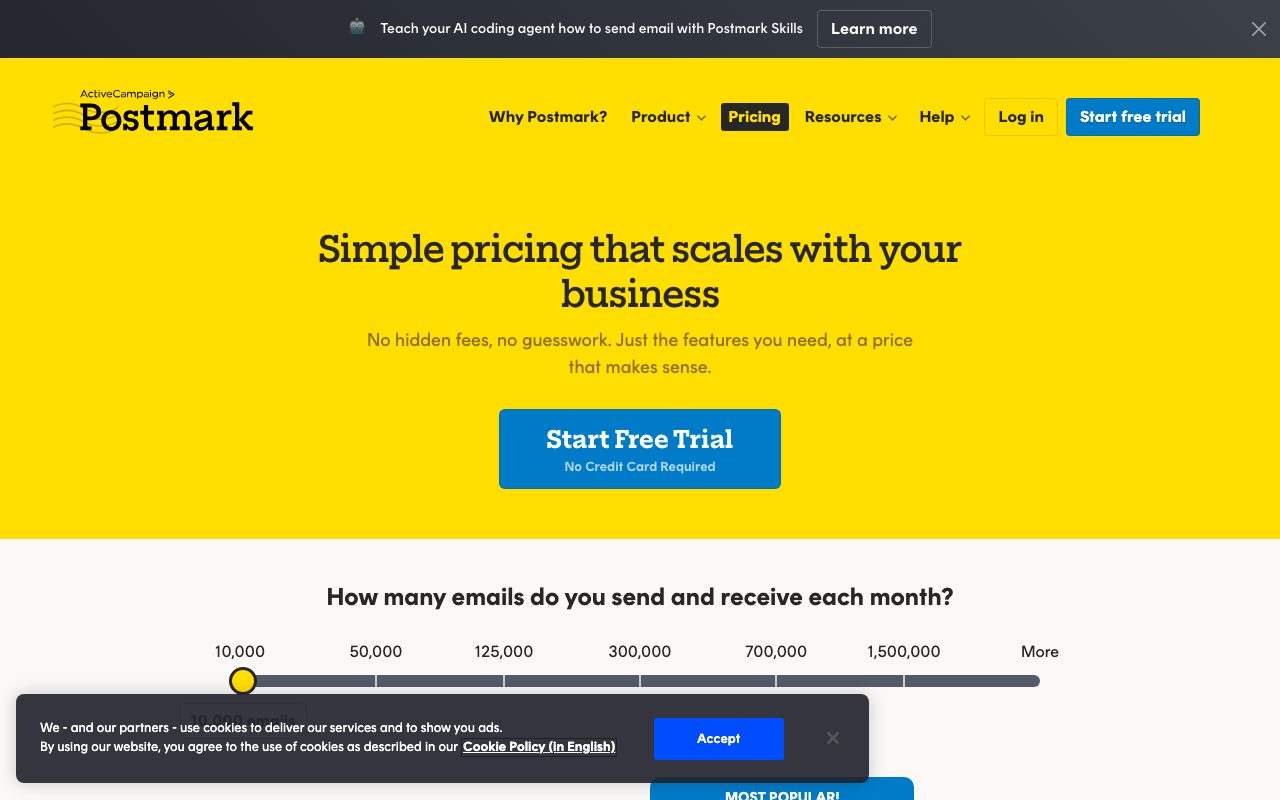
Pay-as-you-go credits or a monthly plan tied to email volume. The pricing is straightforward, no per-feature paywalls, no annual commitment to unlock basics.
It's not the cheapest option in the space. SendGrid's free tier is bigger. Postmark earns the higher price by not skimping on deliverability or logs.
What you don't pay extra for
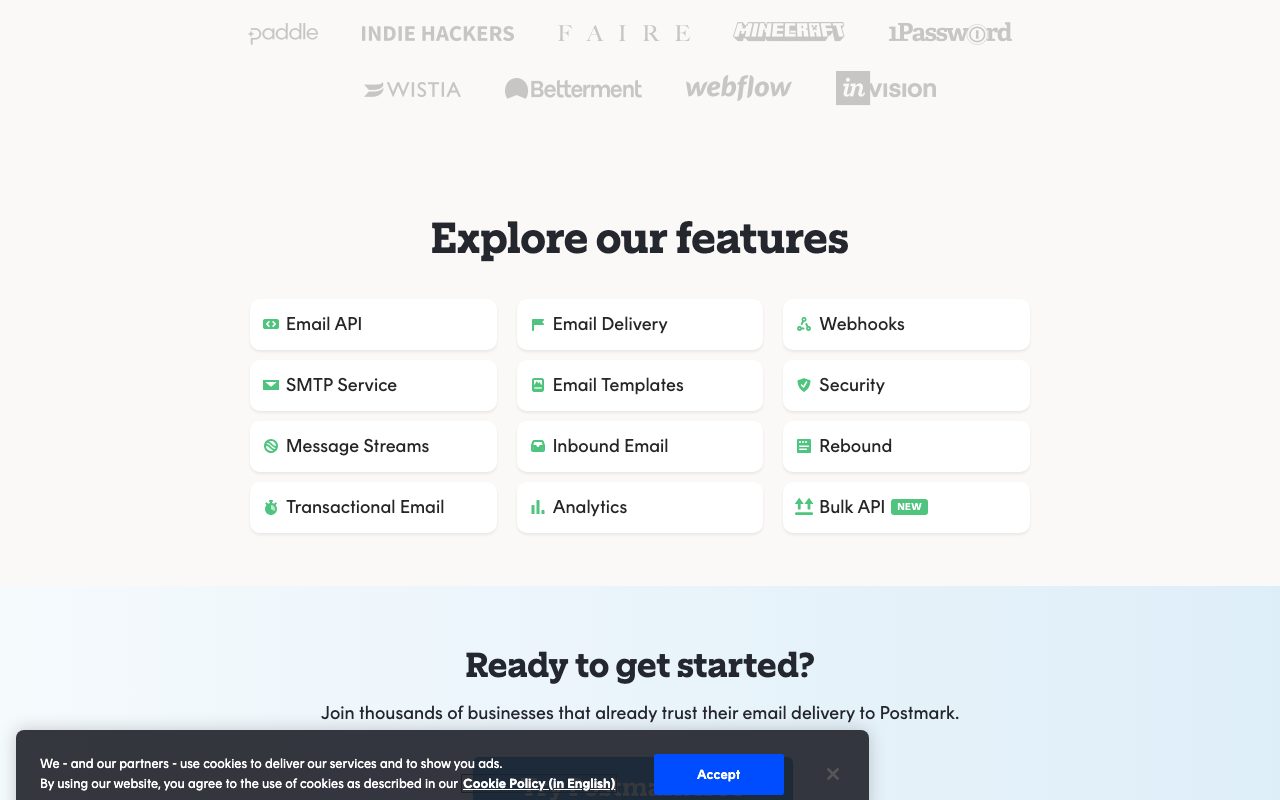
Webhooks, full message logs, click tracking, dedicated IPs at higher tiers, and API access. These come standard rather than as upsells.
Standout features of Postmark
Per-message logs that don't expire for 45 days. You can pull up any send and see headers, content, and bounce data. Other providers truncate or paywall this.
Templates with rendered preview, layouts, and variables. The template editor is opinionated and good. You're not fighting it.
Inbound email parsing
Postmark can also receive email and parse it into structured payloads via webhook. Useful for support inboxes and reply-handling features.
Honest tradeoffs with Postmark
It costs more than the cheapest options. If you're sending millions of marketing emails, Postmark isn't built for you and the math wouldn't work anyway.
The marketing stream feature is newer and less battle-tested than the transactional side. Don't migrate your newsletter here just because you like the brand.
Postmark is the email provider for teams that lost a weekend to a SendGrid deliverability issue and decided never again. The premium is real, the peace of mind is real.
Postmark vs alternatives
Postmark vs SendGrid: SendGrid is bigger and cheaper. Postmark is more focused and more reliable for transactional.
Postmark vs Resend: Resend is the new modern competitor. Postmark is the older, more proven veteran.
Postmark vs Mailgun: Mailgun is similar in scope. Postmark tends to win on dashboard quality and deliverability obsession.
For the broader category, see the best transactional email services or check SendGrid alternatives.
When Postmark wins
You're sending transactional email. Deliverability is non-negotiable. You want logs that don't disappear.
Bottom line on Postmark
Postmark is the boring, reliable, slightly more expensive choice that just works. For transactional mail, that's exactly what you want.
If you're sending newsletters, look at a real ESP. For password resets, receipts, and notifications, Postmark is the safe pick. See tools for SaaS teams for adjacent options.
Why deliverability obsession matters
Most engineers don't think about email deliverability until something breaks. Then they think about it constantly for two weeks. Postmark's value proposition is that you never enter that two-week phase.
Deliverability isn't one knob. It's reputation, content, sender authentication, IP warming, bounce handling, and complaint management. Postmark treats all of these seriously. Cheaper providers treat some of them.
The transactional-only stance
Postmark used to literally refuse marketing emails. They've softened that with separate streams, but the philosophy remains. Marketing emails poison transactional reputation, and Postmark's separation rules protect your password resets.
Postmark for different teams
SaaS apps use it for the core stuff: signups, password resets, receipts, notifications. Fintech apps use it for security-sensitive transactional mail where deliverability is non-negotiable. Marketplaces use it for two-sided communications.
The common thread is "this email must arrive." Postmark optimizes for that and accepts being overpriced for batch marketing as a result.
Templates and the developer experience
Postmark's template system supports layouts, variables, and per-language versions. The render preview shows exactly what users will see. Compared to provider templating that requires testing in production, Postmark is a relief.
Common Postmark questions
Is Postmark good for newsletters? It supports them now via separate streams, but Postmark isn't optimized for that. Does Postmark have a free tier? Limited free trial, then paid. What's typical inbox time? Usually under 10 seconds.
For more, see tools for SaaS founders and Postmark vs Resend.
Final take on Postmark
Postmark is the boring, expensive, completely reliable choice for transactional email. It's not flashy. It's not cheap. It just works, and that's worth a lot when your password resets need to land on time.
Postmark's deliverability infrastructure
The technical side: shared and dedicated IPs, automatic IP warming, sender authentication setup, bounce handling, complaint processing. None of this is unique to Postmark, but Postmark gets all of it right. Cheaper providers cut corners on at least one of these dimensions.
The non-technical side: a deliverability team that monitors reputation, intervenes when issues arise, and shares best practices openly. This human layer matters more than people realize.
Server architecture
Postmark separates customers across servers to prevent reputation contamination. Your server's reputation is yours. A bad-actor neighbor can't sink your inbox placement. This architectural choice has been a Postmark differentiator since launch.
Postmark's broadcast streams
The broadcast feature lets Postmark customers send marketing-style emails on dedicated streams that don't share reputation with transactional. It's newer than the transactional product and not yet at SendGrid-scale, but it works for customers who want both under one roof.
Most existing Postmark customers stick with transactional only and use a dedicated ESP for marketing. The broadcast feature targets customers who want consolidation more than best-in-class marketing tools.
API and SDK quality
The HTTP API is well-documented and follows REST patterns. SDKs exist for major languages: Ruby, Python, Node, Java, PHP, Go. The documentation includes examples for common scenarios. Onboarding from zero to first email is fast.
For SMTP users, Postmark provides standard credentials. Apps that just need a smart-host can swap from existing providers with minimal code changes.
Templates with layouts
Layouts let you define a master template (header, footer, brand styles) and inherit it across individual emails. Variables interpolate cleanly. The preview shows exactly what users will see. The templating is straightforward, not over-engineered.
Postmark's logging is the secret weapon
Forty-five days of full message logs by default. You can pull up any send, see headers, content, bounce codes, click data, and SMTP receipts. When debugging deliverability issues, this visibility is invaluable.
Cheaper providers truncate logs after days, not weeks. Some don't show full content. Some hide bounce reasons. Postmark's openness is a real advantage for any team that's ever spent a weekend chasing an inbox issue.
Webhooks for events
Bounces, complaints, opens, clicks, deliveries, and inbound messages all fire webhooks. You can pipe these into Slack alerts, your CRM, or your own analytics. The webhook reliability is solid.
The Postmark customer profile
Postmark customers tend to be technical, detail-oriented teams that learned the hard way how much deliverability matters. Once burned, twice cautious. They pay the premium because the alternative cost (broken password resets, lost receipts, customer complaints) is worse.
If you haven't been burned yet, you might not see the value. If you have, Postmark's pitch lands immediately.
Postmark wrap-up
The deliverability obsession is the platform's identity and its competitive moat. Cheaper providers occasionally match Postmark on specific features. Nobody matches on the holistic deliverability story. That gap is what justifies the price difference for teams who've experienced both sides.
For new SaaS teams, start with Postmark for transactional from day one. The deliverability headaches you'll avoid are worth more than the price difference versus cheaper alternatives. The cost of a broken password reset flow at 2am is much higher than the monthly invoice difference.
Migrating in
Moving to Postmark from another provider involves DNS authentication updates, code changes for the new SDK, and template recreation. Plan for a week of focused work. The migration usually pays for itself within a few months through deliverability improvements alone.
One final note: Postmark's customer support quality is itself a feature. The team is technical, responsive, and knowledgeable about deliverability specifically. When you do hit an edge case, you get help from people who actually understand SMTP, DNS, and inbox-provider quirks. Cheaper providers often route you to general support that can't help with deliverability nuance. Postmark's depth here matters more than people credit until they need it.
For more options, see the best email API services and tools for API developers. Postmark, Resend, SendGrid, and Mailgun are the four main contenders for transactional email APIs. Each has its sweet spot. Postmark's is reliability and deliverability obsession, which is exactly what most SaaS teams should optimize for.
Tutorial / Demo
Key Features
- Separate IP pools for transactional and broadcast
- Per-message delivery and event logs
- Inbound email parsing with webhooks
- Version-controlled email templates
- REST API and SMTP with SDKs
- Detailed deliverability analytics
Pros & Cons
What we like
- Excellent inbox placement and fast delivery
- Logs and tooling tuned for engineering teams
- Predictable per-message pricing
Room for improvement
- Not designed for marketing campaigns or list management
- Costs more per email than budget-tier providers
Frequently Asked Questions
Postmark vs SendGrid vs Resend?
Does Postmark do marketing email?
How much does Postmark cost?
What's Postmark's standout feature?
Does Postmark have an API and SDKs?
Best For
Featured in
Tags
Alternatives to Postmark

Loops
Modern email platform built for SaaS teams, combining transactional, marketing, and lifecycle messages with a clean API.

Customer.io
Event-driven messaging platform for product teams that want to send email, push, SMS, and in-app messages from real user behavior.

Mailgun
Developer-focused email infrastructure with APIs, SMTP, validation, and analytics for high-volume transactional sending.

Resend
Email API built for developers with React Email support
Our take
Tool Index Editorial · May 2026· 4.6/5
Postmark positions itself as transactional email service obsessed with deliverability, fast inbox arrival, and clean per-message logs for app teams, and on the whole it earns the framing.
What it actually does well: Excellent inbox placement and fast delivery, Logs and tooling tuned for engineering teams, and Predictable per-message pricing. Less impressive: Not designed for marketing campaigns or list management and Costs more per email than budget-tier providers.
Verdict: Postmark comfortably earns its spot in the category — a smart default when you need transactional emails like receipts and password resets.
Editorial opinion from the Tool Index team, written from the public product pages. Not a user review.
Reviews (4)
Did exactly what I needed
Picked Postmark for the lower price, stayed for the actual quality. Genuine strength: predictable per-message pricing.
Cons
- Costs more per email than budget-tier providers
- Not designed for marketing campaigns or list management
Best decision this quarter
Postmark has quietly become part of my daily flow. What stands out is how logs and tooling tuned for engineering teams. Got real value out of REST API and SMTP with SDKs. Found it works best for account verification and login code delivery. Sticking with Postmark.
It just works
Postmark is one of those tools you stop noticing because it just works. Genuine strength: excellent inbox placement and fast delivery. The version-controlled email templates is more useful than I expected. Mostly using it for transactional emails like receipts and password resets. Would buy again without thinking twice.
Pros
- Excellent inbox placement and fast delivery
It just works
Postmark is one of those tools you stop noticing because it just works. The biggest win has been logs and tooling tuned for engineering teams. Their take on inbound email parsing with webhooks is solid. Wish they'd address how not designed for marketing campaigns or list management.
Cons
- Costs more per email than budget-tier providers
Badge builder
Add Postmark to your website
Choose a badge style and size, preview it here, then copy the generated HTML. Badge images are self-contained SVGs and do not require an external script.

<a href="https://toolindex.net/tools/postmark?ref=badge" target="_blank" rel="noopener">
  <img src="https://toolindex.net/badge/postmark/medium.svg" alt="Postmark - Listed on Tool Index" width="180" height="50" />
</a>How to use the badge
- 1. Pick the style, size, and theme that fit your layout.
- 2. Copy the generated HTML from the code block.
- 3. Paste it into your footer, homepage, or press page.
Standard badge available
The standard listing badge is available now. Score and circle badges are limited to tools currently ranked in the top 10 of a category.
Badge clicks return visitors to this profile with a referral tag so the source remains identifiable.
Related Tools

Kevin Gabeci
Solo developer building web apps, cozy browser games, and AI creator toolkits.

Coolify
Self-hostable, open source alternative to Heroku and Netlify

Warp
The modern terminal reimagined with AI and collaboration

Bolt.new
Prompt-to-deployed full-stack app inside the browser
Work on Postmark? Request listing access or correction