
Sanity
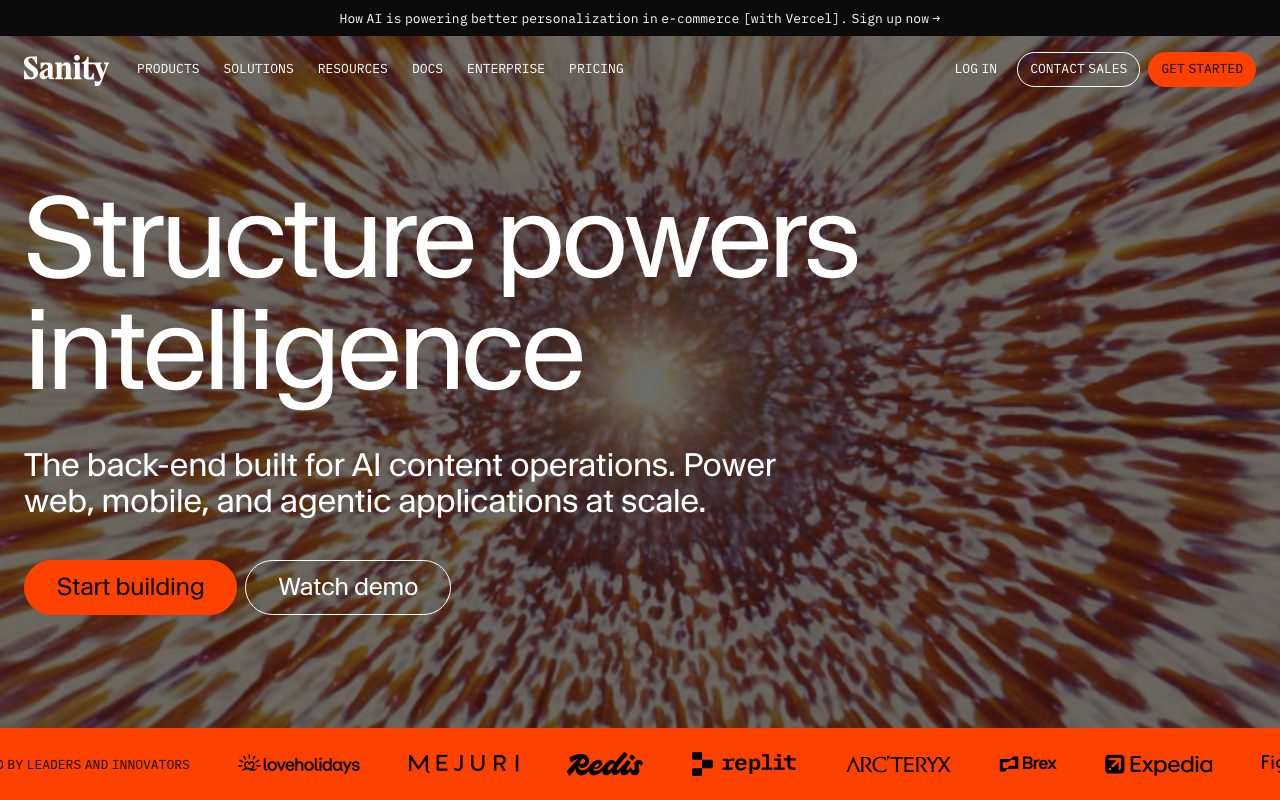
Composable content platform with a customizable studio, real-time collaboration, and a queryable structured content backend.
Gallery
About Sanity
Sanity is the headless CMS with the most flexible content modeling story in the category. It's structured content as code: schemas live in your repo, the studio renders from them, and your frontend pulls via GROQ or GraphQL.
The Sanity Studio is open source and self-customizable. You write React components for fields, plug in custom previews, and ship a tailored editorial experience for your team.
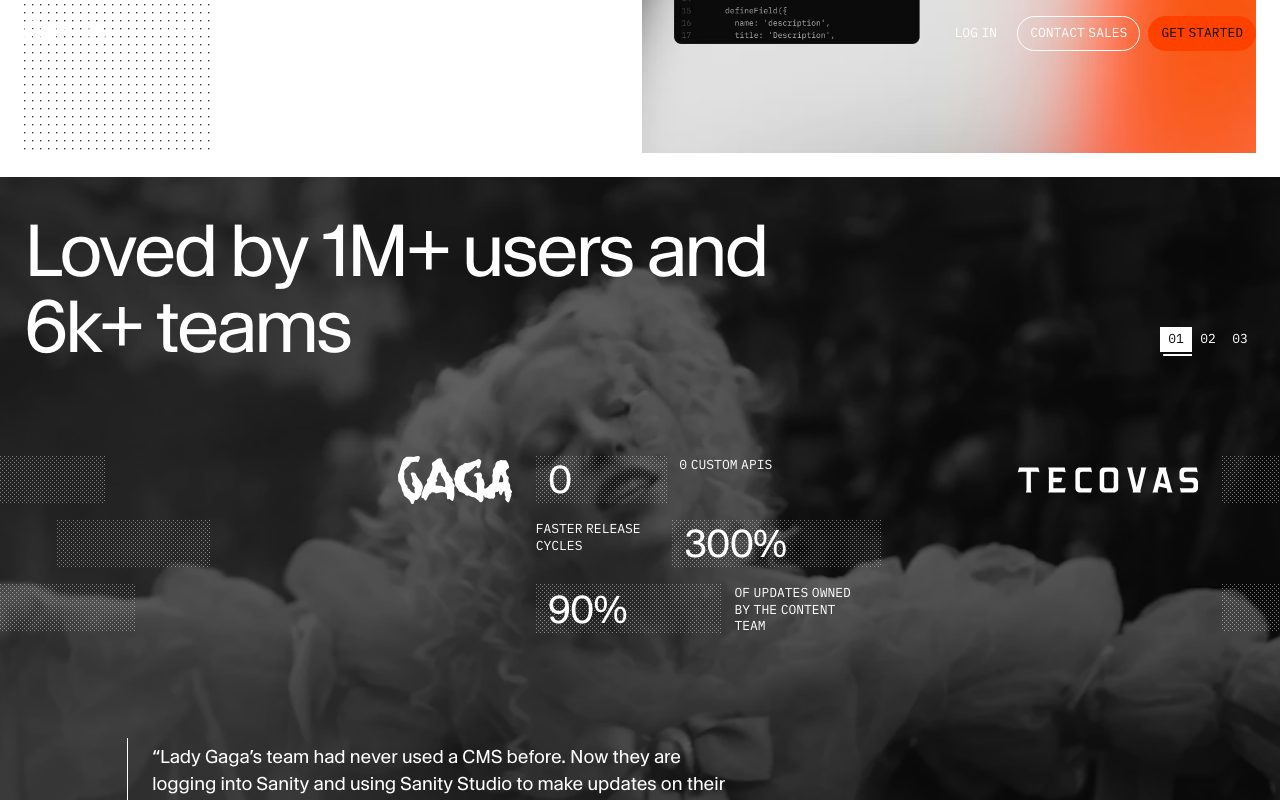
Customers include Figma, Loom, Riot Games, National Geographic, and Sonos. Sanity is the developer-first choice when Contentful feels too rigid and Strapi feels too DIY.
What Sanity actually does
Sanity stores content as structured JSON in a hosted database called the Content Lake. You define schemas (Article, Author, Product, etc.) in code and deploy your studio.
Editors use the studio to author, review, and publish content. Developers query content via GROQ (Sanity's purpose-built query language) or GraphQL.
Real-time updates, image transformations, and a CDN ship out of the box. Sanity's webhooks and Functions cover automation. Sanity AI Assist handles content generation hooks.
Who Sanity is for
Developer-led teams building modern content platforms are Sanity's heart. Next.js sites, mobile apps, and design system docs all benefit from structured content.
Studios shipping multiple brands love the multi-dataset model. One Sanity project can host content for a dozen sites.
Editorial-only teams without dev support sometimes find Sanity heavier than Storyblok or Contentful. Setup requires a developer at minimum.
Pricing breakdown
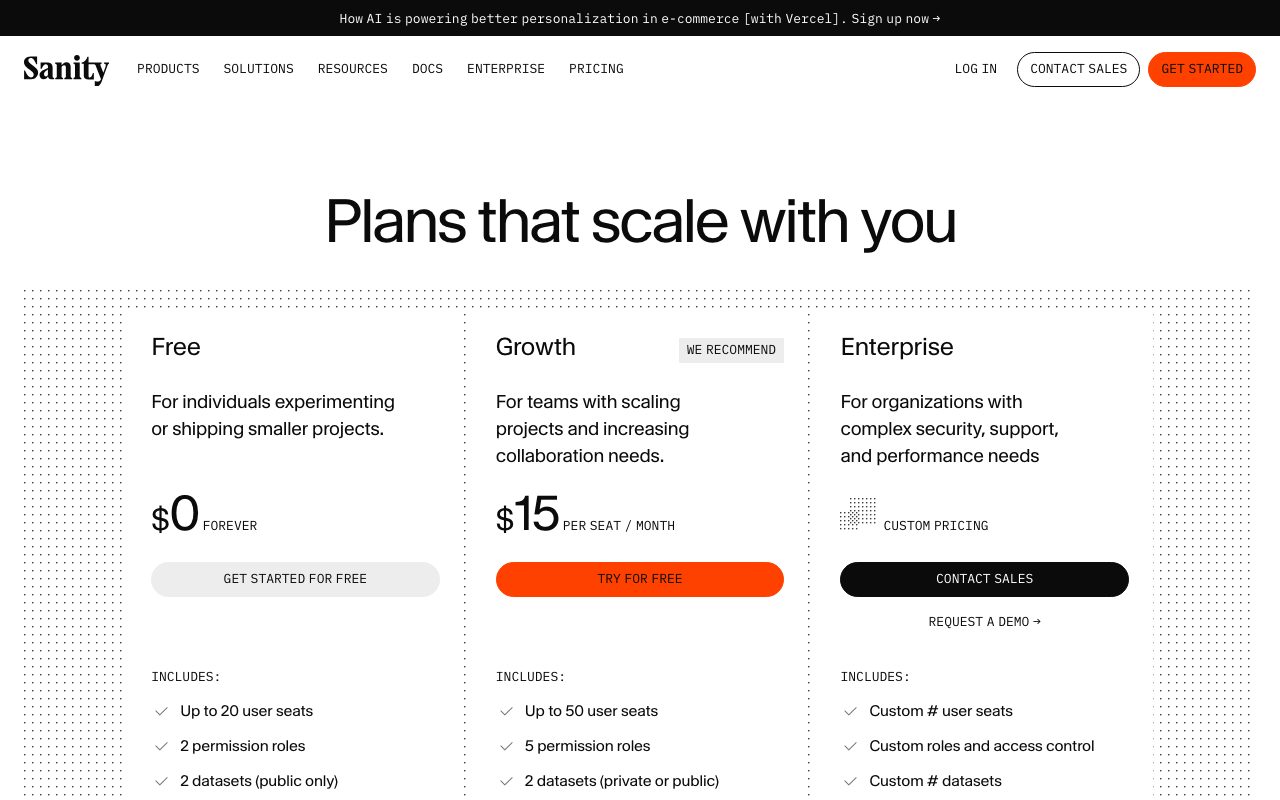
Sanity Free covers 3 users, 10,000 documents, and 100,000 API CDN requests/month. The free tier is genuinely usable for small projects.
Growth plans start around $15/user/month. Enterprise pricing is custom and includes SSO, priority support, and SLAs.
Compared to Contentful, Sanity's pricing is friendlier for small teams and similar at enterprise scale. The free tier is what wins indie developers.
Standout features
Portable Text is the killer feature. It's a structured rich-text format that survives across web, mobile, and AI content pipelines without losing semantics.
The studio is fully customizable. You can write custom input components, embed previews, and add side panels for any workflow your editors need.
GROQ queries are concise and powerful. Filter, project, and join across types in one query. Real-time subscriptions are built into the same query language.
Honest tradeoffs
The learning curve is real. GROQ takes a day to internalize. Schema design in code is a different mental model from form-based CMS configurators.
Editorial workflow tools (publish dates, scheduled releases) are improving but lag Contentful in some specifics. Sanity Studio extensions help close the gap.
Bandwidth and asset CDN limits on free tier are tight enough that growing projects bump into them quickly.
Sanity treats content like code. For developer-led product teams, that's exactly the right framing.
Sanity vs Contentful vs Storyblok
Contentful is the established enterprise pick with a mature editor. Storyblok has a visual editor that marketers love. Sanity is the developer-first option with the most flexible studio customization.
See best headless CMS and Sanity alternatives. Our Sanity vs Contentful guide covers the architectural differences.
Other Sanity alternatives: Hygraph, Strapi, Payload, Directus, and Prismic. Each one trades developer experience and editor experience differently.
Bottom line on Sanity
Sanity is the headless CMS for developers who want to design the editorial experience as carefully as the frontend. The studio in code is the unique value prop.
Browse tools for Jamstack developers and the Contentful profile. Headless CMS is a crowded space. Sanity earns the premium for tech-led teams.
Try the free tier with a real schema. The 30-minute "first content live in Next.js" experience sells itself.
GROQ and the developer experience
GROQ (Graph-Relational Object Queries) is Sanity's purpose-built query language. It's concise, powerful, and tailored for content queries.
You can filter, project, slice, and join across content types in one query. Real-time subscriptions to query results are built in. Editor previews use the same query language as production.
The learning curve is real. GROQ takes a day to internalize. Once you do, queries feel cleaner than equivalent SQL or GraphQL.
Sanity Studio customization
Sanity Studio is the editor UI, and it's open source. You write it in React. You can customize literally anything.
Custom input components, custom dashboards, embedded previews of live frontends, and integrations with translation or DAM tools all live as React code in your studio.
That flexibility is the reason developer-led teams pick Sanity. Editorial teams get a UI shaped to their workflow, not a generic CMS form.
Sanity for headless commerce
Headless commerce stacks (Shopify Hydrogen, Medusa, BigCommerce) often pair with Sanity for editorial content. Sanity handles long-form pages, blog posts, lookbooks, and brand storytelling.
The Shopify-Sanity integration is solid. Product data lives in Shopify, editorial decoration lives in Sanity, the storefront merges them.
For brand-led ecommerce, this split is the modern best practice. Sanity owns one half of that conversation.
Final word on Sanity
Sanity is the headless CMS for developer-led product teams. The studio-as-code model is the unique value. The free tier is generous enough to fall in love with.
Spin up a project, define a schema in code, and pull content into a Next.js site in 30 minutes. The DX sells itself.
Sanity Functions and webhooks
Sanity Functions are serverless TypeScript functions that run inside the Sanity Content Lake. You write code that responds to content events (publish, update, delete) without managing infrastructure.
Use cases include cache invalidation, webhook fan-out, content validation, and AI enrichment. Trigger an OpenAI call when a draft is published, get the summary written back to the document automatically.
The Functions runtime is brand new and evolving. Most teams still use traditional webhooks and external functions on Vercel or Netlify, but Functions are worth watching for new builds.
Webhooks themselves are mature. You configure them per dataset and they fire on document changes. Most production Sanity workflows depend on them.
The Sanity AI Assist product layers AI generation and translation into the studio. Editors can fill fields with AI-suggested content, then refine. It's a real productivity boost for content-heavy teams.
Sanity supports multi-dataset projects, which means one Sanity project can host many sites or environments cleanly.
For more headless CMS options, browse our best headless CMS guide and Contentful profile.
Sanity FAQ
Is Sanity better than Contentful? For developer-led teams, generally yes. The studio-as-code model and GROQ query language give devs more control. For pure editorial workflows, Contentful's UI is more conservative and predictable.
How steep is the learning curve? GROQ takes about a day to internalize. Schema design in code is a bigger mental shift for teams used to form-based CMS configurators. Plan for a week of ramp-up before being productive.
Can I migrate off Sanity later? Yes. Sanity exposes export tools and a clean JSON document model. Migration to another CMS requires building an importer for the target system, but the source data is portable.
What about content versioning? Document history, draft states, and version restoration are all built in. Editors can compare versions and revert to earlier drafts when needed.
Does Sanity work with Next.js? Beautifully. The official Next.js starter, Visual Editing integration, and ISR support make Sanity one of the smoothest CMSes for Next.js apps.
Sanity has earned its reputation as the developer-led headless CMS leader. The studio customization, GROQ queries, and active development make it a defensible choice for tech-forward product teams.
Sanity workflow patterns for production teams
Use multiple datasets for staging and production. Editors can preview changes in staging before promoting to production. Sanity's deploy CLI handles the dataset operations.
Define schemas as code with strict TypeScript types. The studio renders correctly, and your frontend gets typed content shapes. Catch bugs at compile time.
Use GROQ for almost everything. The query language is concise and powerful. GraphQL exists, but most teams find GROQ more productive once they internalize it.
Configure preview mode in your frontend. Sanity's draft API lets editors see unpublished content with a click. The Visual Editing integration takes preview further.
Set up validation rules in your schemas. Required fields, regex patterns, and reference constraints prevent bad content from being published.
Use webhooks or Sanity Functions for cache invalidation. Static-generated frontends need a trigger to revalidate when content changes. Both approaches work.
Browse our best headless CMS roundup and Contentful profile for related options.
Closing thoughts on Sanity in 2026
Sanity has become the headless CMS that developer-led product teams choose by default. The combination of GROQ, customizable studios, and active development keeps it competitive against established enterprise CMSes.
Recent releases of Sanity Functions, Visual Editing, and AI Assist push the platform further into modern content workflows. The roadmap signals continued investment.
For Next.js, Astro, Remix, and SvelteKit projects, Sanity is one of the cleanest CMS pairings available. The integration story is mature and well-documented.
The community around Sanity is active. The Slack workspace, forum, and YouTube content all provide help when you hit edge cases. Response times are good.
For teams choosing CMS infrastructure today, Sanity deserves a serious evaluation. The free tier is generous enough to fall in love with. The paid tiers are reasonable for what you get.
Browse our best headless CMS roundup, the Sanity alternatives page, and the Sanity vs Contentful guide for context.
Pick Sanity when you want a CMS shaped to your team's specific workflow. The studio-as-code model is the unique value prop, and it's worth the learning curve for product-led teams.
Tutorial / Demo
Key Features
- Customizable open-source editing studio
- Real-time structured content APIs
- GROQ and GraphQL query languages
- Built-in image pipeline and asset management
- Live preview and content versioning
- Usage-based pricing with free tier
Pros & Cons
What we like
- Highly flexible editor and content model
- Excellent developer experience
- Real-time collaboration on content edits
Room for improvement
- Requires developer time to configure the Studio
- Pricing tracks usage, which can surprise busy projects
Frequently Asked Questions
Sanity vs Contentful vs Strapi?
Does Sanity have a free tier?
Can I self-host Sanity?
Is Sanity good for non-developers?
What's GROQ?
Best For
Featured in
Tags
Alternatives to Sanity
View all
Payload CMS
The open source headless CMS built with TypeScript and React
Contentful
Headless CMS that models content as structured data and delivers it through APIs to web, mobile, and other channels.

1Lookup
Real-time data verification API for phone, email, IP, and domain validation to fight fraud

Glide
No-code platform that turns spreadsheets and databases into mobile and web apps, with computed columns and AI actions.
Our take
Tool Index Editorial · May 2026· 4.8/5
Sanity sits in a crowded category, differentiating itself as composable content platform with a customizable studio, real-time collaboration, and a queryable structured content backend.
What it actually does well: Highly flexible editor and content model, Excellent developer experience, and Real-time collaboration on content edits. Less impressive: Requires developer time to configure the Studio and Pricing tracks usage, which can surprise busy projects.
Bottom line: pick Sanity when you need marketing sites with reusable content blocks; look elsewhere if requires developer time to configure the Studio would be a dealbreaker.
Editorial opinion from the Tool Index team, written from the public product pages. Not a user review.
Reviews (8)
Onboarded the team in a day
Hadn't planned on switching, but Sanity was hard to ignore. The thing I keep coming back to: real-time collaboration on content edits. Their take on customizable open-source editing studio is solid. Easy yes for anyone weighing the same trade-offs.
Pros
- Excellent developer experience
- Real-time collaboration on content edits
Worth the price of admission
Took a few weeks for Sanity to click, then it stuck. Genuine strength: real-time collaboration on content edits. Main use case: multi-team editorial platforms. That said, requires developer time to configure the Studio is a real gripe. Would buy again without thinking twice.
Pros
- Highly flexible editor and content model
- Excellent developer experience
- Real-time collaboration on content edits
Cons
- Requires developer time to configure the Studio
- Pricing tracks usage, which can surprise busy projects
Sanity, better than expected
Tried Sanity on a side project first. Real selling point: excellent developer experience. Usage-based pricing with free tier works the way you'd hope. Mostly using it for multi-team editorial platforms. Hard to imagine going back to my previous setup.
Best decision this quarter
Have been using Sanity for a while, here's where I land. Where it really wins is excellent developer experience. Worth calling out the live preview and content versioning too. Would buy again without thinking twice.
Pros
- Real-time collaboration on content edits
Did exactly what I needed
Been using Sanity for three months now. The thing I keep coming back to: real-time collaboration on content edits. Their take on usage-based pricing with free tier is solid.
Underrated honestly
Sanity solves a real problem for me, but it's not magic. What stands out is how real-time collaboration on content edits. Sticking with Sanity.
Pros
- Excellent developer experience
Solid product, even better support
First impression of Sanity was 'huh, this is actually thought through.' Real selling point: real-time collaboration on content edits. Wish they'd address how pricing tracks usage, which can surprise busy projects. Would buy again without thinking twice.
Pros
- Real-time collaboration on content edits
Cons
- Requires developer time to configure the Studio
- Pricing tracks usage, which can surprise busy projects
Sanity, better than expected
Six months of using Sanity, here's what holds up. What stands out is how real-time collaboration on content edits. Worth calling out the usage-based pricing with free tier too. It fits well for ecommerce product content layers. Would buy again without thinking twice.
Pros
- Real-time collaboration on content edits
- Highly flexible editor and content model
- Excellent developer experience
Badge builder
Add Sanity to your website
Choose a badge style and size, preview it here, then copy the generated HTML. Badge images are self-contained SVGs and do not require an external script.

<a href="https://toolindex.net/tools/sanity?ref=badge" target="_blank" rel="noopener">
  <img src="https://toolindex.net/badge/sanity/medium.svg" alt="Sanity - Listed on Tool Index" width="180" height="50" />
</a>How to use the badge
- 1. Pick the style, size, and theme that fit your layout.
- 2. Copy the generated HTML from the code block.
- 3. Paste it into your footer, homepage, or press page.
Score badge available
Sanity qualifies for the score and circle badges based on its current top-10 positionin No-Code.
Badge clicks return visitors to this profile with a referral tag so the source remains identifiable.
Related Tools

Kevin Gabeci
Solo developer building web apps, cozy browser games, and AI creator toolkits.
Coolify
Self-hostable, open source alternative to Heroku and Netlify

Warp
The modern terminal reimagined with AI and collaboration

Bolt.new
Prompt-to-deployed full-stack app inside the browser
Work on Sanity? Request listing access or correction