
Twist
Calmer team messaging where threads replace the firehose of channels
Gallery
About Twist
Twist is what team chat looks like when you reject the firehose model. Threads replace channels. Async replaces real-time. Calm replaces noise.
Built by Doist (the same team behind Todoist), Twist launched in 2017 as a response to Slack-induced burnout. The Doist team has been remote-first since 2007 and built Twist to fit how distributed teams actually work.
If you're tired of Slack and not ready to commit to Discord for team chat, Twist is worth a serious look. Here's why.
What Twist actually does
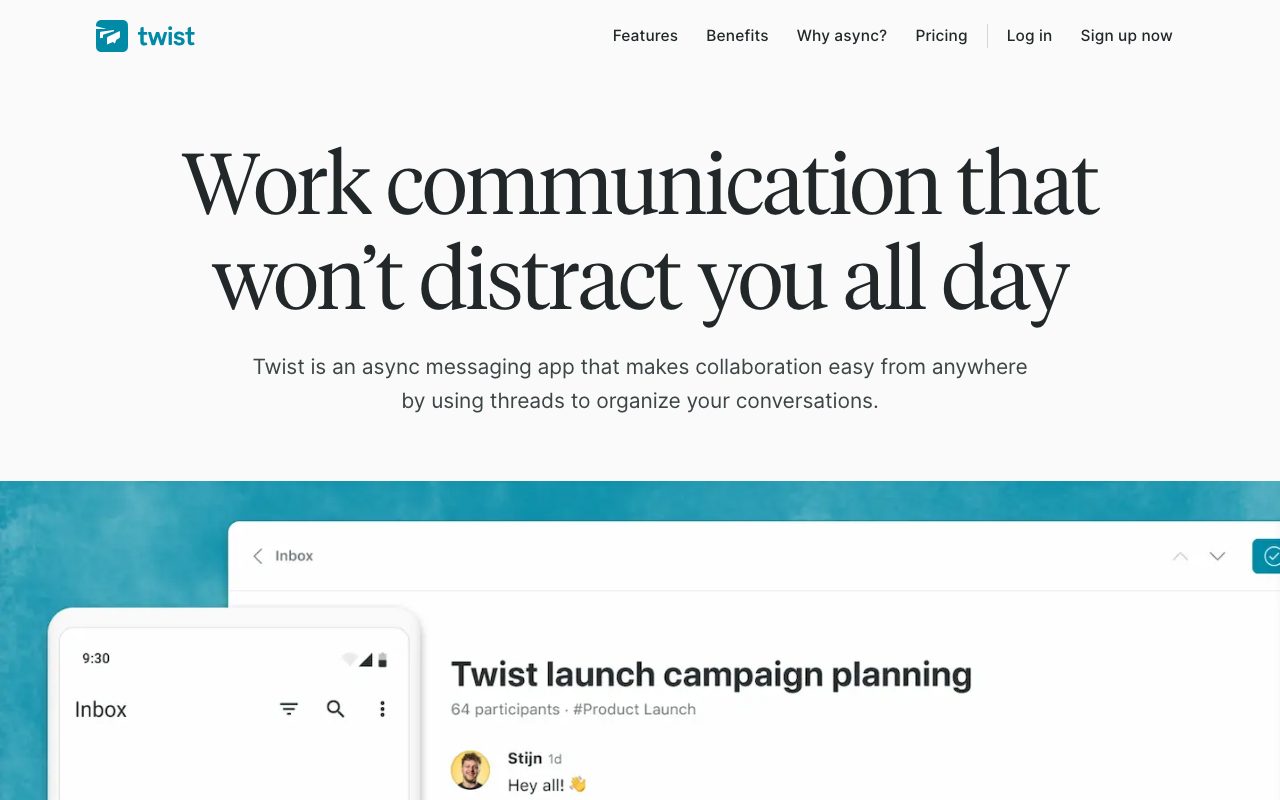
Twist organizes communication into channels and threads. Channels are topic-level (engineering, marketing, product). Inside each channel, every conversation is a separate thread with its own subject line.
This sounds minor. It changes everything. Instead of scrolling through a channel of mixed conversations, you see a list of threads with clear subjects. Catching up takes minutes, not hours.
Twist also includes one-on-one messages, file sharing, integrations (GitHub, Trello, Zapier), and search across all conversations. It's a full team chat tool, just structured differently than Slack.
Who Twist is for
Distributed teams that span multiple time zones benefit most. The async-friendly design means you can catch up on yesterday's threads without scrolling through 500 messages.
Engineering and product teams often appreciate Twist's structure. Threads work like email subject lines: scannable, organized, easy to ignore until needed. Real-time-allergic introverts also love it.
Where Twist doesn't fit: teams that thrive on real-time energy (sales floors, support teams), companies already heavily invested in Slack's ecosystem, or teams that need rich integrations beyond Twist's smaller catalog.
Pricing breakdown
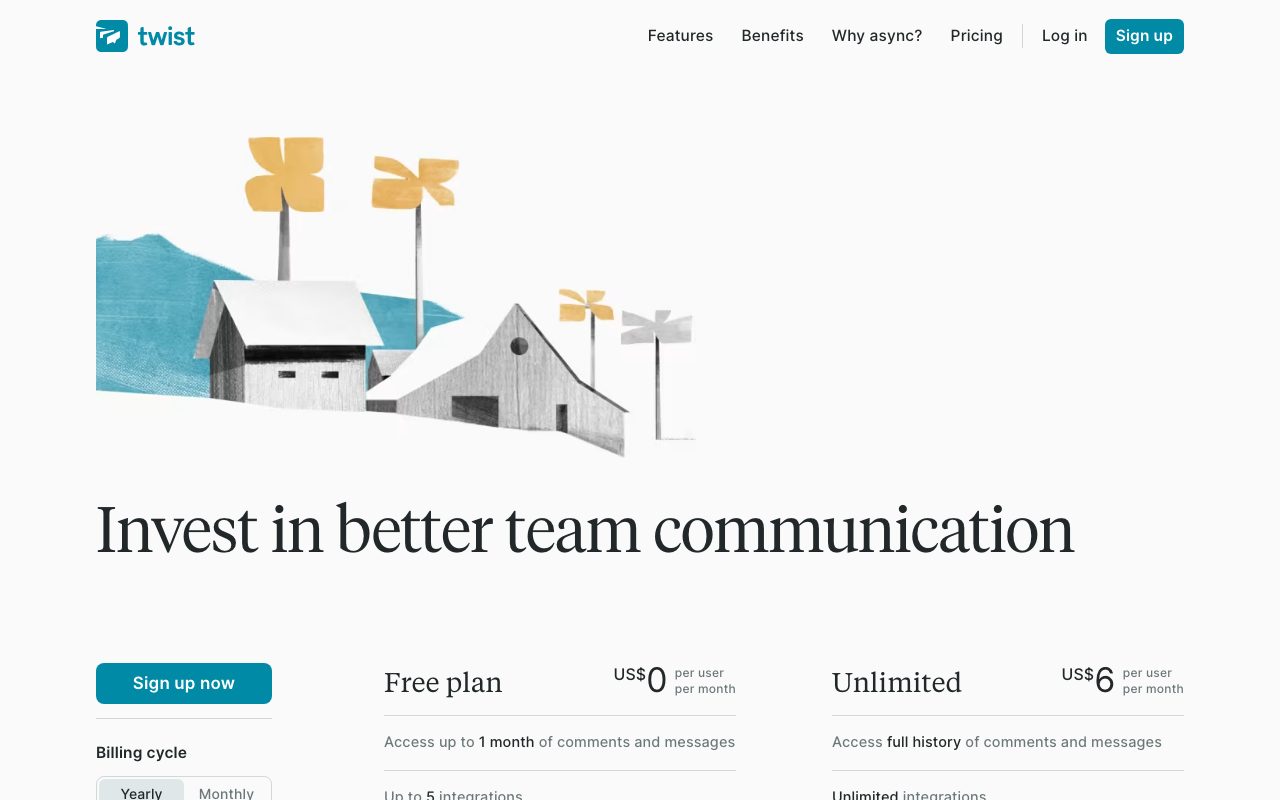
Free tier includes unlimited messages, basic integrations, and 1 month of message history. Generous compared to Slack's 90-day free tier limit.
Unlimited is $6/user/month with full message history, advanced features, and priority support. Enterprise tier is custom-priced with SSO, advanced security, and dedicated support.
Compared to Slack Pro ($8.75/user/month) and Microsoft Teams (varies), Twist is competitively priced and arguably more honest. The free tier is more usable for small teams.
Standout features
Threads as first-class objects
This is the killer feature. Every conversation in Twist has a subject line. You can scan a channel like an email inbox: 12 threads, here are the subjects, click into the ones that matter.
Slack added threads as an afterthought, and the experience reflects that. In Twist, threads are the entire architecture. The difference is profound when you catch up on a busy day.
Async-by-default norms
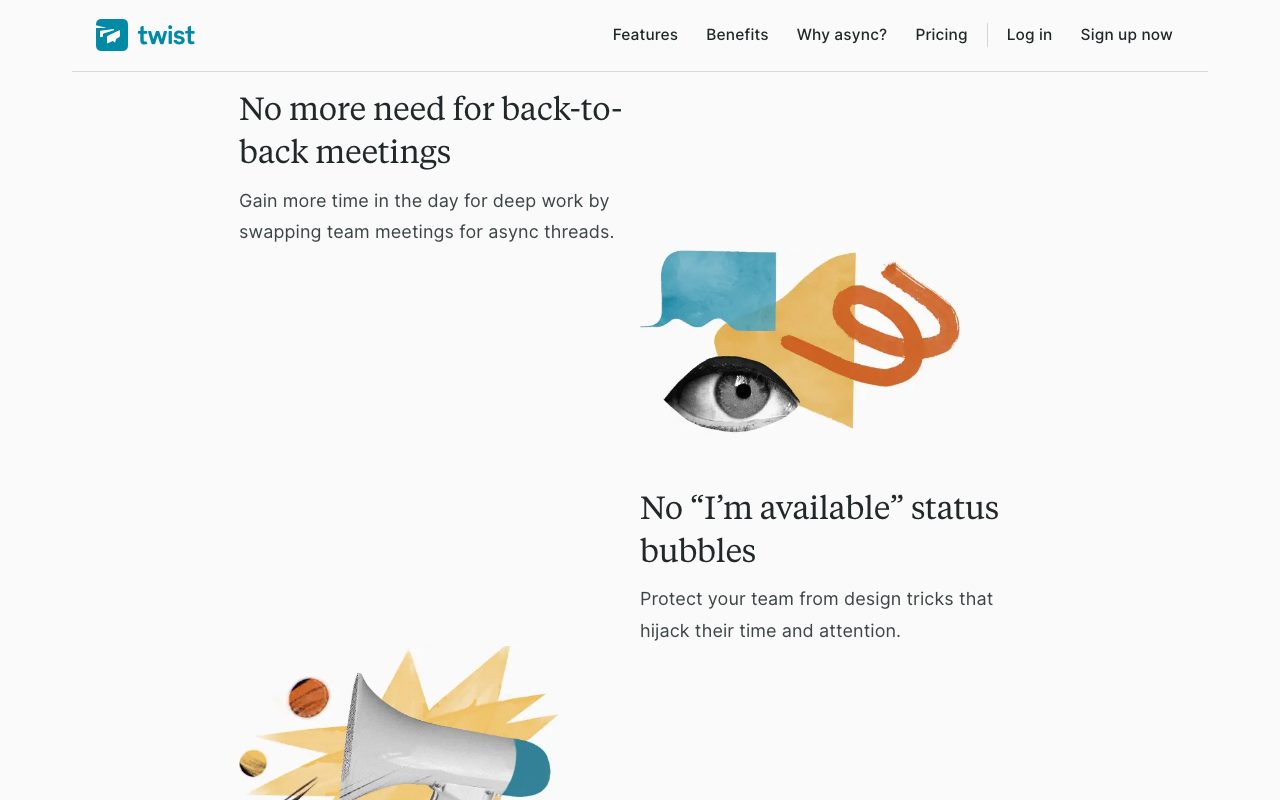
Twist doesn't push real-time presence. There's no "active" indicator nudging you to respond. The default expectation is that messages get answered when the recipient is online and available, not immediately.
This sounds like a UX detail. It changes team culture. People stop expecting instant replies. Deep work becomes possible. Burnout drops.
Inbox view
Twist's inbox shows all your unread threads in one place. Catch up on engineering, marketing, and product threads without bouncing between channels. The model is closer to email than to Slack.
Twist's design is a quiet protest against productivity theater. If your team values calm over chaos, the tool is built for you.
Honest tradeoffs
The integrations ecosystem is smaller than Slack's. If your workflow depends on dozens of Slack integrations (PagerDuty, Linear, Notion alerts), expect some gaps. The most common ones are covered.
Real-time fans hate it. Twist genuinely doesn't optimize for instant communication. If your team wants to feel constantly connected, Twist will feel sterile.
Adoption requires culture change. Moving from Slack to Twist means changing how people communicate, not just changing tools. Some teams resist this. Some teams embrace it. Be honest about which yours is.
Twist vs alternatives
Versus Slack: Slack is the dominant player with the deepest ecosystem. Twist is the conscientious objector with better async culture. Slack wins on integrations and brand recognition. Twist wins on organization and calm.
Versus Microsoft Teams: Teams is bundled with Microsoft 365 and dominant in enterprise. Twist is a focused alternative for teams that don't need Office integration. Different shapes.
Versus Discord: Discord is voice-and-community oriented. Some teams use it for chat, but the model is real-time-first. Twist is the opposite philosophy.
Versus Basecamp Campfire: Basecamp is the closest philosophical sibling, but Campfire chat is part of a broader project management tool. Twist is dedicated to messaging. Different scopes.
For more options, see best team chat tools or tools for remote teams.
Bottom line
Twist is the right team chat tool for distributed teams that take async seriously. The thread-first model genuinely changes how teams communicate, in ways that compound over months.
It's not for everyone. Sales floors, support teams, and high-energy real-time cultures will hate it. Engineering teams, distributed startups, and remote-first companies often love it.
Try the free tier with one channel and see if your team's communication patterns change. The change, if it happens, is worth the migration cost.
Twist culture in practice
Adopting Twist is partially a tool change and mostly a culture change. The async-friendly defaults only matter if your team actually adopts async-friendly habits.
The first cultural shift: stop expecting immediate replies. Messages get answered within a working day, not within minutes. People who get this immediately love Twist. People who don't will fight the tool.
The second shift: write better messages. Async communication requires more context per message. "Can you check this?" with a link works in Slack because you'll clarify in the thread. In Twist, that message will sit unanswered while you're across time zones.
Thread subjects matter
Every thread has a subject line. This is not optional. Good subject lines transform Twist's value: clear subjects mean people can scan a channel and decide what to read.
Bad subject lines look like "Quick question" or "Hey." Good subject lines look like "Login flow: should we keep social auth as primary?" or "Q3 OKR draft for review."
Train your team to write thread subjects like email subjects. The investment pays back in scannability.
Twist for distributed teams
The async model genuinely shines across time zones. APAC team posts a thread before logging off. Europe team responds during their day. Americas team picks up the next morning.
Without Twist's async culture, you get the typical multi-timezone failure: everything stalls on real-time meetings, people wake up at 5am or stay up till midnight, burnout follows.
The Doist team itself spans 30+ countries. They've used Twist daily since launch. The dogfooding shows in product decisions.
Integrating with workflow tools
The Twist integrations cover the basics: GitHub (PR notifications), Trello (card updates), Google Drive (file sharing), Zapier (everything else). Smaller catalog than Slack but covers common needs.
For tools that don't have native integrations, use Zapier. The pattern is the same: push notifications to relevant channels, but with Twist's threaded model so notifications don't drown out human conversation.
Common Twist questions
Can Twist replace Slack for an established team?
Yes, but it requires commitment. The migration is technical (export Slack history, import to Twist) and cultural (retrain habits). Teams that go halfway often fail.
The Doist team has guides on Slack-to-Twist migrations. Plan 4-6 weeks of cultural adjustment. Champions on the team make the difference.
What about voice and video?
Twist doesn't include built-in calls. The team's stance: real-time voice is a different tool, use Zoom/Meet/Teams when you need it.
This is intentional. Bundling video would push toward more synchronous behavior, undermining the async model.
Does Twist integrate with project management tools?
Yes. The integrations with Todoist (also Doist), Trello, Jira, and Asana cover most workflows. Native Todoist integration is unsurprisingly tight.
For more team chat options, see best async chat tools or Twist vs Slack.
The async movement
The remote-work shift accelerated async communication's adoption. Twist was early to the trend; the trend is now mainstream.
Slack added thread-first features (huddles, canvases, lists) trying to retrofit async into a real-time tool. The retrofitting is partial. Twist's native async DNA still produces a different experience.
For teams genuinely committed to async, Twist is a clearer choice today than it was five years ago. The cultural moment has caught up to the tool's design.
For more remote tools, see best remote work tools.
Twist for specific team types
Engineering teams often love Twist. The threaded model fits the way engineers think: one topic per discussion, scannable archives, deep context preserved.
Marketing teams have a mixed reaction. Real-time campaign coordination favors Slack's flow. Twist's organization helps with longer-term content planning.
Customer support teams generally don't fit. The use case requires immediate responsiveness, which contradicts Twist's design philosophy.
For more team chat options, see best team chat tools.
Tutorial / Demo
Key Features
- Channels of long-form threads
- Inbox of unread threads
- Direct messages with intentionally lighter affordances
- Search across all conversations
- Integrations with common tools
- Mobile and desktop clients
Pros & Cons
What we like
- Reduces interruption-driven culture
- Threads stay readable months later
- Strong fit for fully distributed teams
- Affordable per-seat pricing
Room for improvement
- Smaller ecosystem than Slack or Teams
- Real-time features intentionally limited
- Less suitable for support or sales floors
Frequently Asked Questions
Is Twist free?
Twist vs Slack, which is better?
Who makes Twist?
Does Twist integrate with my stack?
Should I move my team off Slack to Twist?
Best For
Featured in
Tags
Alternatives to Twist
View all


Our take
Tool Index Editorial · May 2026· 4.6/5
If you're evaluating Twist, the headline is simple: calmer team messaging where threads replace the firehose of channels, and most teams will get value out of the box.
The standout points: Reduces interruption-driven culture, Threads stay readable months later, and Strong fit for fully distributed teams. The friction points: Smaller ecosystem than Slack or Teams and Real-time features intentionally limited.
Verdict: Twist comfortably earns its spot in the category — a smart default when you need async-first remote companies.
Editorial opinion from the Tool Index team, written from the public product pages. Not a user review.
Reviews (6)
Underrated honestly
Twist is one of those tools you stop noticing because it just works. Real selling point: strong fit for fully distributed teams. Still recommending it to people in similar setups.
Pros
- Strong fit for fully distributed teams
- Affordable per-seat pricing
Underrated honestly
Have been using Twist for a while, here's where I land. Honestly impressed by how affordable per-seat pricing. Glad I made the switch.
Pros
- Strong fit for fully distributed teams
- Affordable per-seat pricing
- Threads stay readable months later
The kind of tool you forget you're paying for
Hadn't planned on switching, but Twist was hard to ignore. What stands out is how affordable per-seat pricing. Easy yes for anyone weighing the same trade-offs.
Pros
- Threads stay readable months later
- Affordable per-seat pricing
- Reduces interruption-driven culture
Underrated honestly
Tried Twist on a side project first. Real selling point: reduces interruption-driven culture. Easy yes for anyone weighing the same trade-offs.
Pros
- Reduces interruption-driven culture
Three months in, here's the verdict
Skeptical at first because Twist looked too simple. It's not. The biggest win has been threads stay readable months later. Got real value out of mobile and desktop clients.
Pros
- Affordable per-seat pricing
- Threads stay readable months later
- Reduces interruption-driven culture
Beautiful demo, painful reality
Came to Twist after frustration with what I had before. What stands out is how affordable per-seat pricing. Honest gripe: smaller ecosystem than Slack or Teams. Probably better for someone with different needs.
Pros
- Strong fit for fully distributed teams
- Reduces interruption-driven culture
- Affordable per-seat pricing
Cons
- Less suitable for support or sales floors
- Smaller ecosystem than Slack or Teams
Badge builder
Add Twist to your website
Choose a badge style and size, preview it here, then copy the generated HTML. Badge images are self-contained SVGs and do not require an external script.

<a href="https://toolindex.net/tools/twist?ref=badge" target="_blank" rel="noopener">
  <img src="https://toolindex.net/badge/twist/medium.svg" alt="Twist - Listed on Tool Index" width="180" height="50" />
</a>How to use the badge
- 1. Pick the style, size, and theme that fit your layout.
- 2. Copy the generated HTML from the code block.
- 3. Paste it into your footer, homepage, or press page.
Standard badge available
The standard listing badge is available now. Score and circle badges are limited to tools currently ranked in the top 10 of a category.
Badge clicks return visitors to this profile with a referral tag so the source remains identifiable.
Related Tools

Substack
Hosted newsletter and publication platform with built-in payments, recommendations, and an audience network for writers.

MailerLite
Friendly, affordable email marketing tool with newsletters, automations, landing pages, and a growing creator toolkit.

Zulip
Threaded team chat that treats topics as a first-class concept

Buttondown
Minimalist newsletter tool built for writers who prefer Markdown, plain text, and quietly powerful tooling under the hood.
Work on Twist? Request listing access or correction