Flux by Black Forest Labs
Open and hosted image models that power half the AI art stack
Gallery
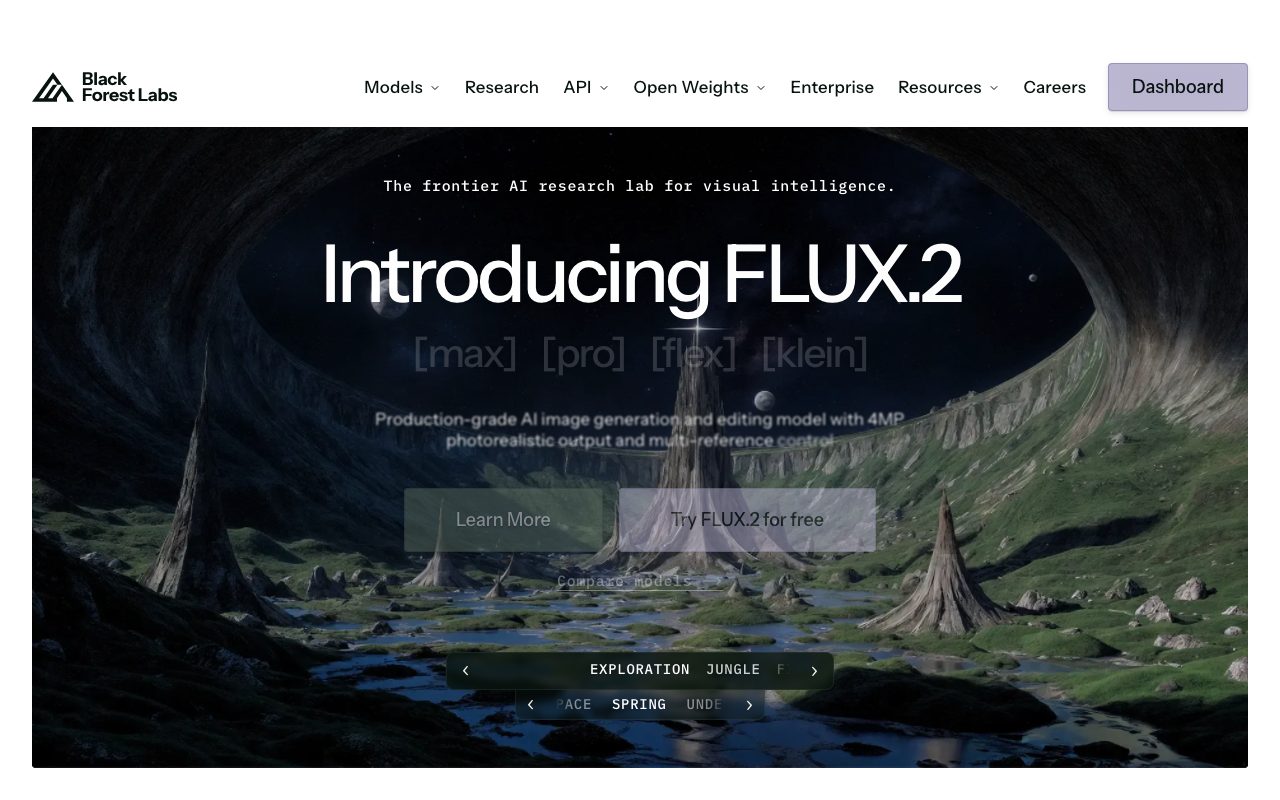
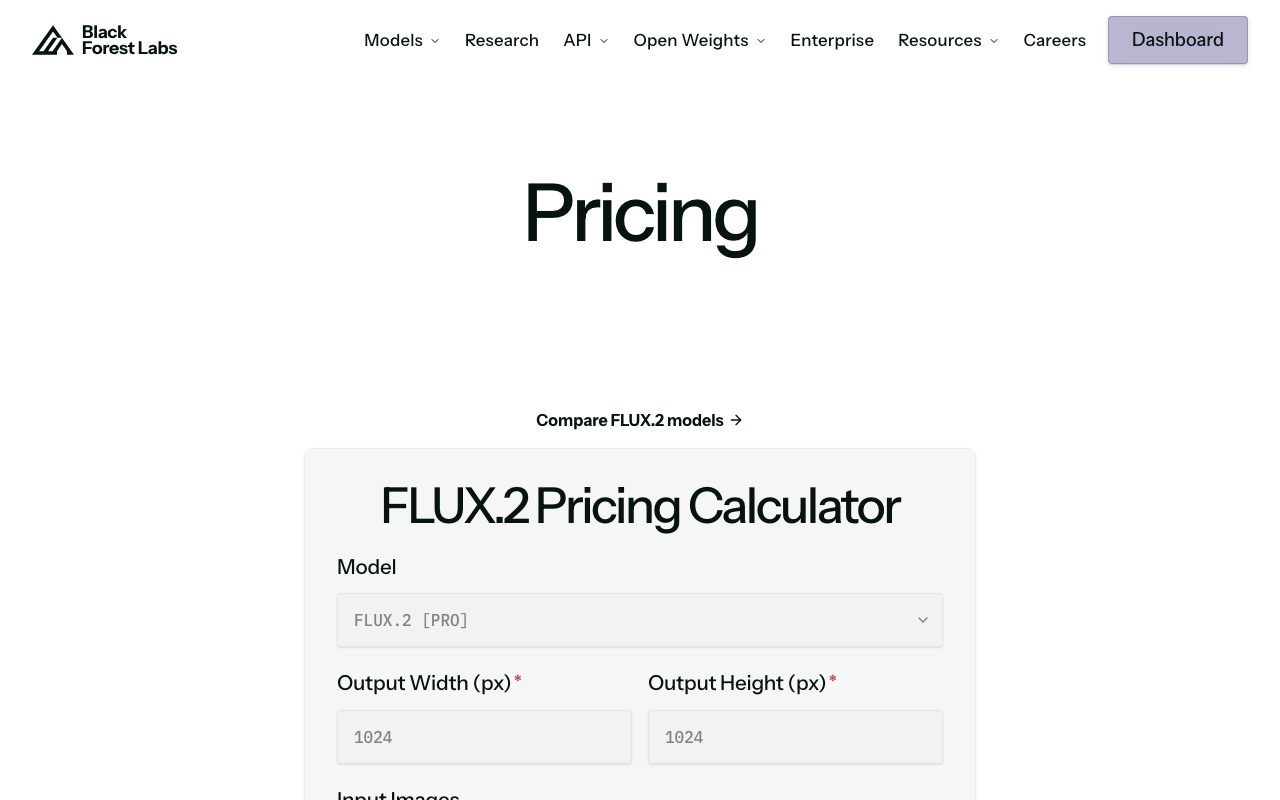
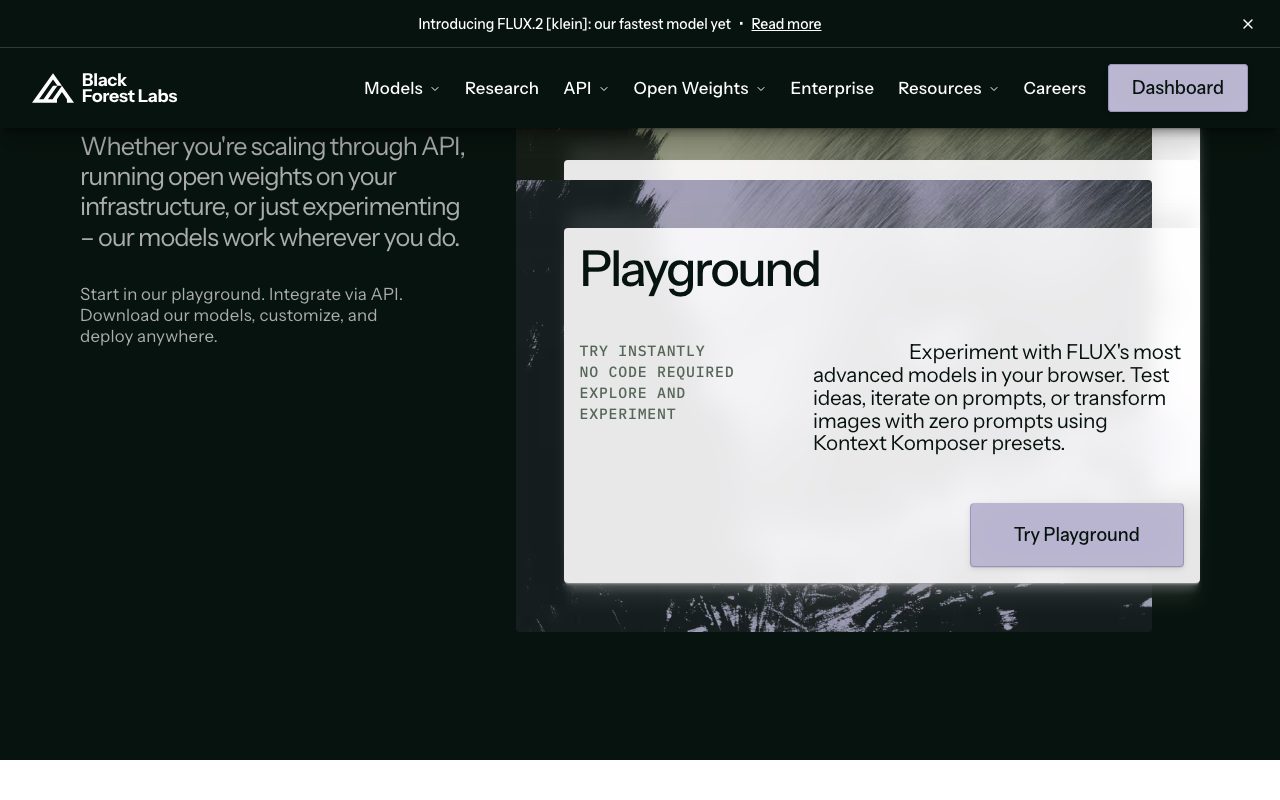
About Flux by Black Forest Labs
Flux is the open-weights image generation family from Black Forest Labs, founded by ex-Stability AI researchers. The headline model, FLUX.1, hit the scene in 2024 and immediately challenged Midjourney on prompt fidelity.
There are three Flux variants. Pro is the high-end commercial API. Dev is open weights for non-commercial use. Schnell is open weights, Apache-licensed, and fast.
If you've seen viral text-to-image gallery posts in the last year, half of them were Flux output. The model rendered hands and text better than anything else open at the time.
What Flux actually does
Flux generates images from text prompts. It also handles image-to-image variation, inpainting, and (via the Pro API) Flux Tools features like fill, redux, and depth control.
The architecture is a hybrid transformer plus diffusion approach with rectified flow training. That's why prompts hit harder. Token-to-pixel alignment is unusually good.
You can run Flux Schnell and Dev locally on a 24GB GPU. Flux Pro is API-only and runs on Black Forest Labs' infrastructure or via partners like Replicate, Fal, and Together.
Who Flux is for
Indie creators who want Midjourney quality without the Discord workflow love Flux. The Schnell variant runs locally on a beefy laptop or a single 4090.
Product teams building AI features (avatar generators, marketing image tools) plug Flux Pro into their stack via API. License terms favor commercial deployment more than older Stability releases.
Researchers and ComfyUI tinkerers love that weights are public. The community has trained countless LoRAs and fine-tunes on top of Flux Dev.
Pricing breakdown
Flux Schnell is free, Apache 2.0, and commercially usable. Flux Dev is non-commercial only via the BFL license. Flux Pro is API-only with usage-based pricing.
Replicate prices Flux Pro at around $0.055 per image. Fal and Together offer similar rates with their own tweaks.
Self-hosted Flux Schnell costs you GPU time, not API tokens. That's a big deal for high-volume use cases.
Standout features
Prompt fidelity is the big win. Flux follows long, detailed prompts better than most open models. Hands and text rendering are notably stronger.
Flux Pro's variants (Pro 1.1, Ultra, Raw) push fidelity, resolution, and style further. Flux Tools include fill (smart inpainting), redux (style transfer), and canny/depth control.
Flux Kontext, the newer release, layers character consistency and editing controls on top. It's how you keep a character looking the same across a 20-image series.
Honest tradeoffs
Open weights for Schnell are great. Flux Dev is non-commercial only, which trips up startups who don't read the license carefully.
Out of the box, Flux is heavier than SDXL. Inference takes longer per image on consumer GPUs. Optimized loaders and quantization help, but it's still a memory-hungry model.
The BFL ecosystem is young. Documentation is improving but lighter than Stability's. You'll lean on Replicate or Fal for production-grade serving.
Flux is what happens when ex-Stability researchers get a clean slate and a fresh checkpoint. The output speaks for itself.
Flux vs Midjourney vs Stable Diffusion
Midjourney has the cleanest aesthetic but no API and no weights. Stable Diffusion is open and has the deepest community ecosystem. Flux sits between them: open Schnell weights, Pro-quality API, and prompt fidelity that beats both on certain prompts.
See best AI image generators and Midjourney alternatives. Our Flux vs Midjourney comparison goes deeper.
Other Flux alternatives: Ideogram (great at text), Recraft, and DALL-E 3. The space moves monthly, so check the comparison pages for current standings.
Bottom line on Flux
Flux pushed open-weight image generation forward in a way nothing has since SDXL. It's the model to fine-tune on if you're shipping AI image features in 2026.
For more, see tools for AI creators and the Midjourney profile. Flux changed the calculus on whether you can self-host generative image models. The answer is now clearly yes.
Try Schnell locally first. Move to Pro if you need the highest fidelity.
Self-hosting Flux Schnell on consumer GPUs
Flux Schnell runs on a single 24GB GPU like the RTX 4090 or 3090. With quantization tricks (FP8, NF4), you can squeeze it onto cards with less VRAM.
ComfyUI is the most common runtime in the community. It exposes Flux's nodes and lets you build complex pipelines with LoRAs, ControlNet, and image-to-image flows.
For production, dedicated inference servers like Replicate or Fal handle scaling, queueing, and reliability. Self-hosted is great for experimentation. Hosted is better for product features.
LoRAs and fine-tunes for Flux
The community has trained countless LoRAs on top of Flux Dev. Style LoRAs (anime, ink wash, photorealistic), character LoRAs, and concept LoRAs all exist.
Civitai is the main sharing hub. Quality varies. Trained character LoRAs let you keep a consistent character across many image generations, which is huge for storytelling and ad creative.
Fine-tuning Flux Dev requires meaningful compute (a single A100 or rented multi-GPU). Tools like Replicate's training endpoints make it easier without your own hardware.
Flux Kontext and character consistency
Flux Kontext is the newer Black Forest Labs release focused on consistent characters and editing. Drop a reference image and a prompt, get a controlled variation.
This solves one of the longest-standing pain points in generative image: keeping a character looking the same across a 20-image sequence. Kontext doesn't fully solve it, but it pushes the bar far forward.
For comic creators, ad agencies, and storyboard artists, Kontext is the most consequential image-AI release of the year.
Final word on Flux
Flux changed the open-weights conversation in 2024 and keeps shipping in 2026. The team's research pedigree is the moat. Expect more releases.
For commercial AI image features, Flux Pro or Flux Schnell (Apache-licensed) are both viable. Pick based on the quality-vs-cost tradeoff your product needs.
Flux Pro for production AI image features
Flux Pro is the API-only tier from Black Forest Labs. It runs on BFL's infrastructure or via partners like Replicate, Fal, Together, and Runware.
For product teams building avatar generators, ad creative tools, or AI photo apps, Flux Pro hits the quality bar that consumers expect. Output rivals Midjourney on many prompts.
Flux Pro 1.1 (sometimes called Pro Plus) and Flux Ultra extend resolution, fidelity, and edge-case quality. Flux Raw produces less stylized output for editorial use.
Pricing varies per partner. Replicate, Fal, and Together publish per-image rates. For high-volume use, negotiate directly with BFL for enterprise pricing.
Latency is fast for a frontier image model. Most providers return generations in under 10 seconds. Streaming is supported via partners that offer it.
For commercial use, double-check the license tier. Flux Pro and Flux Schnell are commercially safe. Flux Dev is non-commercial only and trips up startups who skim the license.
For more AI image options, see best AI image generators and our Midjourney, DALL-E 3, and Ideogram profiles.
Flux FAQ
Is Flux better than Midjourney? Different strengths. Flux follows complex prompts more literally and renders text and hands more reliably. Midjourney has a stronger native aesthetic and tighter style consistency. Try both for your specific use case.
Can I run Flux on a Mac? With limitations. Flux Schnell can run on M-series Macs via tools like DiffusionBee or ComfyUI with MLX backends, but performance lags behind a real GPU. For serious local work, an NVIDIA card wins.
What's the license situation? Flux Schnell is Apache 2.0 (commercially safe). Flux Dev is non-commercial only. Flux Pro is commercial via API. Read the license carefully before shipping a product on Flux Dev.
How does Flux compare to Stable Diffusion 3? Flux models tend to render more cleanly out of the box. SD3 has a deeper community ecosystem with more LoRAs and fine-tunes. Both are valid choices depending on your needs.
Does Flux support image-to-image and inpainting? Yes. Both are native capabilities. Flux Tools (via the Pro API) extend this with smart fill, redux style transfer, and depth or canny conditioning.
For developers shipping AI image features, Flux deserves a serious evaluation. The combination of open weights for indie experimentation and Pro API for production scale is a rare alignment in the AI tooling landscape.
Flux community and ecosystem
The Flux community on Hugging Face, Civitai, and Reddit is active. LoRAs, fine-tunes, training scripts, and ComfyUI workflows are shared daily.
For practitioners, this ecosystem is a force multiplier. Need a Studio Ghibli-style LoRA? Someone has trained one. Need a specific anime aesthetic? Someone has uploaded it.
Black Forest Labs maintains an active research blog. New releases (Flux Pro 1.1, Ultra, Raw, Kontext) are documented with technical details and example outputs.
For commercial use, the licensing structure rewards careful reading. Flux Schnell (Apache) and Flux Pro (commercial) are safe. Flux Dev is non-commercial only and trips up startups who skim.
The training scripts for fine-tuning Flux Dev on consumer hardware exist but require meaningful technical comfort. Renting H100 time on Replicate or Runpod is often more practical than local fine-tuning.
For more AI image options, see our best AI image generators roundup and Midjourney, Stable Diffusion, and Ideogram profiles.
Flux pushed open-weight image generation forward in 2024 and continues setting the bar in 2026. For developers shipping AI image features, it deserves serious evaluation.
Tutorial / Demo
Key Features
- Flux Pro, Dev, and Schnell tiers for different needs
- Strong prompt adherence and anatomy
- Open weights on Dev and Schnell
- Image-to-image and inpainting via API
- LoRA fine-tuning support
- Editing models (Flux.1 Kontext) for instructed edits
Pros & Cons
What we like
- One of the best open-license image models available
- Pro quality competitive with Midjourney
- Used as the backbone of many other consumer products
- Active research lab pushing fast updates
Room for improvement
- No polished consumer UI, since it's meant for developers and platforms
- Pro is hosted only and metered per call
- Dev license forbids commercial use without an agreement
- Less hand-holding than Midjourney or Ideogram
Frequently Asked Questions
Is Flux free?
Flux vs Stable Diffusion, what's better?
Can I run Flux locally?
Does Flux work for commercial use?
How does Flux handle text in images?
Best For
Featured in
Tags
Alternatives to Flux by Black Forest Labs
View all
Stable Diffusion
Stability AI's open-weight text-to-image model family you can self-host or call via API

Reve
AI image generator from the team formerly behind Halfmoon, built for prompt adherence and text
Google Imagen
Google DeepMind's text-to-image model with class-leading text rendering, served in Gemini and ImageFX

Recraft
AI image generator built around vector output and brand styles
Our take
Tool Index Editorial · May 2026· 4.3/5
Flux by Black Forest Labs sits in a crowded category, differentiating itself as open and hosted image models that power half the ai art stack.
On the strengths side: One of the best open-license image models available, Pro quality competitive with Midjourney, and Used as the backbone of many other consumer products. Honest gripes: No polished consumer UI, since it's meant for developers and platforms and Pro is hosted only and metered per call.
In short: Flux by Black Forest Labs is a solid pick when you need self-hosting open image generation, and a harder sell if no polished consumer UI, since it's meant for developers and platforms would be a dealbreaker.
Editorial opinion from the Tool Index team, written from the public product pages. Not a user review.
Reviews (2)
Finally something that fits
Picked Flux by Black Forest Labs for the lower price, stayed for the actual quality. The thing I keep coming back to: active research lab pushing fast updates. Their take on image-to-image and inpainting via API is solid. That said, pro is hosted only and metered per call is a real gripe. Still recommending it to people in similar setups.
Cons
- Less hand-holding than Midjourney or Ideogram
- Pro is hosted only and metered per call
Onboarded the team in a day
Got Flux by Black Forest Labs on the recommendation of someone I trust. Real selling point: used as the backbone of many other consumer products. Their take on image-to-image and inpainting via API is solid.
Badge builder
Add Flux by Black Forest Labs to your website
Choose a badge style and size, preview it here, then copy the generated HTML. Badge images are self-contained SVGs and do not require an external script.

<a href="https://toolindex.net/tools/flux-bfl?ref=badge" target="_blank" rel="noopener">
  <img src="https://toolindex.net/badge/flux-bfl/medium.svg" alt="Flux by Black Forest Labs - Listed on Tool Index" width="180" height="50" />
</a>How to use the badge
- 1. Pick the style, size, and theme that fit your layout.
- 2. Copy the generated HTML from the code block.
- 3. Paste it into your footer, homepage, or press page.
Score badge available
Flux by Black Forest Labs qualifies for the score and circle badges based on its current top-10 positionin AI Image Generators.
Badge clicks return visitors to this profile with a referral tag so the source remains identifiable.
Related Tools
Apatero AI
The creator studio for AI image, video, audio, 3D, and avatars, now at apatero.ai.
Kevin Gabeci Toolkits
Seven AI toolkits for writing books, making music, cutting video, and building agents.

Warp
The modern terminal reimagined with AI and collaboration

Bolt.new
Prompt-to-deployed full-stack app inside the browser
Work on Flux by Black Forest Labs? Request listing access or correction