
Radius
Create local groups, organize events, and meet people nearby
Gallery
About Radius
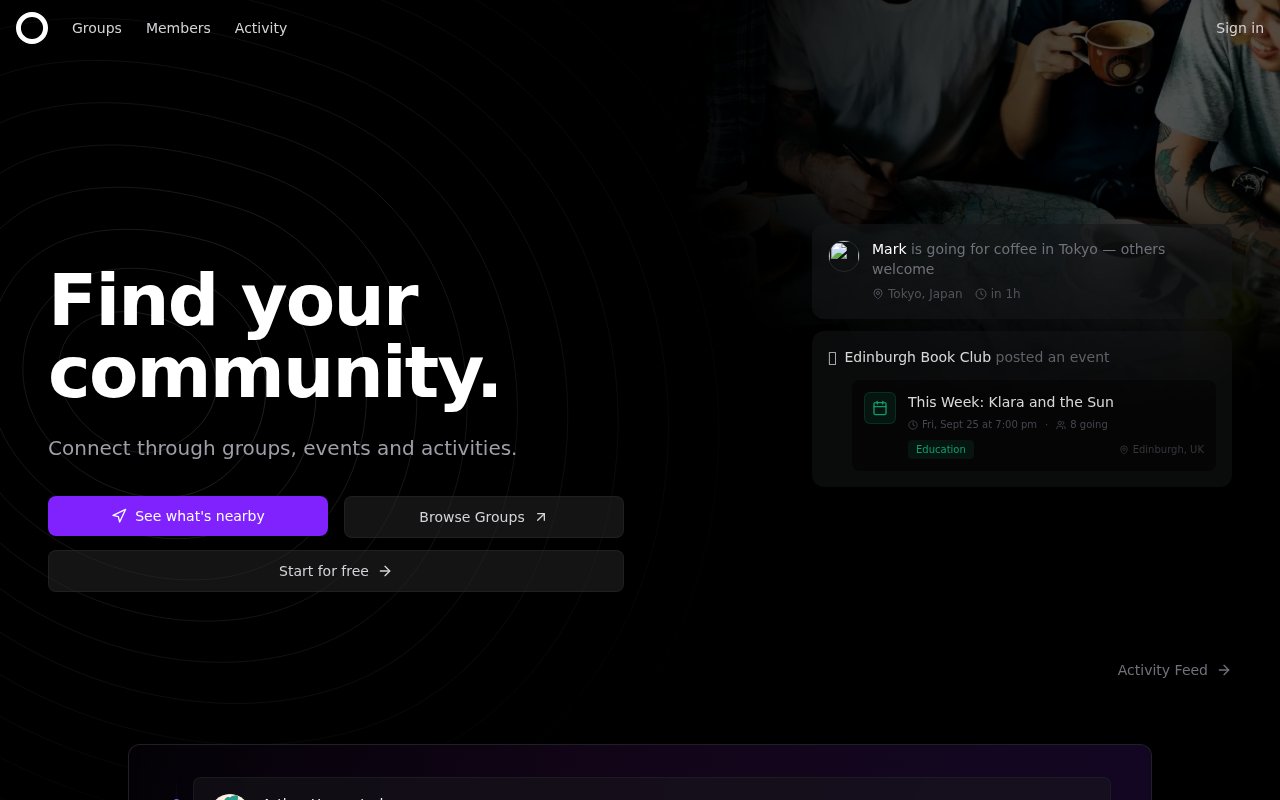
Radius is a community platform for creating local groups, organizing events, and finding people through shared interests. It covers the familiar structure of a public group with members and scheduled meetups, but it also supports lighter activities that don't need a permanent organization around them. Someone can post that they're going for coffee, a run, or a bike ride, attach a time and place, and let nearby people with the same interest join. That makes Radius useful for both recurring communities and informal plans. The public activity feed shows new groups, upcoming events, and member activity across cities, while discovery pages help people browse communities by location and category.
Organizers can create a group, choose its name, city, and description, and receive a public URL to share. They can publish in person or virtual events, accept replies, use waiting lists, invite members, add more organizers, and send reminders or scheduled emails. Events may repeat weekly, every two weeks, or monthly, with future instances published automatically. Guests can reply to an event with a name and email, then confirm through a link without opening a full Radius account. Calendar subscriptions give members a way to follow upcoming events in Google, Apple, or Outlook, and an embeddable widget lets a community display its Radius schedule on an existing website.
The activities side is intentionally less formal. A user can post a one off plan without first making a group, make it public to people nearby, or limit participation to people they follow. When the exact time isn't decided, the post can offer a rough window and let interested people select the slots that work. The organizer then confirms the popular choice. Profiles can carry interests, and people can discover others through the feed or members map. This approach fits someone who wants company for an occasional activity as well as someone looking for an established club. Radius is available worldwide in a mobile friendly web interface, although the product is currently in English and doesn't yet have a native mobile app.
For community administration, Radius includes invitations, member roles, moderation controls, group discussions, posts, data exports, and an Events API. Organizers can export member and attendee data as CSV or download a broader group archive as a ZIP containing events, posts, photos, and other records. The documented moderation tools allow organizers to approve requests, ban spam accounts, and manage their member list. Pro groups can also be private so their content is visible only to members. Group analytics are included in Pro for organizers who need a clearer view of engagement and growth. Public groups and unlisted options give communities different levels of visibility without forcing every organizer into the same discovery model.
Individual visibility controls extend beyond the group setting. People can choose a display name and decide whether their full name appears publicly. Events and groups can be unlisted, while private group content is part of Pro. The site states that it serves pages over HTTPS and doesn't share personal information without permission. These controls won't remove the need for active moderation in a public community, but they give organizers and members ways to decide how widely a page or identity should be exposed.
Radius positions itself as an alternative for groups moving from Meetup. Its migration guide is honest about the process. Organizers recreate the group and upcoming events, invite members by email, then share the new public page or event widget. There isn't a promised automatic import that moves everything in one click. Members can join from an invitation link without holding a Meetup account. The same guide recommends moving in stages and using calendar feeds or an embed to keep an existing site useful during the transition. For larger chapter networks, Radius offers centralized management, organization level billing, and invoice discounts based on the number of groups.
Joining groups and attending events is free. Organizers can also run a group with up to 100 members on the free plan, which includes event publishing, waiting lists, two organizers, invitations, reminders, calendar subscriptions, an embed widget, exports, and API access. Pro costs $15 per month for each group on the displayed US pricing and removes the member limit while adding analytics, private groups, at least three organizers, and enhanced support. Radius doesn't currently process payments for paid events, so organizers must link to an external ticketing service or collect payment offline. The free tier is substantial for a neighborhood club or early community, while Pro is aimed at growing groups that need scale and tighter access control.
Key Features
- Community groups and public pages
- Recurring events with waiting lists
- Lightweight local activity posts
- Guest replies without full accounts
- Calendar feeds and event embeds
- Member exports and Events API
Pros & Cons
What we like
- Free organizer plan supports up to 100 members
- People can join individual activities without a group
- Guest replies reduce account creation friction
- Exports and API access are included free
Room for improvement
- Built in payment processing isn't available yet
- There is no native mobile app yet
- The product is currently English only
- Meetup migration requires manual recreation
Frequently Asked Questions
What is Radius?
Is Radius free?
Can guests reply without an account?
Does Radius handle ticket payments?
Best For
Featured in
Alternatives to Radius

ChatDash
White-label platform to deliver, manage, and monetize AI voice agents under your own brand

CalendHub
Smart scheduling and calendar management for teams

Zoom
The default video meeting tool of the post-2020 internet

Substack
Hosted newsletter and publication platform with built-in payments, recommendations, and an audience network for writers.
Reviews (0)
Badge builder
Add Radius to your website
Choose a badge style and size, preview it here, then copy the generated HTML. Badge images are self-contained SVGs and do not require an external script.

<a href="https://toolindex.net/tools/radius?ref=badge" target="_blank" rel="noopener">
  <img src="https://toolindex.net/badge/radius/medium.svg" alt="Radius - Listed on Tool Index" width="180" height="50" />
</a>How to use the badge
- 1. Pick the style, size, and theme that fit your layout.
- 2. Copy the generated HTML from the code block.
- 3. Paste it into your footer, homepage, or press page.
Standard badge available
The standard listing badge is available now. Score and circle badges are limited to tools currently ranked in the top 10 of a category.
Badge clicks return visitors to this profile with a referral tag so the source remains identifiable.
Related Tools
Substack
Hosted newsletter and publication platform with built-in payments, recommendations, and an audience network for writers.

MailerLite
Friendly, affordable email marketing tool with newsletters, automations, landing pages, and a growing creator toolkit.

Twist
Calmer team messaging where threads replace the firehose of channels

Zulip
Threaded team chat that treats topics as a first-class concept
Work on Radius? Request listing access or correction